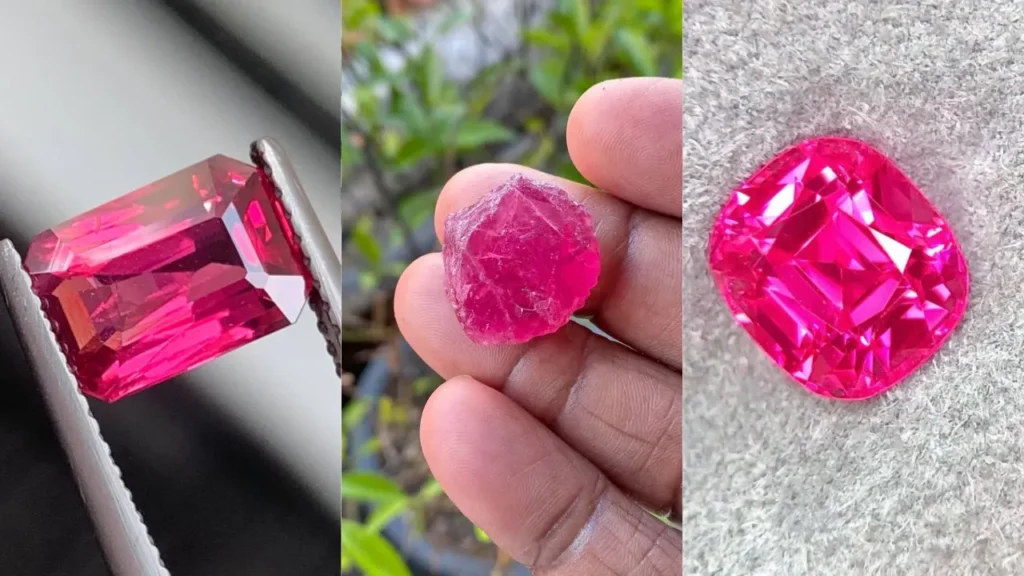
Mahenge spinel is a rare, intensely saturated pink-to-red gemstone from a single remote district in Tanzania, credited with reviving global interest in spinel as a serious collector’s gem. Its neon-like glow is strong enough that dealers have compared it favorably to fine ruby, at a fraction of the price.
What Is Mahenge Spinel?
Mahenge spinel refers to natural spinel (magnesium aluminum oxide) mined specifically from the Mahenge region in Tanzania’s remote Ulanga District, prized for a saturated pink-to-red color with an unusually strong, almost glowing quality. Unlike terms like “Jedi spinel,” which describe a color-and-clarity grade that can technically apply to material from multiple countries, “Mahenge spinel” is a genuine place name — it refers specifically to spinel from this one deposit, making origin, not just appearance, part of the definition.
“To understand what trade criteria strictly qualify a gem as a ‘Jedi’ spinel versus a standard neon pink spinel, see our deep dive into Jedi spinel gemstones.”
The Discovery Story
Spinel mining in the area actually dates back further than most accounts suggest. A local hunter first found a large red stone near Lukande village in the late 1980s, and Thai mining operators worked the area from 1986 to 1992. Around 2000, farmers at nearby Ipanko village discovered transparent spinel crystals weathering out of marble outcrops, but the material attracted little international attention.
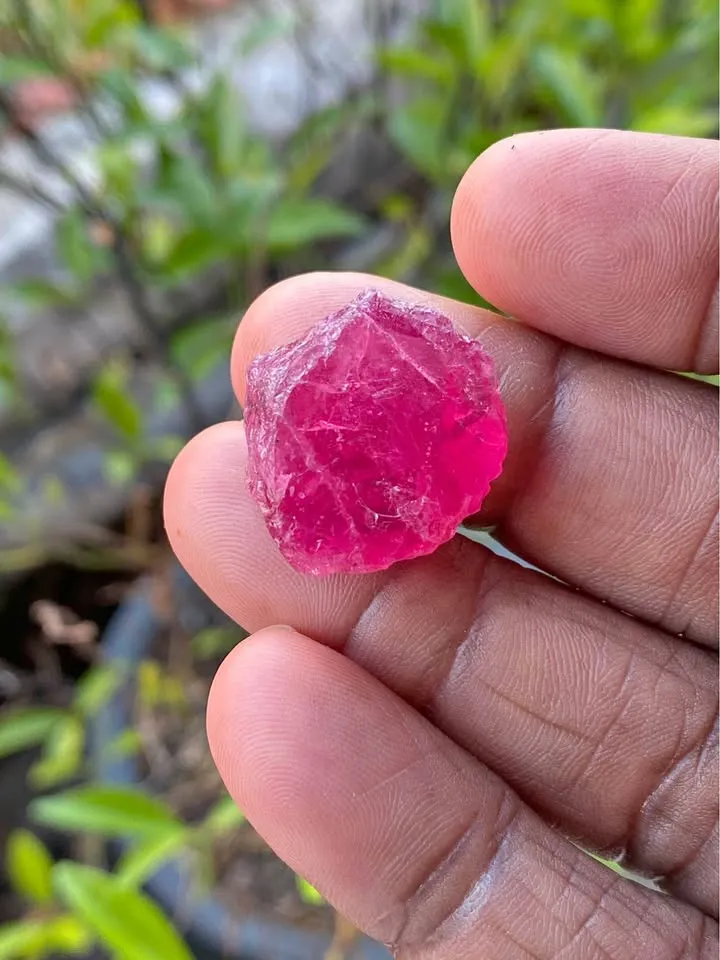
That changed dramatically in August 2007. Miners working a site known as the “Joel Box” at Ipanko unearthed four extraordinary spinel crystals weighing approximately 52, 28, 20, and 5.7 kilograms — a scale essentially unheard of for gem-quality spinel. The vivid, glowing pink-red color of this material sent shockwaves through the colored gemstone trade and is widely credited with transforming spinel’s reputation almost overnight, from an overlooked “also-ran” gem into one of the most actively collected colored stones in the world.
Why Does Mahenge Spinel Glow? The Science of the Color
Like red and pink spinel generally, Mahenge material owes its color to chromium (Cr³⁺) replacing aluminum within the crystal structure. What sets fine Mahenge spinel apart is a combination of high chromium content with very low iron — the same pattern seen in the finest “Jedi” grade material from Myanmar. Iron tends to mute and darken red-pink tones in spinel, so material with minimal iron stays bright and clean rather than shifting toward brown or grey.
That low-iron chemistry also affects fluorescence. Mahenge spinel characteristically fluoresces strongly under natural light and UV, which is part of what gives it that glowing, almost backlit appearance dealers describe — a visual effect distinct from material sourced from regions where higher iron content dampens fluorescence.
Where Mahenge Spinel Comes From
Mahenge spinel comes from a single source: the Mahenge region of Tanzania’s Ulanga District, roughly 200 kilometers southwest of Dar es Salaam. The deposit sits within ancient metamorphic marble formations, geological conditions that favor spinel crystal growth. This narrow, single-district origin is central to the gem’s rarity and value — unlike ruby or sapphire, which are mined across dozens of countries, fine Mahenge-quality spinel comes from nowhere else, and much of the historically richest ground has reportedly already been worked.
This gives Mahenge spinel a different profile from your Sri Lankan-sourced gem coverage: it isn’t part of the illam/vatti alluvial mining tradition, since Mahenge spinel is recovered from marble-hosted primary deposits rather than river gravel, a genuinely different mining method from Sri Lanka’s alluvial gem-gravel tradition.

Is Mahenge Spinel Treated?
Mahenge spinel is generally sold untreated, and this is a real part of its appeal. There’s no widely used or reliable treatment for enhancing spinel’s color, so material reaches the market largely as it formed underground. Given the strong prices this material commands, it’s still worth asking any dealer directly about treatment status and requesting lab documentation for significant purchases.
Mahenge Spinel Durability: Can You Wear It Every Day?
Yes. Like the rest of the spinel family, Mahenge spinel rates 8 on the Mohs hardness scale and has no cleavage plane, making it a genuinely practical choice for rings and other daily-wear jewelry.
What Determines the Value of Mahenge Spinel?
- Color saturation and glow — Vivid, neon-quality pink-to-red with strong fluorescence is the benchmark and commands the steepest premiums.
- Clarity — Eye-clean stones are especially valued, though spinel is generally a fairly clean gem to begin with.
- Carat weight — Because so much of the finest original material has already been mined, larger fine-color stones are increasingly scarce and priced accordingly.
- Confirmed origin — Given how closely “Mahenge” is tied to this single deposit, documentation confirming Tanzanian origin matters more here than with broadly-sourced spinel colors.
- Market trajectory — Prices for exceptional Mahenge material have risen sharply since the 2007 discovery, reflecting both dwindling fresh supply and growing collector demand; this is a genuinely dynamic, actively-traded market rather than a static one.
How to Care for Mahenge Spinel
Clean it with warm water, mild soap, and a soft brush. Its hardness and lack of cleavage generally make it safe for ultrasonic and steam cleaning, though it’s worth checking with your jeweler if the piece includes other, more delicate stones. Store separately from softer gems to prevent surface scratching.
Mahenge Spinel vs. Ruby: How to Tell Them Apart
Given spinel’s long history of confusion with ruby, the comparison is a natural one here too. Ruby is doubly refractive and often shows pleochroism, a subtle shift in shade depending on viewing angle, while Mahenge spinel’s single refraction gives it a consistent color from every direction. Dealers who work with both stones often describe Mahenge material’s glow as rivaling or exceeding fine ruby’s, while trading at a meaningful discount to top-tier ruby prices — though exceptional Mahenge stones have themselves reached six-figure territory at auction, so “affordable” is relative to ruby’s ceiling, not to gemstones generally.
“Unlike traditional red gems that can exhibit dark extinction in shadow, authentic Mahenge spinels maintain an electric, glowing brilliance in all light conditions. Read more about their physical traits on Mahenge’s official spinel resource.”
“While natural yellow sapphires often undergo heat treatment, yellow spinels remain unheated, offering vibrant canary-to-golden hues with single refractivity and an 8 Mohs hardness rating. Explore our complete guide to yellow spinel rarity and value.”