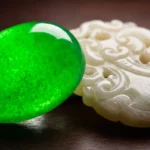
If you are shopping for a May birthday or seeking the ultimate green gemstone to mark a traditional emerald birthday milestone, you are looking at a stone with unparalleled historical prestige. But emerald is also the one classic gem where visible internal flaws aren’t just accepted; they are expected. Here is the real science, history, and buyer’s truth behind the world’s most famous green gemstone, told the way a bench jeweler would explain it to you.
What Is Emerald?
Emerald is the elite green variety of the beryl mineral family (chemically, a beryllium aluminum silicate). What separates it from its beryl cousins, like aquamarine or morganite, isn’t just its rich color but how gemologists classify it. It is officially a “Type III” gemstone. In the trade, this means we expect natural inclusions in virtually every mined stone. We even have a romantic term for them: jardin (French for “garden”), because under a microscope, these inclusions look like tangled, mossy branches. While emerald registers a solid 7.5 to 8 on the Mohs hardness scale, that number masks its true fragility—a critical factor we will cover below.
Why Is It Green?
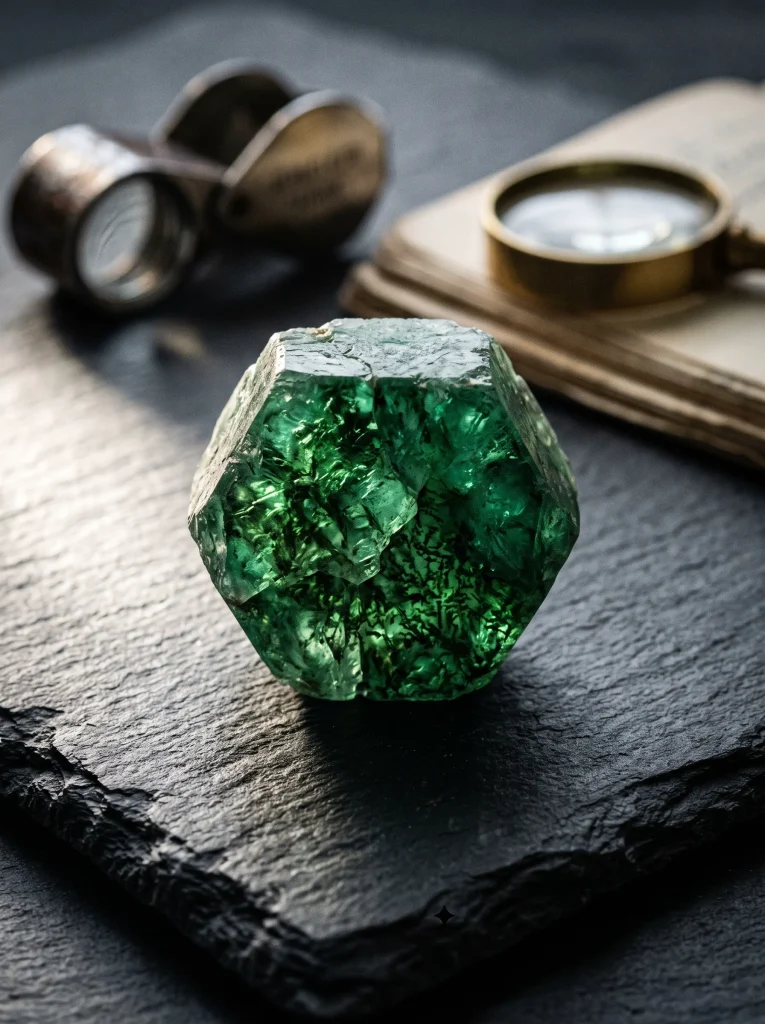
An emerald’s signature color comes from trace amounts of chromium, vanadium, or a combination of both, substituting into the crystal structure as the stone forms in the earth. Chromium tends to produce a pure, highly saturated green, while vanadium leans slightly cooler, adding a bluish-green secondary tone. When iron gets into the mix, it tends to mute or darken the stone. This delicate elemental recipe is exactly why stones from different global regions possess distinct, recognizable personalities.
Where It Comes From: Colombian vs. Zambian
If you walk into a high-end jeweler and ask to see a classic Colombian emerald ring, you are asking for the historic benchmark. Mines like Muzo and Chivor are legendary for producing stones with a warm, pure green that almost seems to glow from within. Naturally, documented Colombian origin carries the highest prestige and pricing power in the trade.
On the other hand, the modern market has been wonderfully disrupted by the Zambian emerald. Mined primarily from the Kagem deposit, Zambian stones typically present a cooler, bluer-green tone. The real secret? They are often significantly cleaner—meaning they have fewer inclusions—than their Colombian counterparts, offering exceptional value for buyers who want a clearer stone without sacrificing rich color.
Natural vs. Lab Grown Emerald
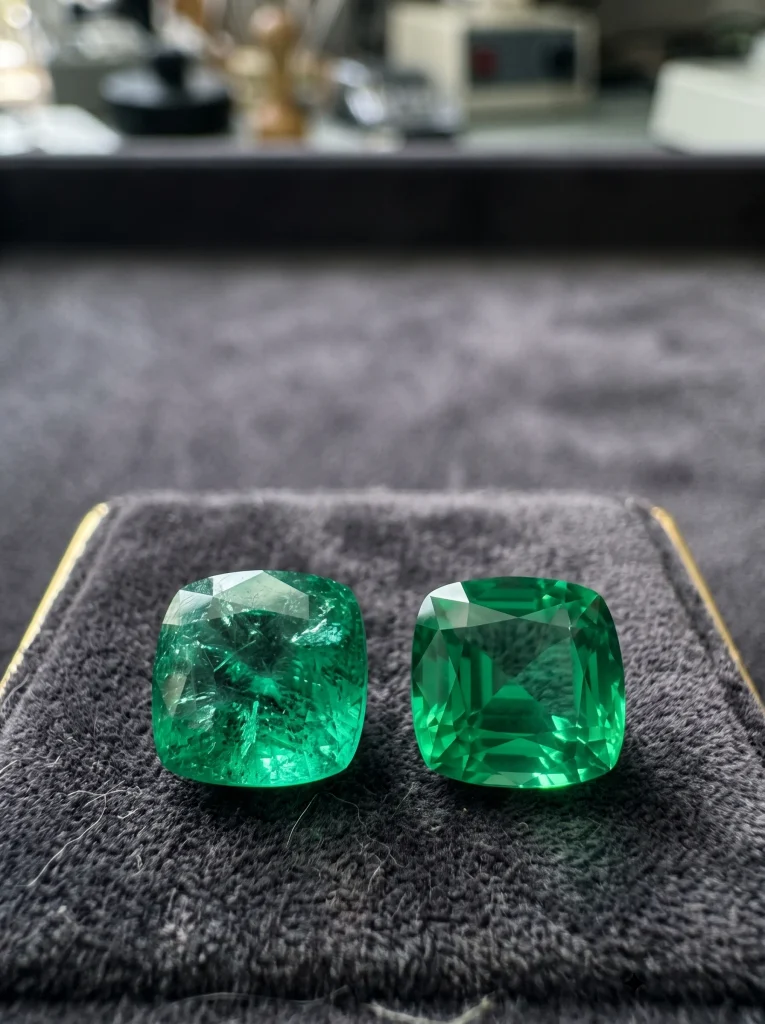
With mined emeralds fetching steep prices, the lab grown emerald has become an incredibly popular, budget-friendly alternative. These aren’t fake or imitation stones; they are grown in controlled environments using flux-melt or hydrothermal processes. Because they possess the exact same chemical, optical, and physical properties as earth-mined emeralds, they are technically real emeralds. The visual giveaway? Lab-grown stones are usually exceptionally clean. They lack the heavy, tangled jardin typical of mined stones, they don’t require the standard oil treatments, and they trade at a fraction of the cost.
How to Tell if an Emerald is Real
Because both lab-created stones and cheap green glass are rampant in the market, knowing how to tell if an emerald is real requires looking for specific natural markers rather than just a green sparkle. First, look for the jardin. If a “natural” emerald is completely flawless and highly affordable, your guard should immediately go up; it is almost certainly lab-grown or colored glass.
You can also check the wear and tear. Glass edges scratch easily and round off quickly, whereas emerald is hard enough that its facet junctions should look crisp under a jeweler’s loupe. Furthermore, beware of stones that throw bright, rainbow-colored flashes of light (like a diamond). Emeralds have a low refractive index. A stone flashing rainbows is usually green cubic zirconia or YAG. Ultimately, taking the stone to a gemologist to check the refractive index and inspect the inclusion patterns under a microscope is the only definitive test.
Is It Treated?
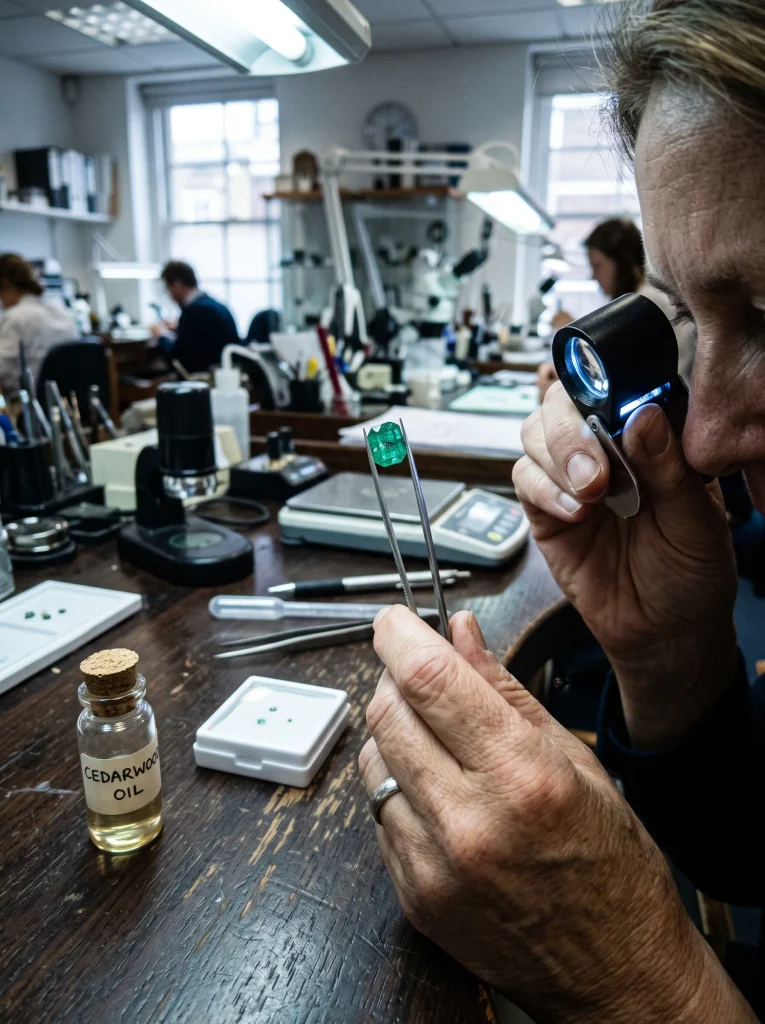
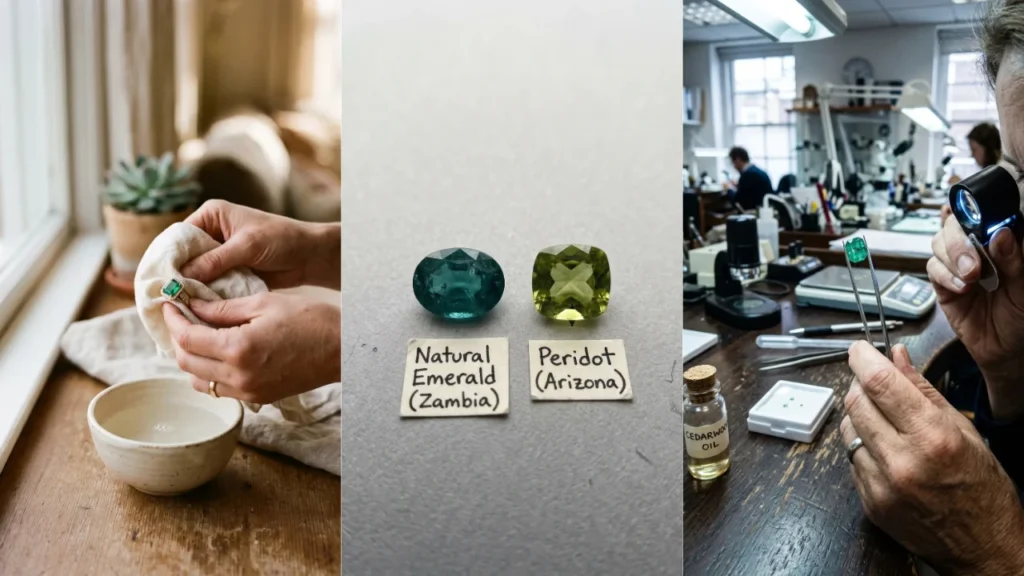
This is the single most important thing a first time buyer should know: the overwhelming majority of natural emeralds are treated with oil, typically colorless cedarwood oil, to fill surface-reaching fractures. This is not a scam; it is standard industry practice. In fact, under FTC guidelines in the United States, sellers are legally required to disclose this treatment because it dictates how the stone must be cared for and the treatment is not strictly permanent.
Over years of wear, the oil can dry out, making those natural fissures visible again. When this happens, a reputable gemologist can simply clean and re-oil the stone as routine maintenance. “No-oil” natural emeralds do exist, but because they are so astonishingly rare, they command massive premiums.
Under FTC Jewelry Guides in the United States, sellers are legally required to disclose oil treatment because it dictates how the stone must be cared for and the enhancement is not strictly permanent.
Durability: Can You Wear It Every Day?
As mentioned earlier, emeralds sit at 7.5 to 8 on the Mohs hardness scale. But in the jewelry world, hardness (resistance to scratching) and toughness (resistance to breaking) are two very different things. Because nearly every emerald is riddled with internal fractures, these natural weak points make the stone highly brittle and prone to chipping under sudden impact.
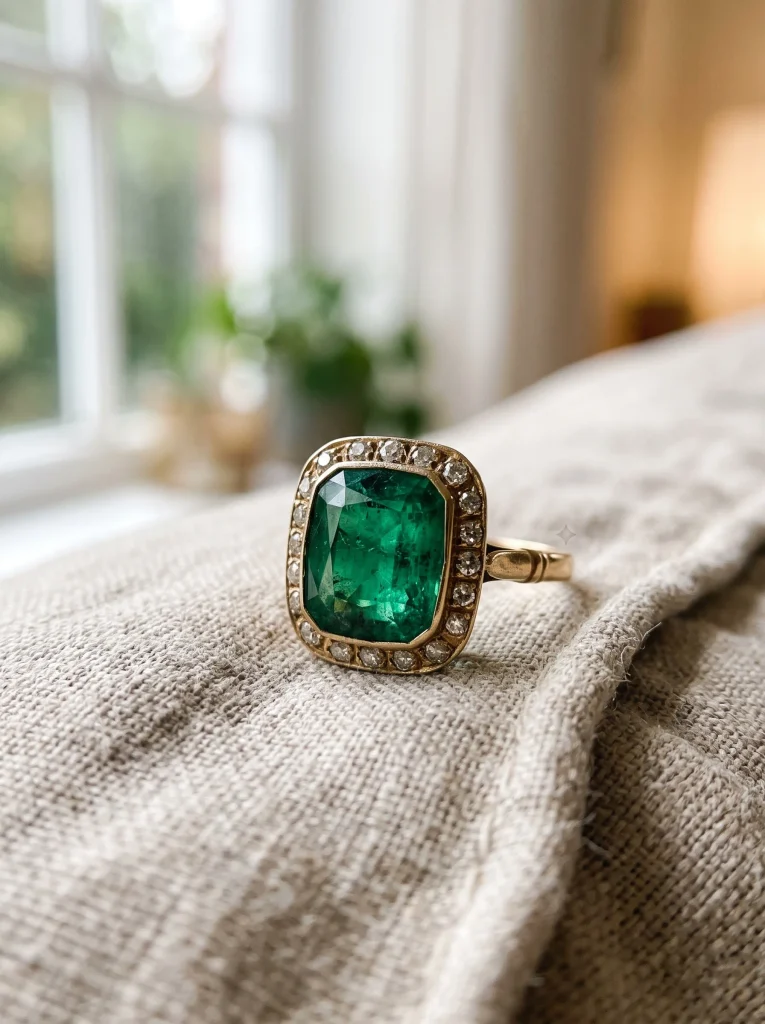
This is exactly why jewelers heavily favor protective settings like bezels. In fact, the classic “emerald cut” with its cropped corners was invented specifically to reduce stress on the stone’s fragile edges. You can absolutely wear an emerald daily, but it demands vigilance. Always take your emerald rings off before heavy lifting, gardening, or manual work.
Emerald Value & Pricing
If you are trying to figure out the emerald price per carat, you have to throw out diamond-grading logic. With diamonds, clarity is king; with emeralds, color dictates everything. A pure, vivid, medium-to-medium-dark green with no brownish dulling represents the absolute ideal.
The emerald value by carat scales exponentially with size, but a smaller stone with magnificent color will easily outprice a larger, washed-out stone. Clarity is judged by how the inclusions affect the stone’s overall transparency rather than their mere presence. Add in treatment levels (where a “minor oil” stone commands a premium over a “significant oil” stone) and geographic origin, and you have a highly nuanced pricing matrix that requires a trusted dealer to navigate properly.
How to Care for Emerald
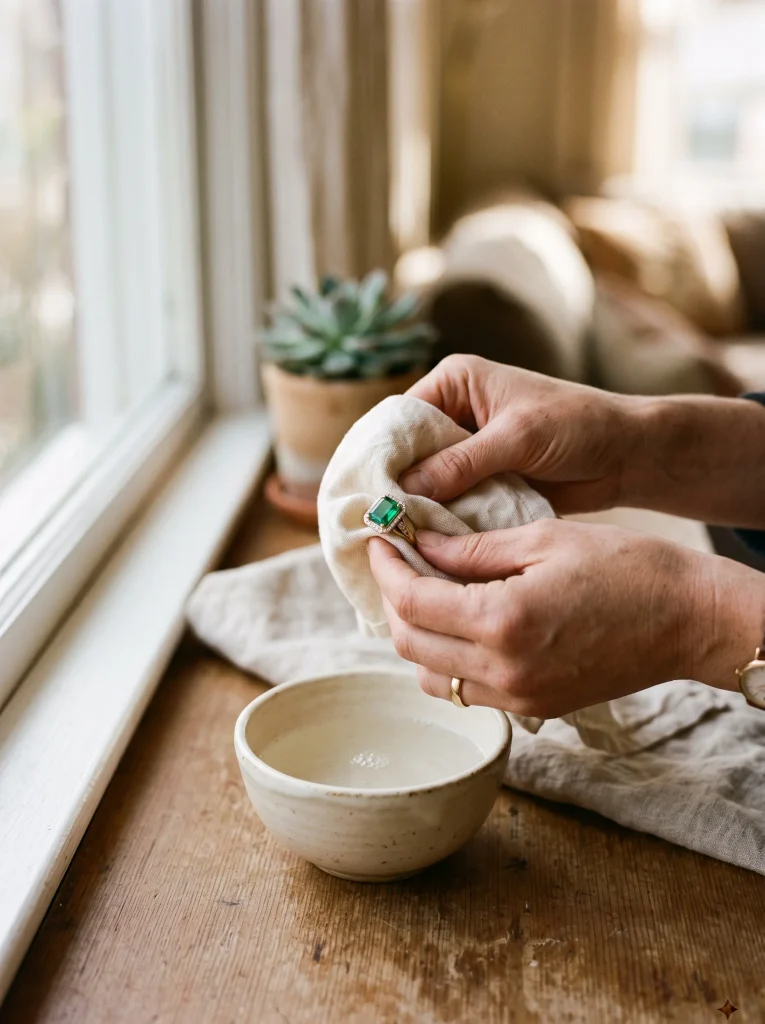
The golden rule of emerald care: step away from the ultrasonic cleaner. The heat and intense vibrations of an ultrasonic or steam cleaner can instantly strip the cedarwood oil treatment and potentially shatter the stone right along its existing fracture lines. Clean your emeralds only with warm water, a few drops of mild soap, and a soft cloth. Keep them away from harsh household chemicals, sudden temperature extremes, and prolonged direct sunlight.
A Brief, Factual History
Emerald’s documented history stretches back roughly 2,000 years to Egypt’s Sikait-Zabara region. According to the Gemological Institute of America, Cleopatra was famously devoted to the stone and claimed personal ownership of Egypt’s emerald mines. Ancient Egyptians associated the gem’s green color with rebirth and sometimes buried emeralds with their dead. Separately, pre-Columbian cultures in South America mined emeralds for centuries before Spanish colonization in the 1500s brought Colombian emeralds into the global trade. It was formally established as the modern May birthstone in 1912.
According to the Gemological Institute of America (GIA), Cleopatra was famously devoted to the stone and claimed personal ownership of Egypt’s emerald mines. Ancient Egyptians associated the gem’s green color with rebirth and sometimes buried emeralds with their dead.
Emerald vs. Peridot: May vs. August
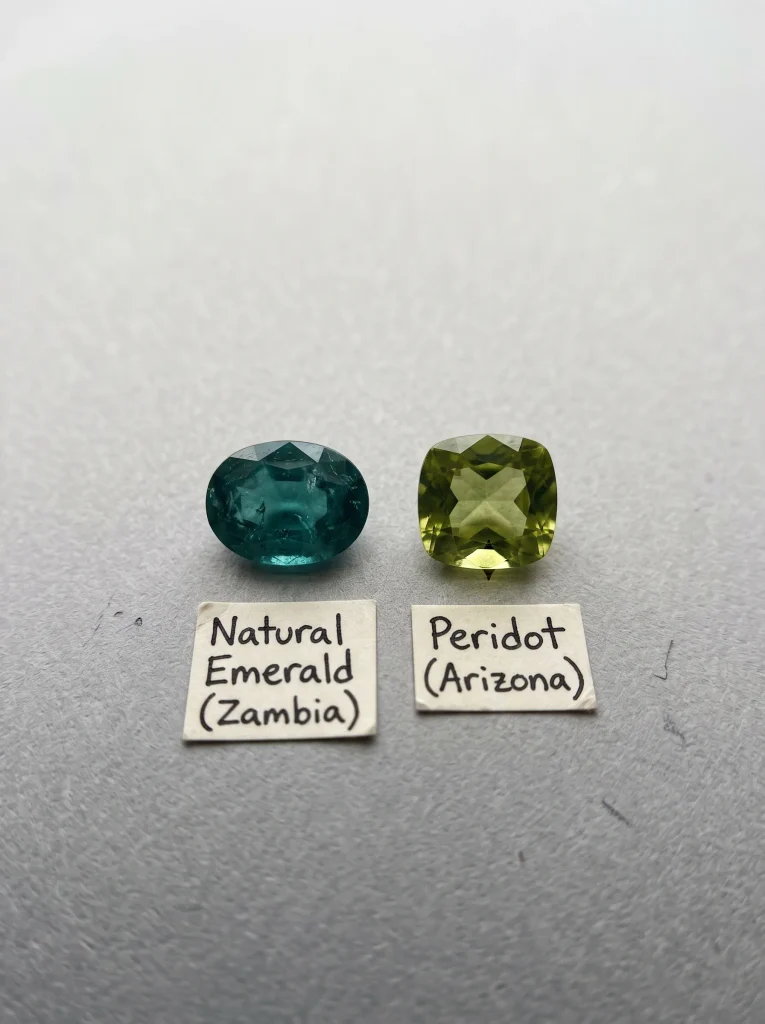
Emerald is frequently confused with peridot, but they are chemically and visually distinct. While emerald is a beryl colored by chromium, peridot is an olivine colored by iron. This results in entirely different color tones: emerald is a deep, rich, bluish-green, whereas peridot is a lighter, yellowish “olive” green. Furthermore, while emeralds are expected to have inclusions, peridots are typically expected to be eye-clean. Finally, their traditional associations differ completely, emerald represents May, while peridot represents August.