
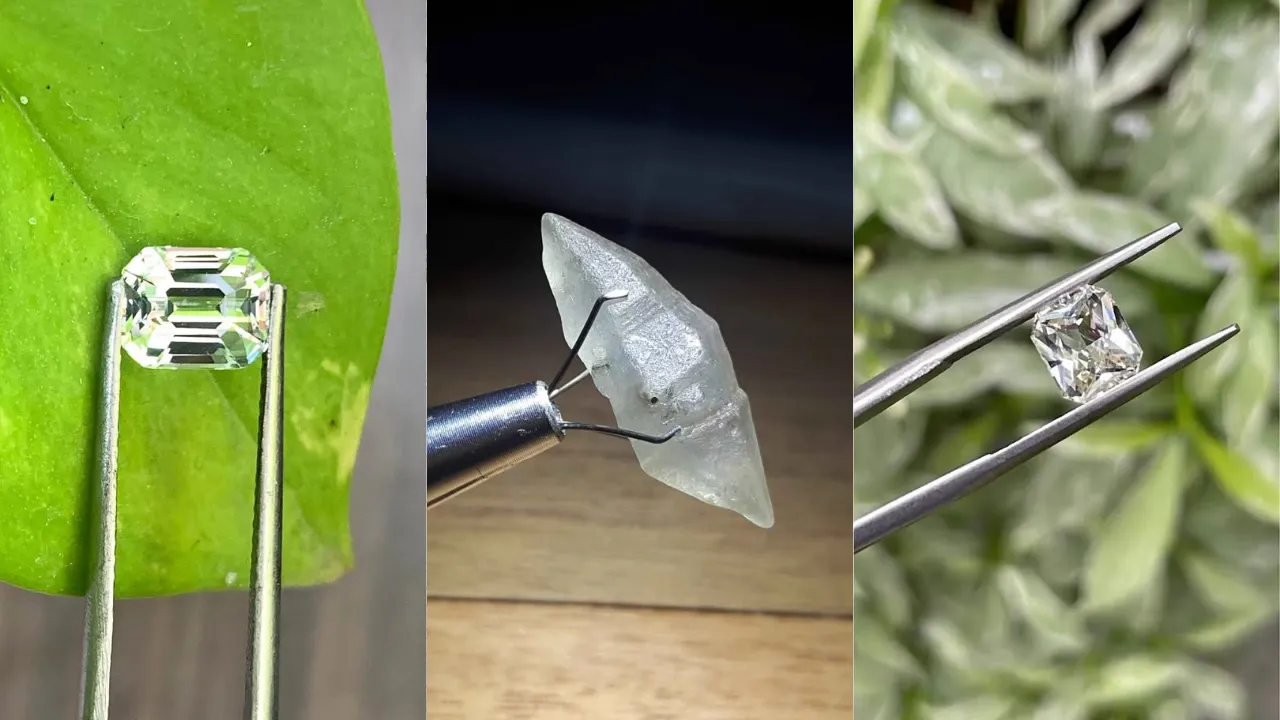
White sapphire is a clear, colorless gemstone. It comes from the same mineral family as blue sapphire and ruby. It is a real stone, not a fake diamond and not glass.
This guide walks you through what white sapphire is, where it comes from, and how to tell a good one from a bad one.
What Is White Sapphire?
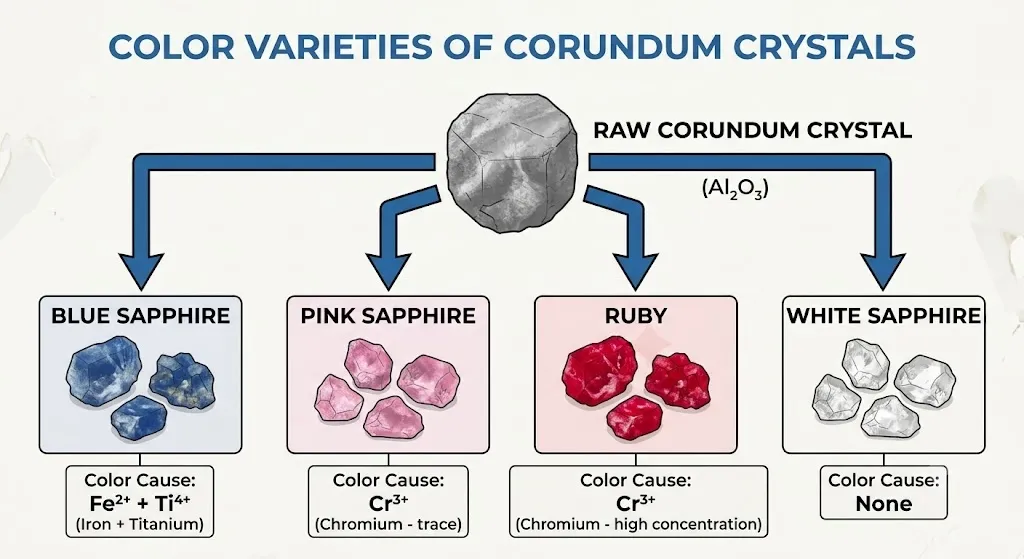
White sapphire is a colorless form of corundum. Corundum is a hard crystal made of aluminum oxide.
Most sapphires have color. Blue, pink, and yellow sapphires get their color from small traces of other elements mixed in while the crystal was forming. Iron and titanium make blue. Chromium makes red, which we call ruby instead of sapphire.
White sapphire forms with almost none of these extra elements. That is the whole reason it comes out clear instead of colored. Underneath, it is chemically almost the same stone as a blue sapphire or a ruby
Where Does White Sapphire Come From?
White sapphire forms deep underground, usually inside marble or basalt rock, over millions of years.
The biggest sources are Sri Lanka, Madagascar, and Myanmar. Smaller amounts come from Australia and Montana in the United States. Sri Lanka is known for producing some of the clearest and largest white sapphires in the world.
Miners dig through gravel and rock to find rough sapphire crystals. Most rough stones then get shipped out to be cut and polished before they reach a jewelry store.
Is White Sapphire Rare?
Yes, in its natural, untreated form, white sapphire is genuinely rare.
Here is why. When a sapphire crystal forms, trace elements usually sneak in and give it some color. A crystal forming with almost zero trace elements is the less common outcome, not the usual one. So a natural white sapphire that came out of the ground already clear, with no help from treatment, is harder to find than a colored one of similar size.
Most white sapphires sold today are not this rare, natural type. Most are treated or lab-grown, which brings us to the next part.
White Sapphire: Natural, Treated, or Lab-Grown?
This is the part most articles about white sapphire skip, and it matters if you are buying one.
Natural White Sapphire
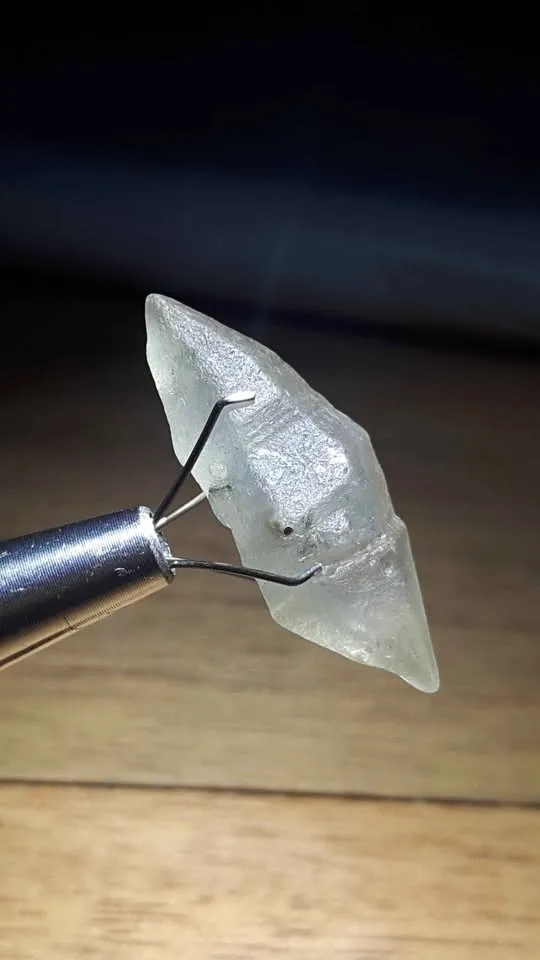
This is a sapphire that formed underground with almost no trace elements, so it came out clear on its own. It is the rarest and usually the most expensive type.
Heat-Treated White Sapphire
Many white sapphires you see for sale did not start out clear. They started light yellow, brown, or gray, and were heated to very high temperatures to remove the tint. This is common and accepted in the jewelry trade. It just needs to be disclosed by the seller.
Lab-Grown White Sapphire
This is real corundum, made in a lab instead of underground. It has the exact same chemistry and hardness as a natural stone. It just grows in weeks instead of millions of years, which makes it far cheaper and usually clearer.
A Quick Warning
Some sellers use the words “white sapphire” loosely for things that are not sapphire at all, like glass or white spinel. If you are spending real money, ask for a grading report from a lab like GIA.
How to Judge the Quality of a White Sapphire
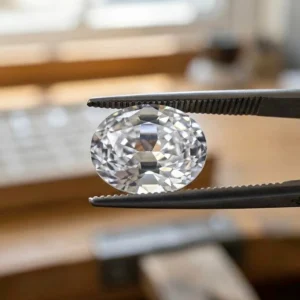
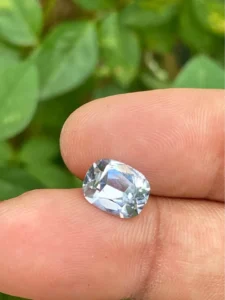
A good white sapphire is judged on three things: clarity, cut, and size.
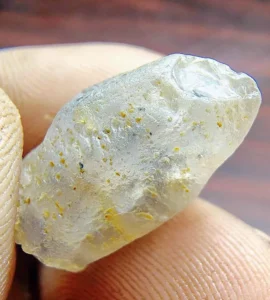
Clarity is how clear the inside of the stone looks. Cheap white sapphires often look a bit cloudy or milky. Better ones look glassy and clean, closer to how a diamond looks inside.
Cut decides how much the stone sparkles. A badly cut white sapphire can look flat, or show a “window,” which is a see-through patch in the middle where light just leaks out instead of bouncing back.
Size matters less than clarity. A smaller, clean stone almost always looks better than a large, cloudy one.
White Sapphire vs. Diamond, in Short
White sapphire is often sold as a cheaper stand-in for diamond, so here is the short version of how they differ.
| Feature | White Sapphire | Diamond |
|---|---|---|
| Hardness (Mohs scale) | 9 | 10 |
| Sparkle (refractive index) | About 1.77 | 2.42 |
| Price | Much lower | Much higher |
| Made of | Aluminum oxide | Carbon |
Diamond bends light more, so it has more fire and sparkle. White sapphire has a softer, quieter shine. It costs a lot less, and it is still very tough. This topic deserves its own deep dive, which we will cover in a separate article.
Is White Sapphire Tough Enough for Everyday Wear?
Yes. A Mohs hardness of 9 makes white sapphire one of the toughest gemstones on Earth, right behind diamond.
It stands up well to daily knocks from keys, countertops, and doorknobs. That makes it a solid pick for a ring you wear every day, not just for earrings or a necklace that get less rough treatment.
How to Clean and Care for White Sapphire
Cleaning a white sapphire is simple. You do not need anything special.
Use warm water, a small drop of mild dish soap, and a soft toothbrush. Gently scrub around the setting, rinse well, and dry with a soft cloth. Because the stone is so hard, most white sapphires can also go in an ultrasonic or steam cleaner, unlike softer stones like opal or pearl. If your stone has visible internal fractures, ask a jeweler first, since cleaning methods should match the specific stone.
Store it apart from softer jewelry, so it does not scratch other pieces sitting next to it.
What Does White Sapphire Cost?
Price depends mostly on whether the stone is natural, treated, or lab-grown, plus its clarity and size.
- Lab-grown white sapphire: usually the cheapest, often under $50 per carat.
- Natural, heat-treated white sapphire: a common mid-range pick, often in the low hundreds per carat.
- Natural, untreated white sapphire: the rarest and priciest, since a truly clear natural stone is uncommon.
Always ask the seller directly whether a stone is natural, treated, or lab-grown. A trustworthy seller tells you without being asked twice.
The History and Meaning Behind White Sapphire
People have valued sapphires for thousands of years. Older cultures linked them to wisdom, truth, and clear thinking.
Some sources today add spiritual or healing claims to white sapphire, like boosting intuition or curing illness. These are beliefs, not proven facts, and there is no scientific evidence behind them. It is fine to enjoy the folklore and symbolism of a stone. Just do not mix up tradition with medicine.
Sapphire is the official birthstone for September, most often shown as the blue variety, though white sapphire is sometimes used as an alternative.
Frequently Asked Questions
Is white sapphire a real gemstone?
Yes. It is real corundum, natural or lab-grown, from the same mineral family as blue sapphire and ruby.
Is white sapphire the same as a diamond?
No. They are different minerals with different hardness, sparkle, and price.
Does white sapphire sparkle like a diamond?
Not quite. It has a softer shine because it bends light less than a diamond does.
Is white sapphire good for an engagement ring?
Yes, if you want a tough, budget-friendly, natural-feeling alternative to diamond. It holds up well to daily wear.
How do I know if a white sapphire is real?
Ask for a grading report from an independent gem lab. This confirms the stone is genuine corundum and states whether it was treated.
GIA (Gemological Institute of America): https://www.gia.edu
Wikipedia’s corundum entry: https://en.wikipedia.org/wiki/Corundum
Mindat.org (mining location data): https://www.mindat.org
Uncover the secrets behind one of the most mesmerizing phenomenon stones in the world. Read Black Star Sapphire: The Complete Guide to Its Rare Gold Star for valuation, care, and buying tips.