
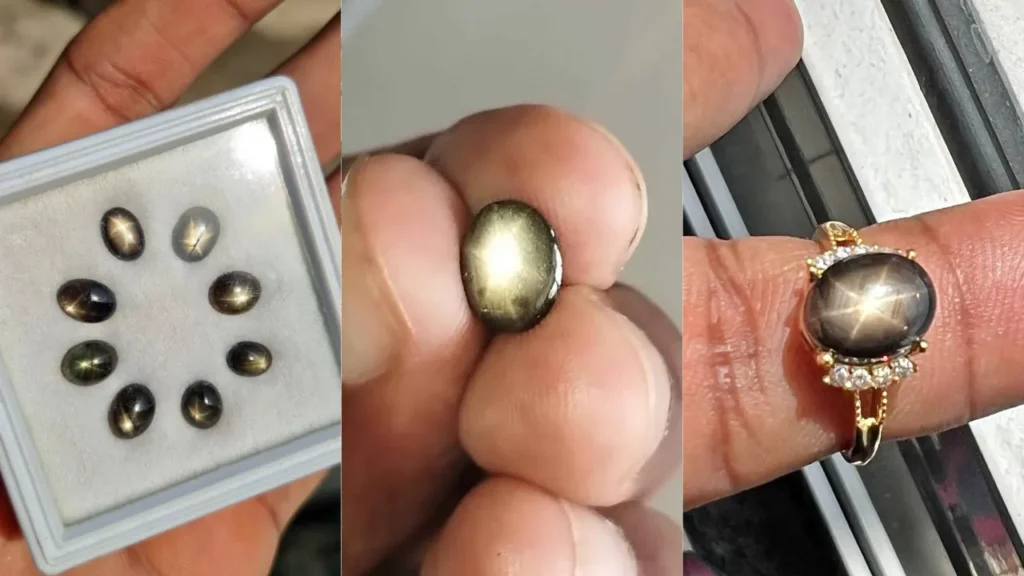
A black star sapphire is a rare, dark gemstone with a glowing star pattern that seems to float on its surface. Unlike other star sapphires, its star often looks gold instead of silver or white. Here’s why, and what else makes this stone different.
What Is a Black Star Sapphire?
Black star sapphire is a type of corundum, the same mineral family as blue sapphire and ruby. What makes it stand out is a bright star pattern on its surface, caused by an optical effect called asterism.
Most black star sapphires show a six-rayed star. In rare cases, a stone shows a 12-rayed star instead, which happens when extra sets of mineral fibers cross inside the stone in more directions than usual.
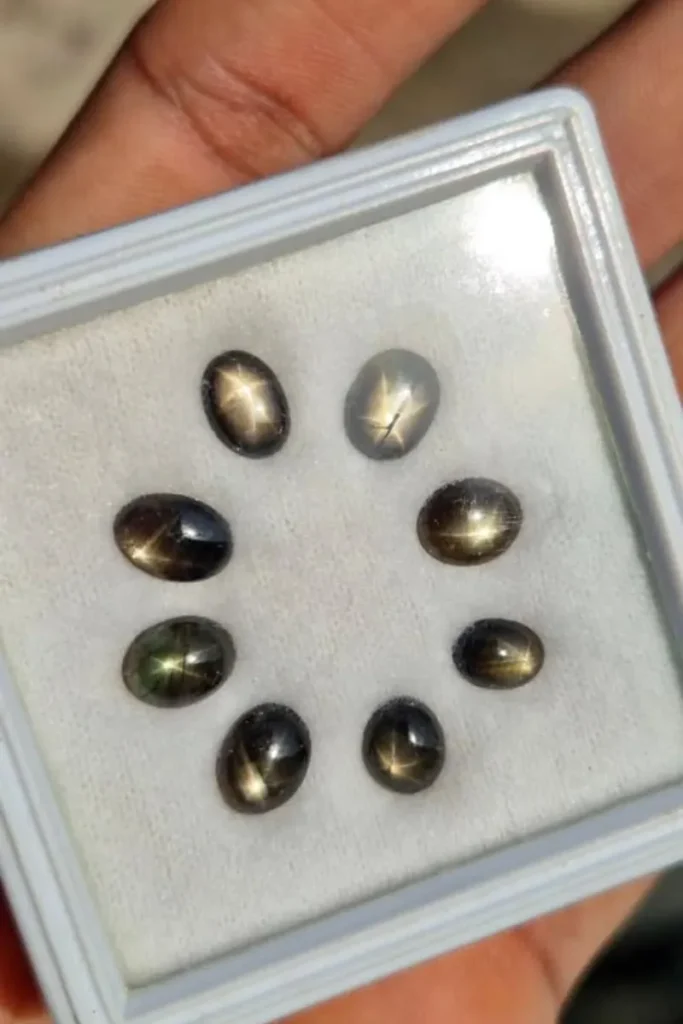
Why the Star Looks Gold, Not Silver
Most blue star sapphires get their star from a mineral called “rutile,” made of titanium oxide. That’s why their star usually looks silvery-white.
Black star sapphire works differently. Its star mostly comes from two other minerals: hematite and ilmenite. These minerals often give the star a gold or golden color instead of silver. Some black star sapphires also contain a third mineral, magnetite, which adds to the stone’s deep black body color.
This same 60-degree fiber arrangement is what creates the star effect across all corundum gemstones, we cover the full mechanics of it in our guide to star sapphire and star ruby physics.
This is the main reason black star sapphire looks and feels so different from other star sapphires, even though the underlying star mechanism (fine mineral needles arranged in three directions, 60 degrees apart) is basically the same idea.
Why It Looks Black at All
Interestingly, a black star sapphire is not always naturally solid black all the way through. The dense buildup of dark mineral inclusions inside the stone is often what makes it look black or very dark brown when cut into a rounded dome shape.
If the same rough stone were cut with a flat top instead of a dome, it can actually reveal a golden-brown color underneath, since the dome shape is what concentrates the dark inclusions visually. This is a detail most buyers never learn, but it explains why cutting choice matters so much with this particular stone.
How to Judge a Good Black Star Sapphire
A few things separate a strong stone from an average one.
Star sharpness. The rays should be thin, straight, and clearly visible, not blurry or faint.
Centering. The point where all the rays meet should sit in the middle of the dome, not off to one side.
Movement. When you tilt the stone under a light, the star should glide smoothly across the surface rather than jumping or disappearing.
Body color. A deep, even black or near-black color is generally preferred over a patchy or uneven dark brown.
Where Black Star Sapphire Comes From
Thailand is the source most often associated with fine black star sapphire, and many of the most well-regarded stones in the trade carry Thai origin. Sri Lanka, Australia, and parts of the United States, including Montana, have also produced black star sapphire, though in smaller quantities than blue sapphire deposits.
Is Black Star Sapphire Valuable?
Black star sapphire is generally more affordable than blue star sapphire of similar size and quality, since blue remains the more historically prized color in the sapphire family. That said, a black star sapphire with a sharp, well-centered, gold star and strong even color can still be a genuinely valuable and sought-after stone, particularly among collectors who specifically seek out asterism.
As with any star sapphire, natural stones with strong asterism are considerably rarer, and therefore more valuable, than lab-created versions, so it’s worth asking directly whether a stone is natural before buying.
Symbolism and Meaning
Black stones have long been linked to protection and mystery across many cultures. Medieval European tradition often treated black gemstones as lucky and protective. In the context of black star sapphire specifically, the added star effect has historically deepened this association, with the star sometimes seen as a symbol of guidance layered on top of the stone’s protective meaning.
Caring for a Black Star Sapphire
Like other corundum gemstones, black star sapphire is very hard, sitting at 9 on the Mohs hardness scale, just below diamond. This makes it a durable choice for rings and other jewelry worn daily. Clean it with warm water, mild soap, and a soft brush, and avoid harsh chemicals. Store it separately from softer jewelry pieces to prevent surface scratches over time.
The Bottom Line
Black star sapphire earns its striking look through a different set of minerals than most other star sapphires, which is exactly why its star glows gold instead of silver. Understanding that distinction, along with what to look for in star sharpness and centering, turns this stone from a curiosity into a genuinely informed purchase.
Analysis of hematite and ilmenite inclusions responsible for asterism in black star sapphires.
Wikipedia — “Black Star of Queensland” (famous historical example)