

Most gemstone guides stop at color, clarity, and treatment. But there’s a layer beneath that, one that separates people who just look at a sapphire from people who actually know how to read one.
Pleochroism: Why a Sapphire Isn’t One Color, It’s Several
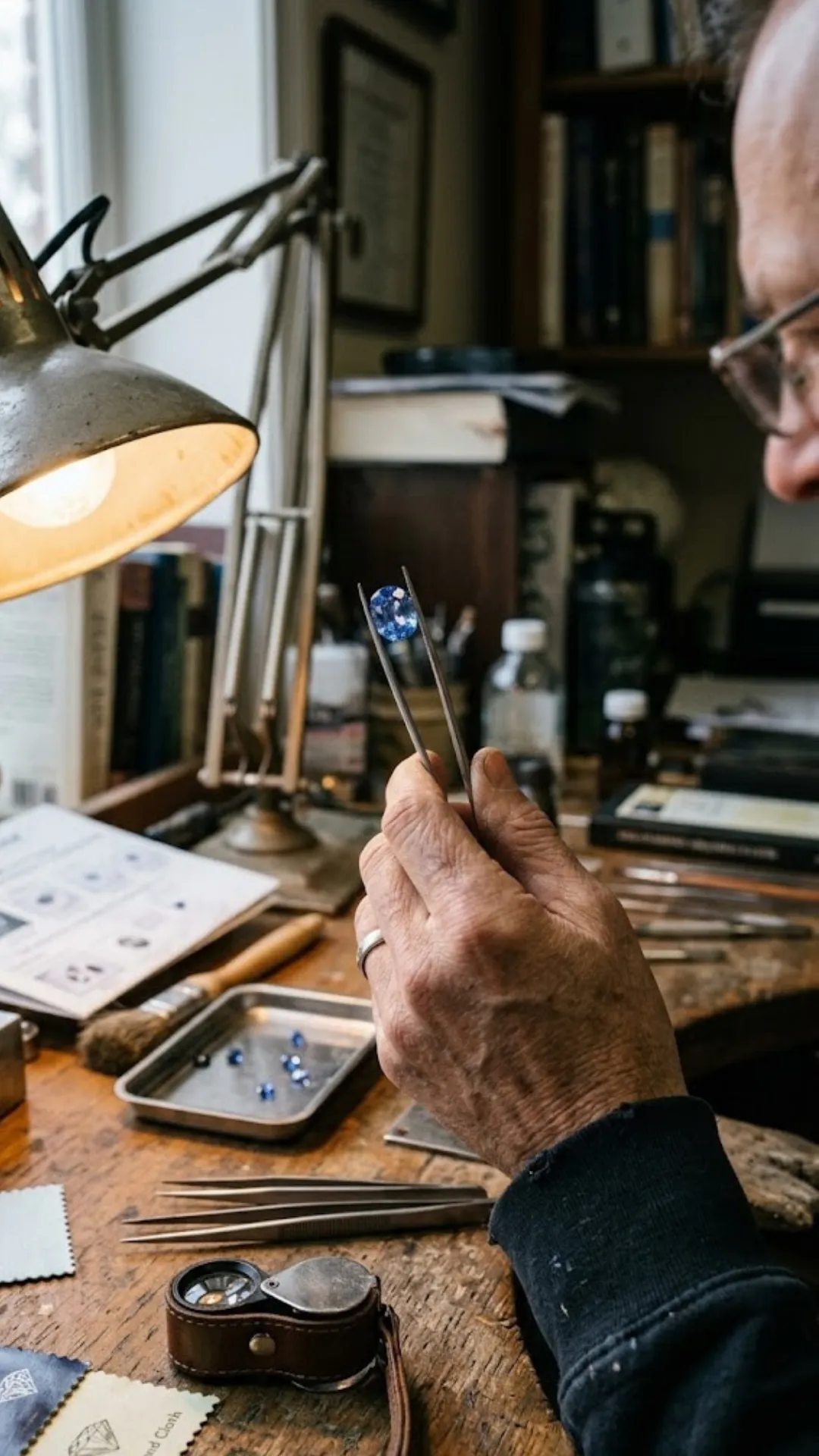
Sapphire belongs to a category of minerals called anisotropic, meaning light behaves differently depending on which direction it travels through the crystal. The result is a phenomenon called pleochroism, literally “many colored.” A single sapphire can show noticeably different shades of its color depending on the angle you view it from, not because the stone is inconsistent, but because that’s simply how light interacts with its internal structure.
Experienced cutters use this deliberately. Hold a rough sapphire between your eye and a light source and slowly rotate it a full 360 degrees, and you’ll notice the color shift through a pattern: a darker, more saturated phase, then a lighter phase roughly 90 degrees later, then dark again at the 180-degree mark, then light again, completing the cycle. This isn’t a flaw or inconsistency in the stone. It’s the reason a skilled cutter can take the exact same piece of rough material and, depending on how they orient the “table” (the flat top facet) relative to that pleochroic cycle, produce a noticeably more vivid or noticeably duller finished gem. Where the cutter places that table is, in a very real sense, where a stone’s final value gets decided.
Color Change Is a Different Phenomenon Entirely
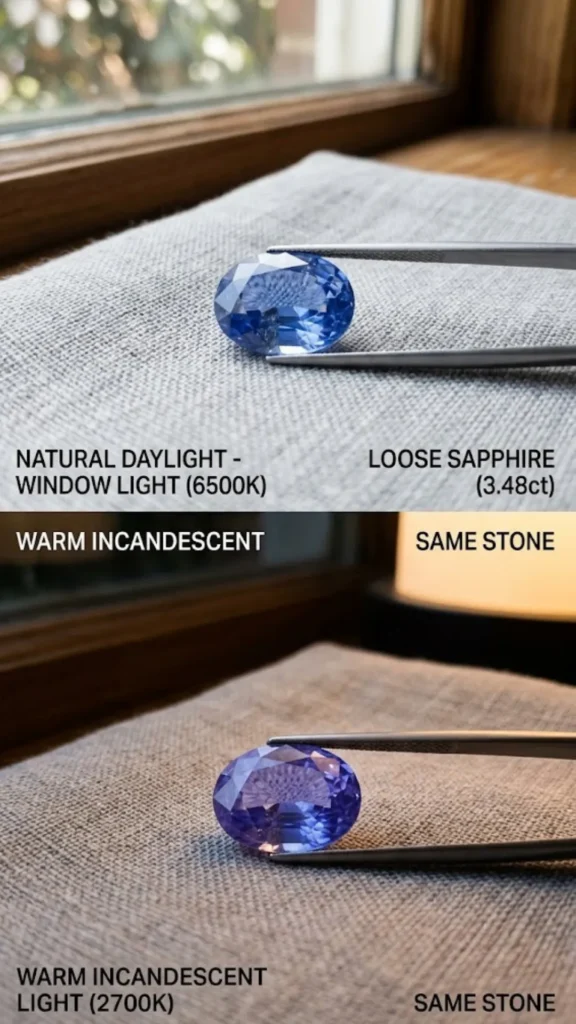
It’s worth not confusing pleochroism with color-change sapphire, which is rarer and works on a completely different mechanism. Pleochroism depends on the angle you’re viewing the stone from. Color change depends entirely on the light source itself.
A true color-change sapphire might show a convincing blue or green under natural daylight, then shift to a distinctly different hue, often purple or reddish, under incandescent or artificial light. These stones are genuinely rare, effectively behaving like two different gems depending on where you’re standing when you look at them, and collectors price them accordingly.
Ruby Is Just Sapphire Wearing a Different Name
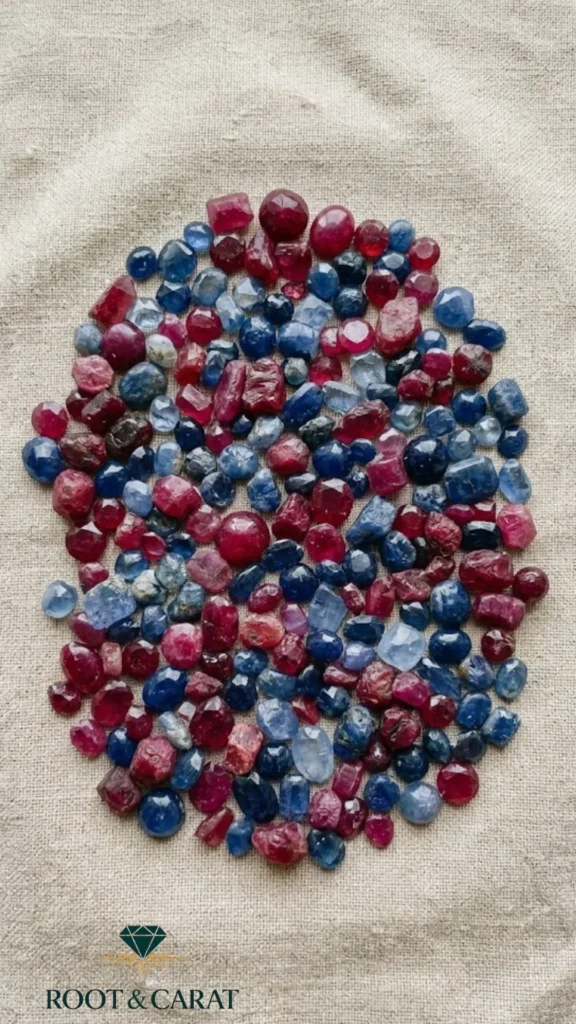
Here’s something that surprises even people who think they know gemstones well: the corundum family includes eight primary colors, the seven colors of the rainbow plus white. Every single one of them is technically called a sapphire, with exactly one exception. Red gets pulled out and given its own name: ruby.
That’s the entire distinction. A white sapphire and a “royal red” ruby are the same mineral, separated by nothing more than the presence of chromium. The word “ruby” isn’t a different gem category. It’s a prestigious title reserved for the red variety, nothing more.
What Rough Sapphire Actually Looks Like Before Cutting
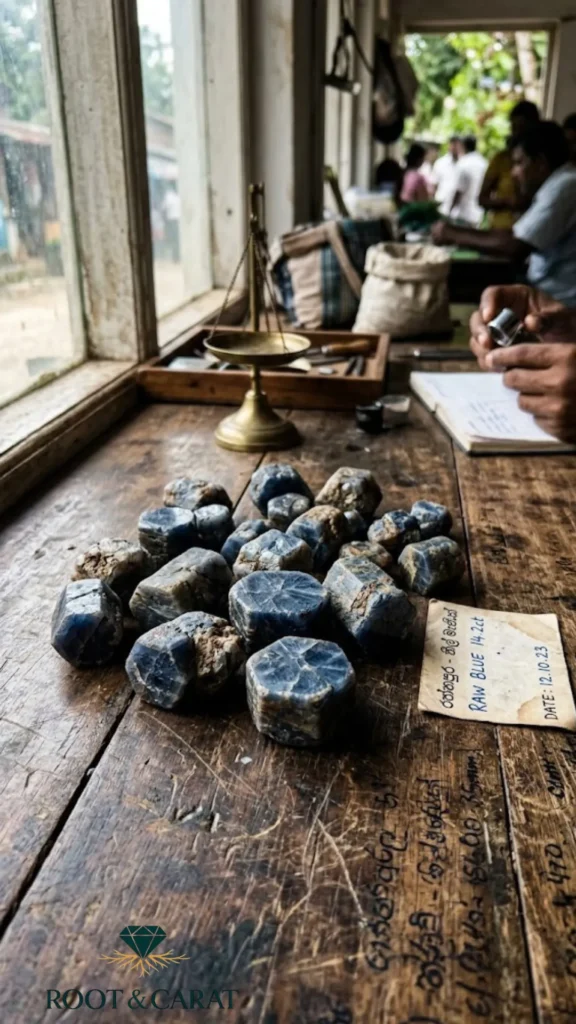
Before a stone is faceted and polished, it exists in a specific natural geometry that gem-producing regions like Sri Lanka and Madagascar consistently yield. Rough corundum tends to follow a strict hexagonal structure, meaning that even in unsorted rough lots, you can often make out six distinct sides on an individual crystal.
Left to grow naturally, a sapphire crystal frequently forms what’s known as a double cone, essentially two cone shapes joined together at their base. Sometimes nature goes further and produces twin crystals, where two separate crystals fuse directly onto each other, creating a more complex, multifaceted rough shape that a cutter has to work around rather than through.
The Trade’s Secret Language: Naming Colors by Feel, Not Just Hue
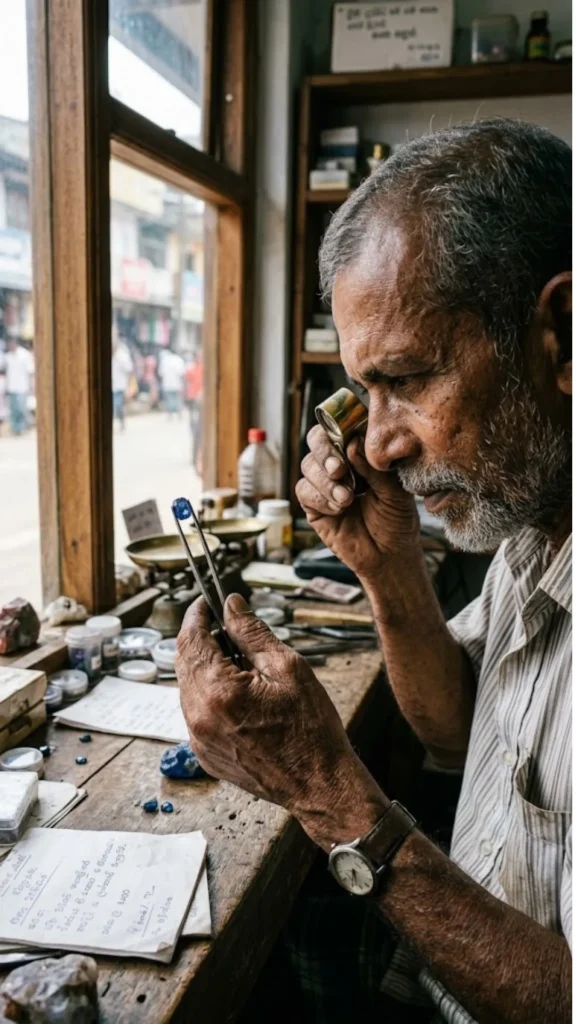
Once you spend real time in the gem trade, you learn that professionals rarely describe color the way a paint swatch would. Instead, the industry uses evocative, almost poetic names that communicate intensity and character in a single phrase, and these aren’t marketing gimmicks. They’re the working vocabulary of the trade.
Pigeon’s Blood and Royal Red describe the absolute peak of intensity in ruby, the most saturated, most desirable red a stone can show.
Royal Blue, Cornflower Blue, and Velvet Blue sit at the top of the sapphire color hierarchy, with Peacock Blue and Neon Blue describing specific, highly saturated variations within that range.
Padmaraja (sometimes written Padparadscha) names the rare pinkish-orange sapphire whose color has no exact equivalent elsewhere in the gem world, a legendary term in the trade precisely because true examples are so uncommon.
Mekong Whiskey describes a distinct golden-brown sapphire, named, appropriately, after the spirit it resembles.
Beyond these headline terms, the market also uses names like Fuchsia, Teal Light, Indigo, Golden Yellow, and Olive Green to pin down exact tones that a simple color name like “pink” or “blue” wouldn’t capture precisely enough for trade purposes.
Why This Matters If You’re Buying
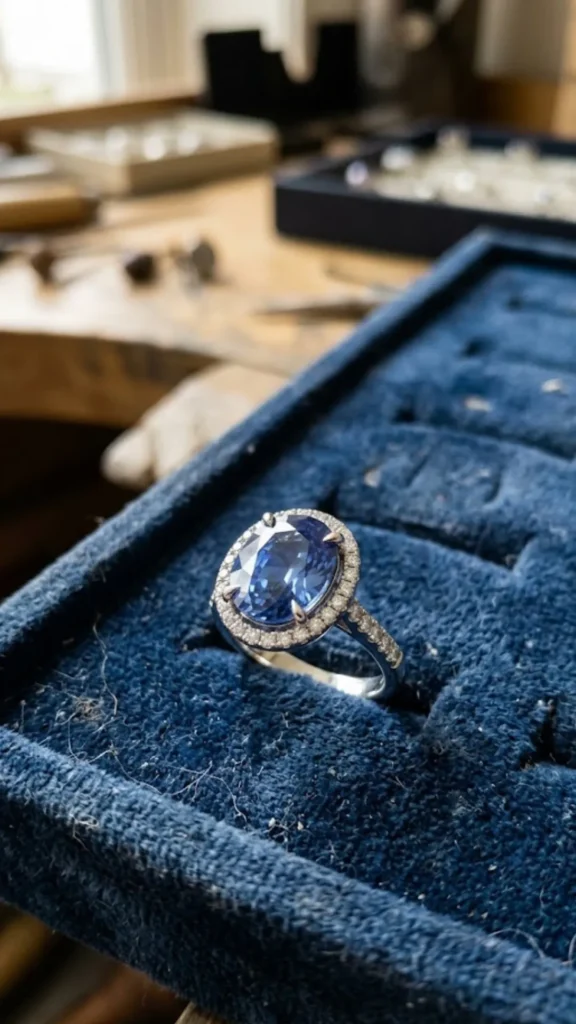
None of this is trivia for its own sake. Understanding pleochroism explains why two sapphires that look identical in a photo can look completely different in person depending on how they’re angled toward the light. Understanding the trade’s naming language means when a seller describes a stone as “Royal Blue” or “Pigeon’s Blood,” you know that’s not flowery sales language, it’s a specific, recognized grade within the trade. And understanding rough crystal geometry explains why cutting decisions matter as much as the raw material a stone started as.
Gemology, at its core, isn’t just a science. It’s the art of understanding a stone’s full 360-degree story rather than the single angle most people happen to glance at.