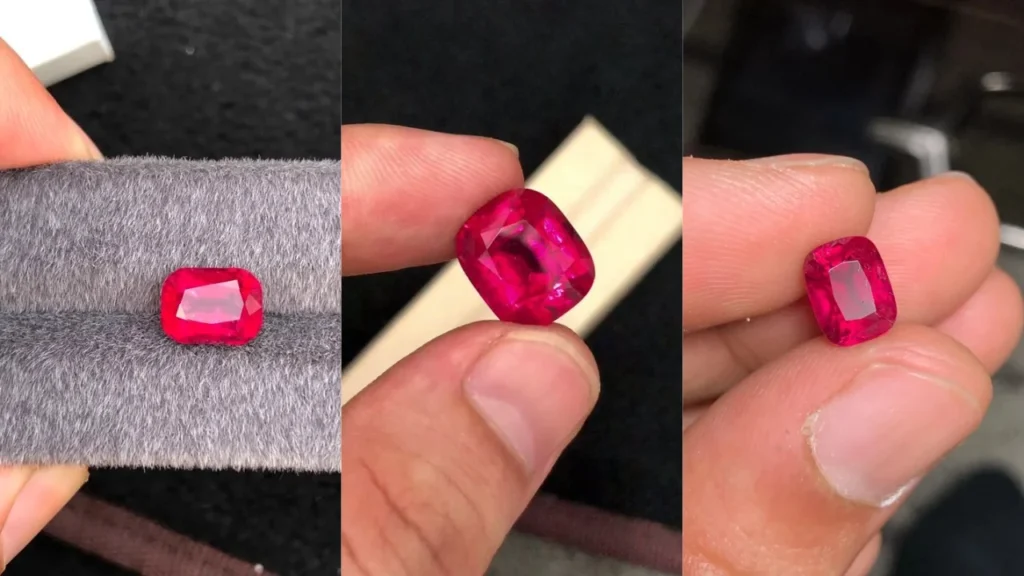
Red tourmaline is sold under the trade name rubellite. The best stones are a vivid, medium-to-dark red or pinkish red without brown tones. Expect inclusions, ask about treatment because irradiation is common, and avoid ultrasonic cleaners. With a hardness of 7 to 7.5, rubellite suits most jewelry.
Table of Contents
What is red tourmaline?
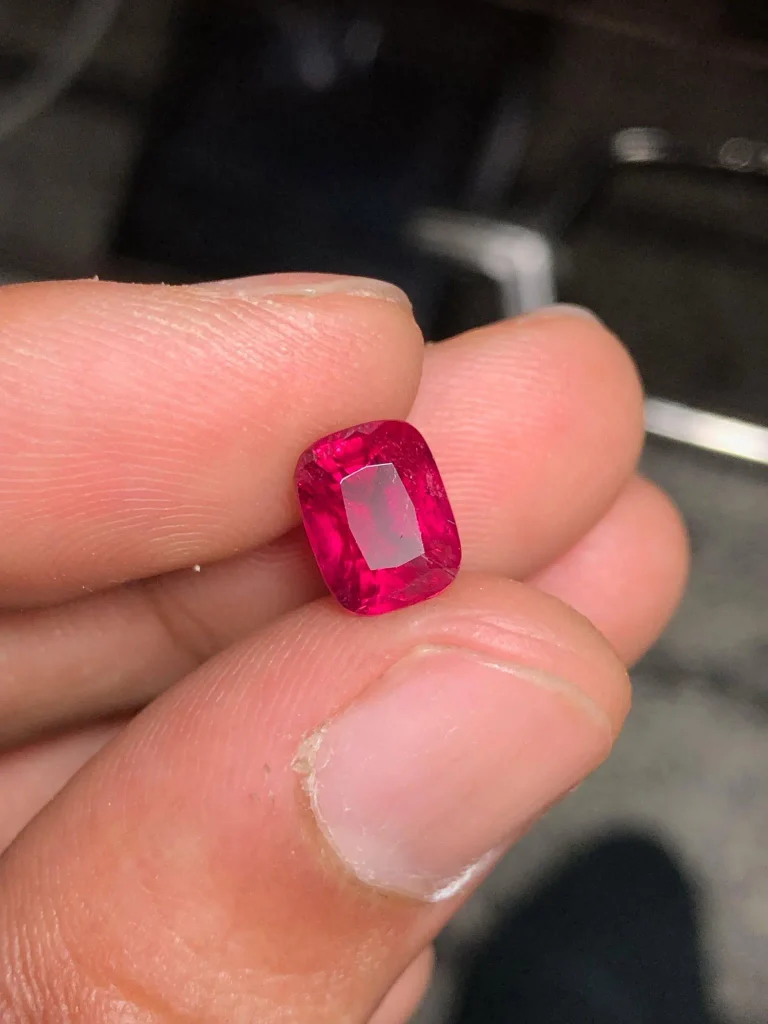
Red tourmaline is sold under the trade name rubellite. GIA describes rubellite as a name for pink, red, purplish red, orangy red, or brownish red tourmaline, and adds that some in the trade argue the term shouldn’t apply to pink stones.
Most gem tourmalines, rubellite included, are elbaite, a species that forms in granite pegmatites. Trace manganese creates rubellite’s natural dark pink to red color, according to the International Gem Society. The name comes from the Latin rubellus, meaning reddish, and Wikipedia dates the term to 1794.
Rubellite vs pink tourmaline
Where red ends and pink begins is a trade debate, not a scientific line. The International Gem Society describes rubellites as tourmalines with reasonably saturated dark pink to red colors and medium to dark tones, and says light pink stones labelled rubellite are more properly pink tourmaline. CaratX, a gem marketplace, goes further and treats rubellite as a premium trade term for vivid stones.
| Pink tourmaline | Rubellite | |
|---|---|---|
| Color | Light to medium pinks | Dark pink to red, medium to dark tone |
| What the name means | A color variety | A trade name, not a scientific one |
| Where sources disagree | Whether light pink stones can be sold as rubellite | Whether the name covers pink at all |
One test circulates widely: a true rubellite keeps its color under daylight and warm light, while lesser pink-to-red tourmalines turn brownish indoors. CaratX and the International Colored Gemstone Association, as quoted by Crystal Vaults, describe it that way. The International Gem Society, though, lists a color shift to peach in incandescent light among rubellite’s properties. Sources don’t fully agree, so view any stone under both daylight and warm light before you buy.
How to judge red tourmaline color
Color is the main value factor. The International Gem Society calls deep pinkish red to slightly purplish red the most desirable colors, says ruby-red stones without orange or brown overtones are highly prized, and says brownish tones decrease a stone’s value considerably.
Origin can shape color. The same source says recent African deposits have yielded cleaner rough that often shows brown tinges and rarely approaches the ruby-like red of older Brazilian stones. Wikipedia adds that rubellite was once the most prized tourmaline but has since been eclipsed by Paraíba tourmaline.
Tourmaline is pleochroic, so color changes with viewing direction. The International Gem Society lists medium pink, light pink, or colorless as rubellite’s pleochroic colors, and CaratX says cutters orient the stone to get the best color.
Clarity and cut
Clarity. The International Gem Society says rubellites are typically Type III gems, so they almost always contain inclusions. Common ones are hollow tubes, needles, and thread-like liquid or gas inclusions, and needles can create a cat’s-eye effect. Collectors and buyers value untreated, eye-clean or better stones most highly.
Cut. CaratX says cutters often choose long rectangles or ovals to preserve weight from naturally elongated crystals. The International Gem Society notes that most Brazilian rubellites receive native cuts and that custom cuts add value. It also has advice that dark rubellite can look very black in an emerald cut, in its emerald-cutting article.
Are red tourmalines treated?
Often, yes. The International Gem Society says irradiation, now a common treatment, can produce stable red tones in otherwise pale pink stones. Because the treatment is undetectable, it advises assuming all rubellites are treated, even though individual stones may not be. CaratX calls the treatment generally stable and accepted, and says reputable sellers should disclose it.
Highly included stones sometimes get fracture fillings similar to those used on emerald. Ask the seller whether the stone is irradiated or filled, and get the answer in writing.
For higher-priced stones, ask for an independent lab report. Keep in mind that CaratX says a lab will identify the stone as tourmaline and describe its color, because rubellite is a trade designation. Our guide to certification and authenticity explains what those reports cover.
Is red tourmaline durable enough for jewelry?
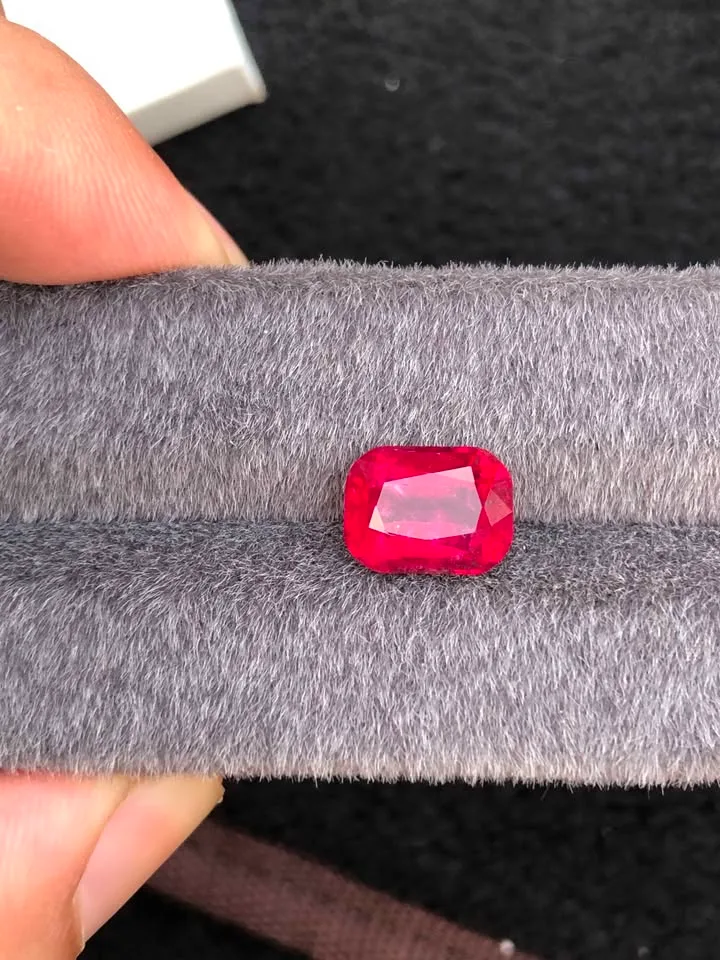
The International Gem Society lists rubellite hardness at 7 to 7.5 with no cleavage, and calls it a good stone for any type of jewelry. It advises avoiding rough handling and using protective settings for heavily included stones.
Inclusions and fillers can make some stones sensitive to heat, so skip ultrasonic and steam cleaners. Use a soft brush, mild detergent, and warm water.
Where red tourmaline comes from
The International Gem Society names Afghanistan, Brazil, Madagascar, Myanmar, Nigeria, Russia, and the United States as notable sources. In the US, Maine’s tourmaline, the state mineral, includes shades of red, according to the Maine Geological Survey. Our Maine tourmaline guide covers its history.
What affects the price
Five things move the price: color (vivid pinkish red without brown is worth more), clarity (untreated, eye-clean stones are valued most), size (CaratX says fine rubellite is rare above 5 to 10 carats), treatment, and cut. The International Gem Society publishes per-carat price data for rubellite, but it is members-only, so this guide quotes no figures. Compare several current listings that match on color, size, clarity, and treatment, and see our gemstone buying guides for how to compare them.
Red tourmaline meaning
In crystal-healing tradition, red tourmaline is linked with the heart and root chakras, passion, and vitality. These associations come from metaphysical belief, not gemology. This guide doesn’t treat them as proven and makes no health claims. GIA and the International Gem Society both call tourmaline an October birthstone. For more on stones and symbolism, see our gemstone meanings and zodiac section.
Red tourmaline buying checklist
- View the stone under daylight and warm light, and from more than one angle.
- Look for brown or gray tones, which lower value.
- Check inclusions: is the stone eye-clean, or do inclusions dull it?
- Ask whether it is irradiated, heated, or fracture-filled.
- Check the cut: is the color even, and is it not too dark to show?
- Ask for a lab report on higher-priced stones, and check the return policy.
FAQ
What is red tourmaline called?
Red tourmaline is usually sold under the trade name rubellite. GIA describes rubellite as a name for pink, red, purplish red, orangy red, or brownish red tourmaline, though some in the trade argue the term shouldn’t apply to pink stones.
Is red tourmaline good for jewelry?
Yes. The International Gem Society lists rubellite hardness at 7 to 7.5 with no cleavage and calls it a good stone for any type of jewelry, though it advises protective settings for heavily included stones and no ultrasonic or steam cleaning.
What does red tourmaline mean?
In crystal-healing tradition, red tourmaline is linked with the heart and root chakras, passion, and vitality. These associations come from metaphysical belief, not gemology, and this guide does not treat them as proven.