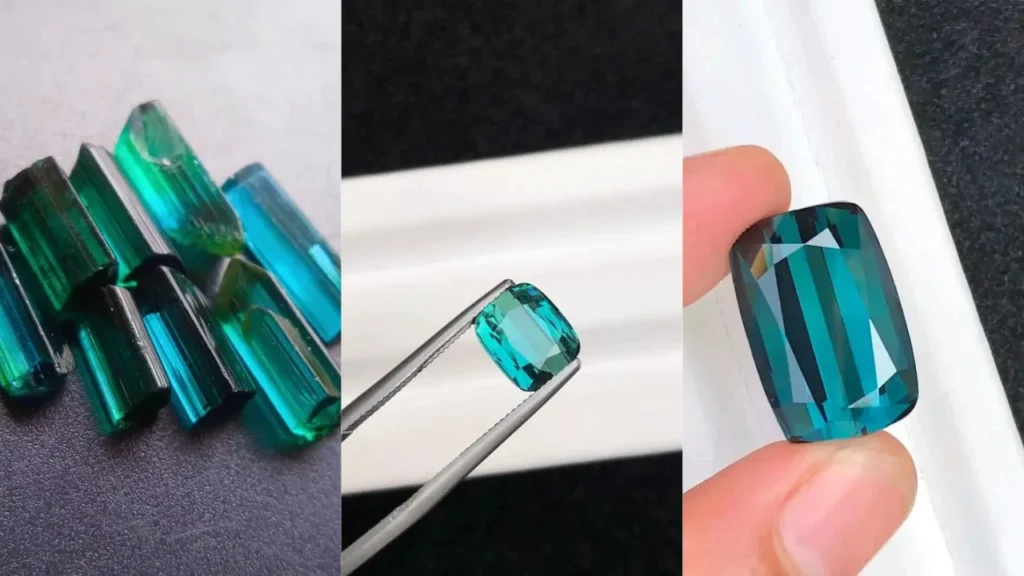
Indicolite is the trade name for blue tourmaline. It is a color variety of tourmaline, not a separate mineral, and most stones carry some green, so ask a seller whether blue or green dominates. Check color and treatment first, then clarity and cut. With a hardness of 7 to 7.5, indicolite suits everyday jewelry when the stone is clean.
Table of Contents
What is indicolite tourmaline?
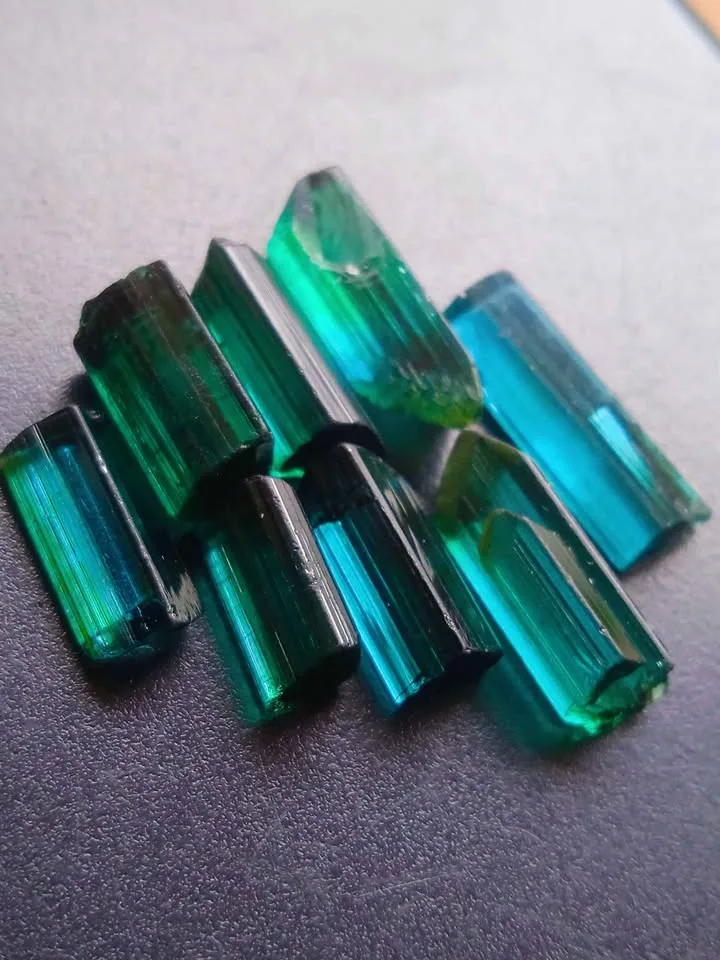
Indicolite is the name the gem trade gives to tourmaline in the blue color range. It isn’t a separate mineral. Gem dealers describe it as a color variety of elbaite, the most common gem-quality tourmaline species, and Gem Rock Auctions notes it is also spelled indigolite.
The color runs from cool, steely blues to deep, inky blues, often with a slight green cast. StarLanka, a gem dealer, describes the range as teal-leaning blues through deep ink tones.
How blue is blue? Indicolite vs verdelite
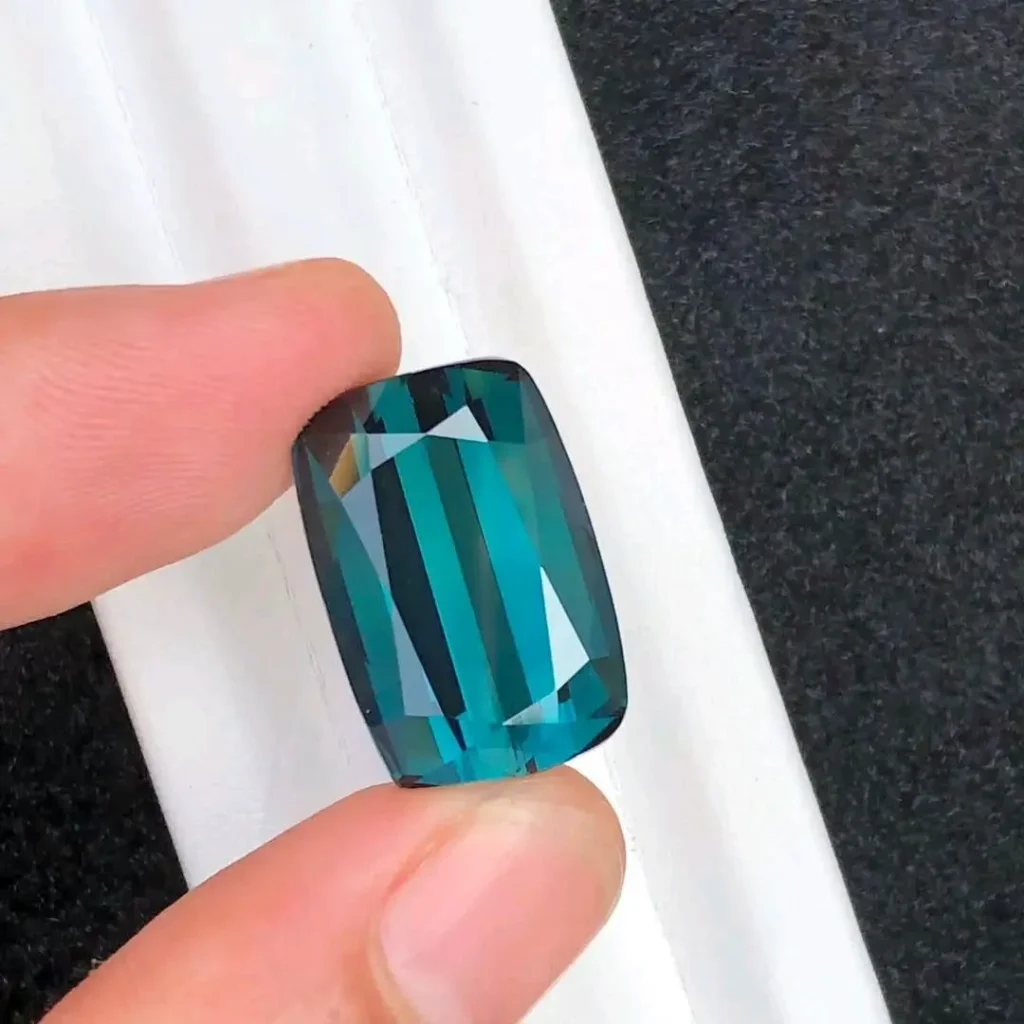
Most indolites have some green in them. That makes the boundary with green tourmaline a judgment call, and sellers don’t all draw it in the same place.
One gemologist at the International Gem Society calls a blue-green stone a blue tourmaline when blue dominates and a verdelite, or green tourmaline, when green dominates. Blue generally brings more money than green, so some sellers label blue-green stones indicolite even when the green is stronger.
Labeling can stretch further. StarLanka’s indicolite collection page also lists bi-color and red tourmaline, where a blue zone sits against another color in the same crystal. So the name tells you less than the stone’s face-up color does.
Retailer guides attribute indicolite’s blue to iron in the elbaite crystal structure. For the green side of the family, see our green tourmaline guide.
| Indicolite | Verdelite | Paraíba tourmaline | |
|---|---|---|---|
| Dominant color | Blue, often with some green | Green | Neon blue, blue-green, or violet |
| What the sources say about color cause | Iron, according to retailer guides | Not covered by the sources I read | Copper |
| Notes | Blue brings more money than green | Where green dominates a blue-green stone | The top color among blue tourmalines |
Indicolite vs Paraíba tourmaline
Paraíba tourmaline is the other famous blue tourmaline. The International Gem Society says it has the top color of all blue tourmalines, with copper-bearing stones that can show a neon blue. Read more in the Society’s Paraíba tourmaline article.
Gem Rock Auctions adds that Paraíba is defined by its copper content, not its location. It is named for Paraíba, Brazil, where it was found in the 1980s, but other countries have since produced it. The same source says indicolite’s color comes from iron and that Paraíba costs far more.
How to judge indicolite quality
Color. Weigh tone and saturation first. According to StarLanka, lighter stones read brighter and livelier, while darker stones carry more presence but return less light. Gem Rock Auctions says pure blue stones are the most valuable, and that the color needs to be light enough to show sparkle and transparency.
Pleochroism and cut. Tourmaline is strongly pleochroic: it shows two different depths of color depending on the direction you view it. That is why cutters orient indicolite crystals with care, and why the cut decides the face-up color. Emerald, oval, and cushion cuts are common, and Gem Rock Auctions says round or checkerboard cuts suit highly saturated, larger material.
Clarity. Gem Rock Auctions places indicolite in the Type 2 clarity group, so the best stones are eye-clean and most others have a few inclusions. It lists color zoning and thin liquid and gas inclusions among the common ones. Stones with flaws or low clarity may be weaker.
Indicolite treatments: ask before you buy
The International Gem Society says most tourmalines receive heat treatment, which can remove or lighten green tones. Gem Rock Auctions says most blue tourmaline sold today is heated, irradiated, or both, and that heavily included stones are sometimes fracture-filled with resin or oil. StarLanka says many stones are untreated and advises checking each stone.
Sources disagree on how common treatment is, so don’t assume either way. The Rare Gemstone Company also notes that irradiation and oiling occur in tourmaline. Ask whether the stone has been heated, irradiated, or fracture-filled, and get the answer in writing. For higher-priced stones, ask for an independent lab report. Our guide to certification and authenticity explains what those reports cover.
Watch the name, too. Gem Rock Auctions says Brazilian indicolite is sometimes sold as Brazilian sapphire. Sapphire is a different gemstone, so treat that label as a red flag. Our sapphire section covers the real thing.
If blue gems that are routinely treated interest you, see our guides to blue zircon and tanzanite.
Is indicolite durable enough for rings and earrings?
The International Gem Society lists tourmaline hardness at 7 to 7.5 with no cleavage, which gives good durability. Stones with flaws or low clarity may be weaker, so check inclusions before you buy a ring.
Care is simple. Gem Rock Auctions recommends lukewarm water, mild soap, and a soft toothbrush, then a rinse and a dry with a soft cloth. It also says tourmalines are sensitive to extreme heat and sudden temperature changes, and that fracture-filled stones should stay away from ultrasonic and steam cleaners and harsh chemicals.
Where indicolite comes from
Gem Rock Auctions says the best gem material comes from Brazil and Sri Lanka, and lists Afghanistan, Madagascar, Mexico, Mozambique, Namibia, Nigeria, Pakistan, Russia, and the USA (California and Maine) as other sources. Maine is where tourmaline is the state mineral, and our Maine tourmaline guide covers its history.
What affects the price?
Five things move the price: how blue the stone is (blue-dominant stones bring more than green-dominant ones), clarity, cut, size, and whether it is treated. Retailer price ranges for indicolite disagree widely, so this guide doesn’t quote a per-carat figure. Compare several current listings that match on color, size, clarity, and treatment, and see our gemstone buying guides for how to compare them.
Indicolite meaning
Metaphysical sources link indicolite with inspiration, open-mindedness, and empathy, and with the throat chakra. These associations come from belief and tradition, not gemology. This guide doesn’t treat them as proven and makes no health claims for the stone.
Indicolite buying checklist
- Ask which color dominates face up, blue or green.
- Check the tone: not so dark that the stone loses light.
- View it under more than one light and from more than one angle, because of pleochroism.
- Ask whether it is heated, irradiated, or fracture-filled.
- Check clarity: eye-clean, or minor inclusions that don’t dull the stone.
- Ask for a lab report on higher-priced stones, and question names like Brazilian sapphire.
FAQ
What is indicolite tourmaline?
Indicolite is the trade name for tourmaline in the blue color range. Gem dealers describe it as a color variety of the elbaite species, not a separate mineral. The color runs from steely blue to deep inky blue, and most stones show some green.
Is indicolite the same as blue tourmaline?
Generally, yes. Indicolite is the trade name for blue tourmaline. One International Gem Society gemologist calls a blue-green stone a blue tourmaline when blue dominates, and a verdelite, or green tourmaline, when green dominates.
Is indicolite tourmaline good for a ring?
The International Gem Society lists tourmaline hardness at 7 to 7.5 with no cleavage, which gives good durability, though stones with flaws or low clarity may be weaker. Ask whether the stone is treated, since sources disagree on how common treatment is.