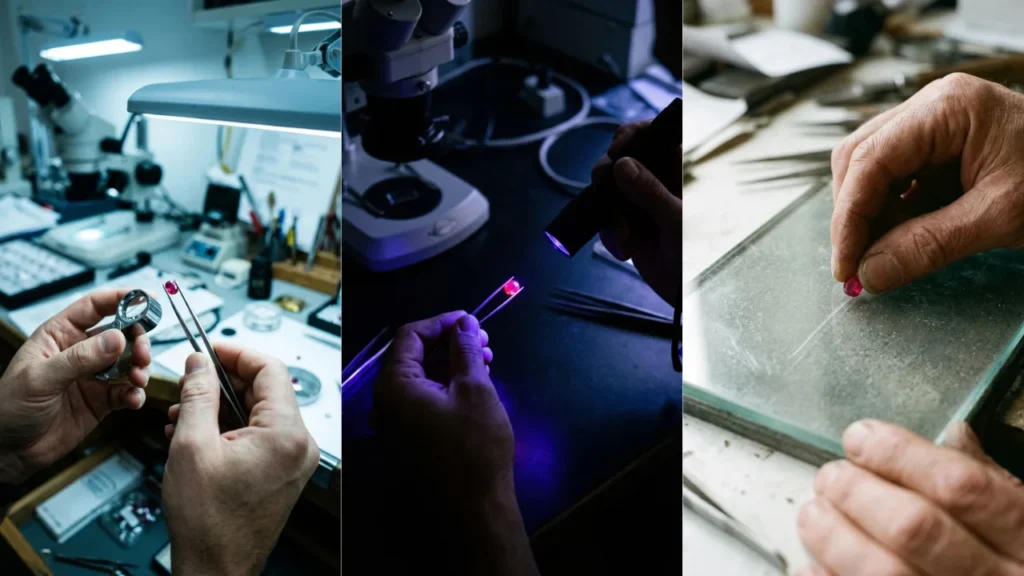
A real ruby is genuine corundum colored by chromium, but “real” actually covers four different categories: natural, treated, lab-grown, and imitation, and only a gemological lab can reliably sort them apart. Home tests like hardness and UV light can rule out obvious fakes, but none of them can distinguish a natural ruby from a lab-grown one, since both are chemically identical corundum.
This is your TLDR paragraph summarizing the article.
- Test 1: The Hardness Check (and Its Real Limit)
- Test 2:Inclusions Under Magnification
- Test 3: Color and Consistency
- Test 4: UV Light Fluorescence
- Test 5: Know What You’re Actually Looking At (Glass-Filled Ruby)
- Test 6: The Only Test That’s Actually Conclusive
- FAQ
What “Real Ruby” Actually Means
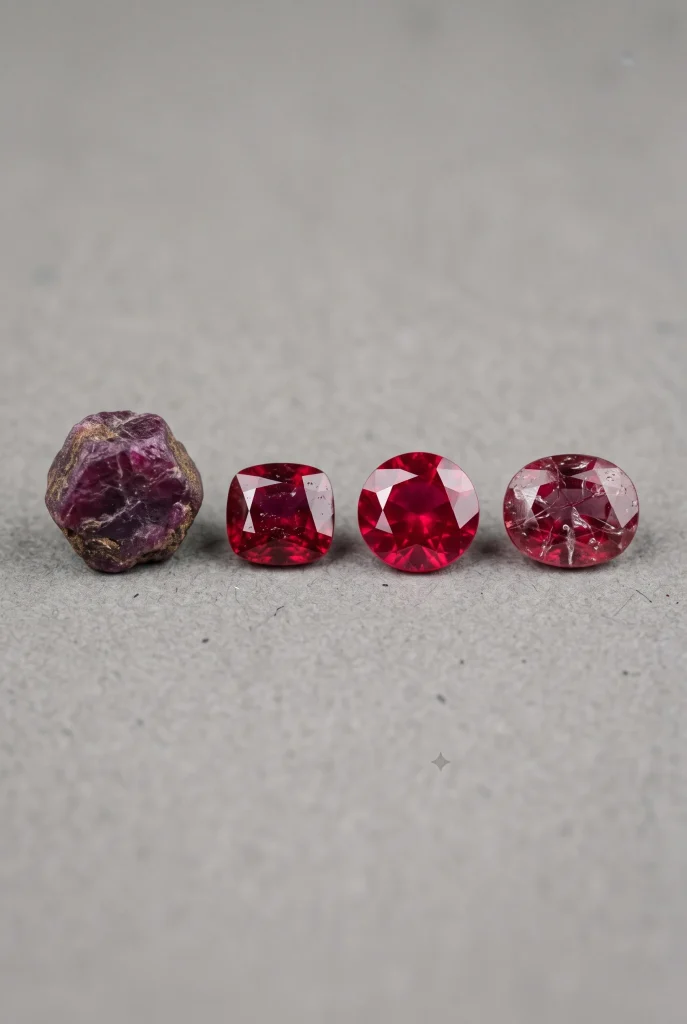
Most buyers think “real” means “not fake,” but the ruby trade splits authenticity into four categories, not two:
- Natural ruby — mined corundum, chromium-colored, may or may not be heat-treated (the vast majority are)
- Lab-grown (synthetic) ruby — identical chemical composition and hardness to natural ruby, grown in a controlled setting rather than mined
- Glass-filled or composite ruby — natural ruby fragments with fractures filled by lead glass, or fused with glass/synthetic material entirely
- Imitation — a different material altogether (glass, red spinel, other gems) with no genuine corundum content
A lab-grown ruby is not “fake” in the way an imitation is it’s real corundum. This distinction matters more than most guides make clear, and it’s the reason no single test below can answer “is it real” on its own.
| Feature | Natural | Lab-Grown | Glass-Filled | Imitation |
|---|---|---|---|---|
| Chemical composition | Corundum | Corundum (identical) | Corundum + glass fill | Not corundum |
| Hardness test | Passes (9 Mohs) | Passes (9 Mohs) | Passes on unfilled areas | Usually fails |
| Typical inclusions | Silk, fingerprints, fractures | Curved growth lines, bubbles | Visible glass bubbles in fractures | Gas bubbles, swirl marks |
| Relative value | Highest (varies by origin/treatment) | Low | Very low | Minimal to none |
Test 1: The Hardness Check (and Its Real Limit)
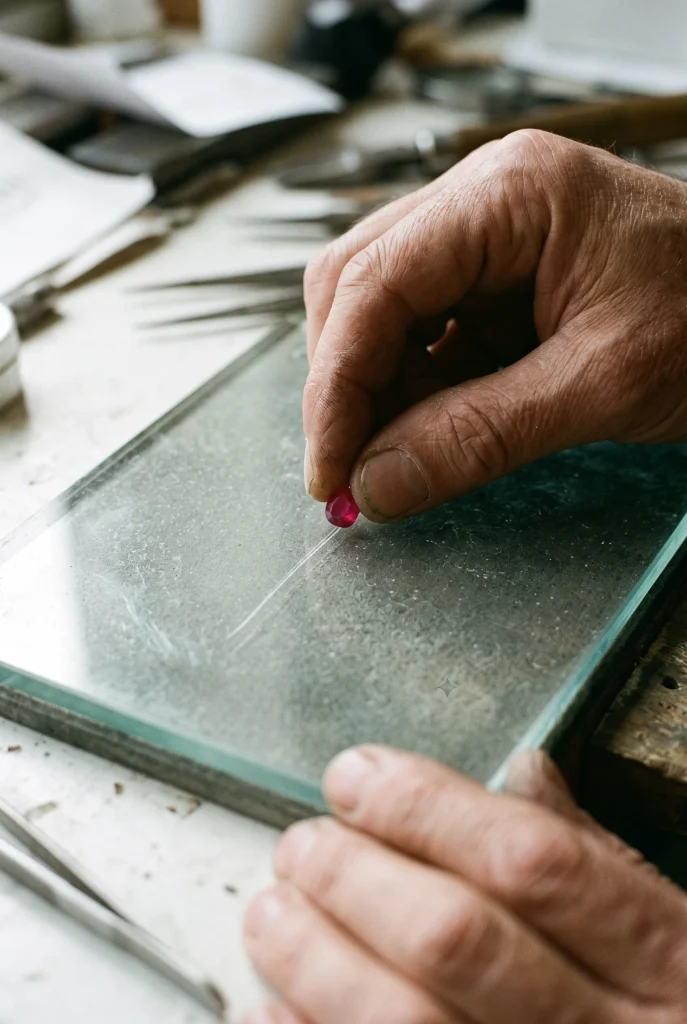
Ruby measures 9 on the Mohs hardness scale, second only to diamond. A genuine ruby will scratch glass and resist scratching from a steel point. What this test actually proves: the stone is probably corundum (ruby or sapphire), not glass or a soft imitation. What it can’t prove: whether that corundum is natural or lab-grown synthetic ruby has the identical hardness and will pass this test just as well. Don’t scratch the ruby itself with keys or coins to “test” it, as one popular guide suggests that risks damaging a genuine stone and tells you nothing reliable either way.
Test 2: Inclusions Under Magnification
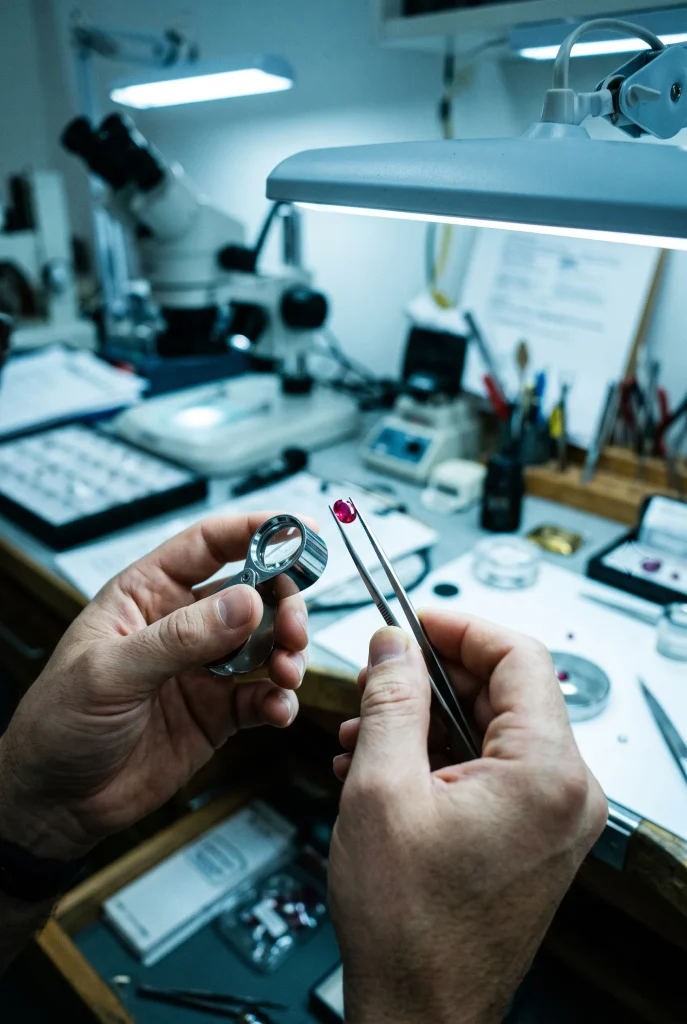
Natural rubies typically contain internal features formed during growth: rutile “silk” (fine needle-like inclusions), crystal inclusions, fingerprint-like patterns, and small fractures. A 10x jeweler’s loupe is the standard tool for this check. A stone that looks completely flawless under magnification is more likely synthetic, heavily treated or imitated natural inclusions are normal, not a defect. Lab-grown rubies often show different internal evidence instead: curved growth lines or gas bubbles, artifacts of the manufacturing process rather than natural formation.
Test 3: Color and Consistency
Natural ruby color tends to show subtle variation and secondary tones (purplish-red or orangish-red). An unnaturally uniform, neon-bright, or perfectly even red is a signal worth investigating further, though color alone, like hardness alone, isn’t conclusive proof of anything specific.
Test 4: UV Light Fluorescence
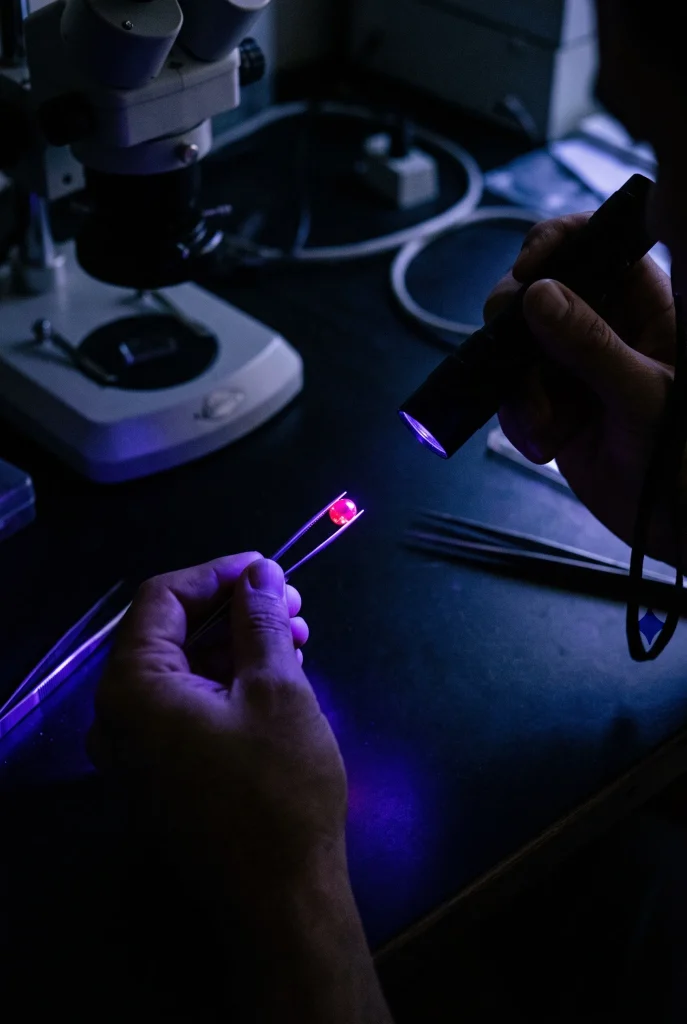
Many natural rubies fluoresce red or orange-red under UV light, with Burmese material typically showing the strongest reaction and Mozambican material a moderate one. Glass or composite imitations typically show no fluorescence or an unnatural yellow-green glow.
Test 5: Know What You’re Actually Looking At (Glass-Filled Ruby)
Lead glass-filled ruby is natural ruby with surface-reaching fractures filled with glass to improve clarity and appearance. It’s a real natural stone, but a heavily treated and significantly less valuable one and a very different thing from both untreated natural ruby and lab-grown ruby. Warning signs include an unusually glassy appearance, visible bubbles in fractures, and a price far below what the stone’s apparent size and color would otherwise suggest.
Test 6: The Only Test That’s Actually Conclusive
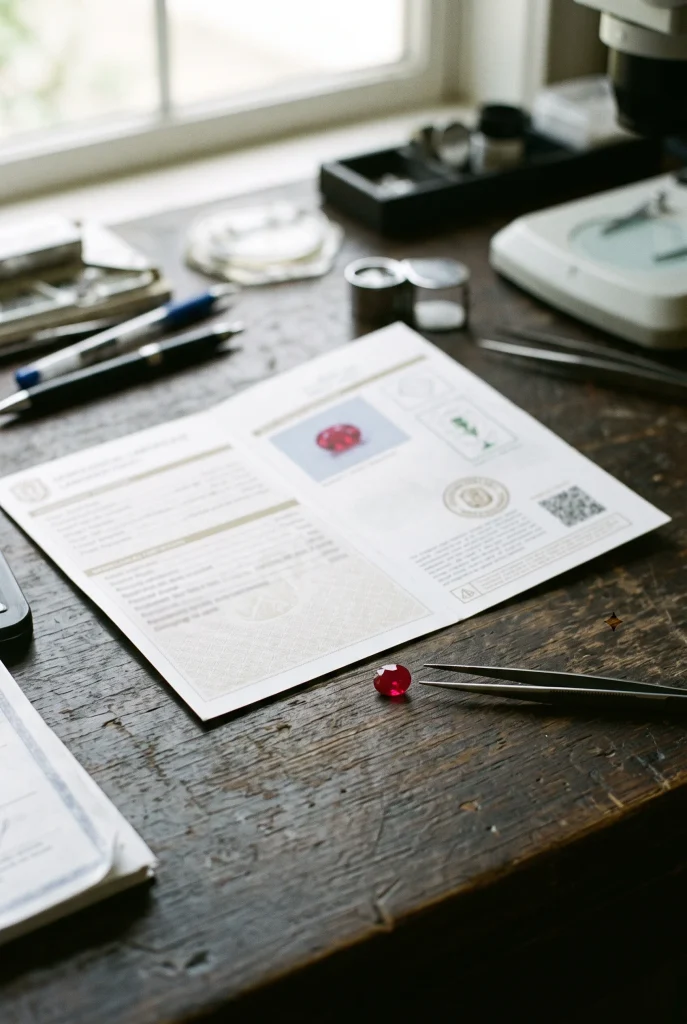
None of the tests above, alone or combined, can replace a report from an independent gemological laboratory. GIA, GRS, AGL, or SSEF are the names to look for. Lab testing can confirm natural vs. lab-grown origin, identify and disclose treatments, and in many cases determine likely geographic origin, which directly affects value. For any purchase beyond casual, low-cost jewelry, requesting this documentation is the only way to know for certain.
Before you buy, check off:
FAQ
Can a synthetic ruby be called a “real” ruby?
It’s genuine corundum with identical chemistry and hardness to natural ruby it’s real ruby material, just lab-grown rather than mined. Reputable sellers always disclose this.
Do real rubies always have inclusions?
Most do, since inclusions form naturally during growth. A completely flawless ruby is unusual enough to warrant closer examination, but exceptionally clean natural stones do exist, which is why this clue supports other tests rather than standing alone.
Can you tell if a ruby is real with a flashlight or UV light?
UV fluorescence can support an assessment but isn’t conclusive on its own treatment, origin, and even the specific UV wavelength used can all affect the result.
Is a heat-treated ruby fake?
No. Heat treatment is a standard, widely accepted industry practice that improves color and clarity in natural stones. A heat-treated ruby is still a natural ruby; it should simply be disclosed as treated.
Is a glass-filled ruby fake?
No, but it’s a heavily treated natural stone worth significantly less than an untreated one it’s a different category from both natural and lab-grown ruby.
What’s the best proof that a ruby is real?
A report from an independent gemological laboratory (GIA, GRS, AGL, or SSEF) is the only fully reliable confirmation of natural origin, treatment, and often geographic source.
🔬 Take Your Gemological Knowledge Further:
Identifying a genuine ruby is the crucial first step for any collector or buyer. Once authenticity is established, the stone’s geographical origin and precise color grading dictate its market prestige:
- Discover why specific origins command record-breaking premiums and learn how “Pigeon’s Blood” color is assessed in our Burmese Ruby Valuation Guide.