


Orange spinel is one of the rarest color varieties in the entire spinel family, a gem so convincing in its warmth that European royalty spent centuries mistaking it for ruby. Unlike most colored stones on the market today, it usually reaches you exactly as the earth made it: untreated, unheated, and unapologetically rare.
What Is Orange Spinel?
Orange spinel is a natural variety of the mineral spinel (magnesium aluminum oxide), prized for a warm, sunset-toned color that ranges from soft peachy orange to a vivid, almost glowing tangerine. It belongs to the same broader gem family as red and pink spinel, but orange is by far the scarcer of the three most gem-grade rough never produces a stone with a true, saturated orange color.
For most of gem history, spinel wasn’t recognized as its own species at all. Rubies and spinels were mined from the same gravels in Sri Lanka and Burma’s Mogok Valley, cut the same way, and worn in the same crowns. It wasn’t until the 18th century, when mineralogists could finally test chemical composition, that spinel was separated from corundum (the mineral family that includes ruby and sapphire). Several of history’s most famous “rubies,” including the Black Prince’s Ruby set in the British Imperial State Crown, turned out to be spinel all along.
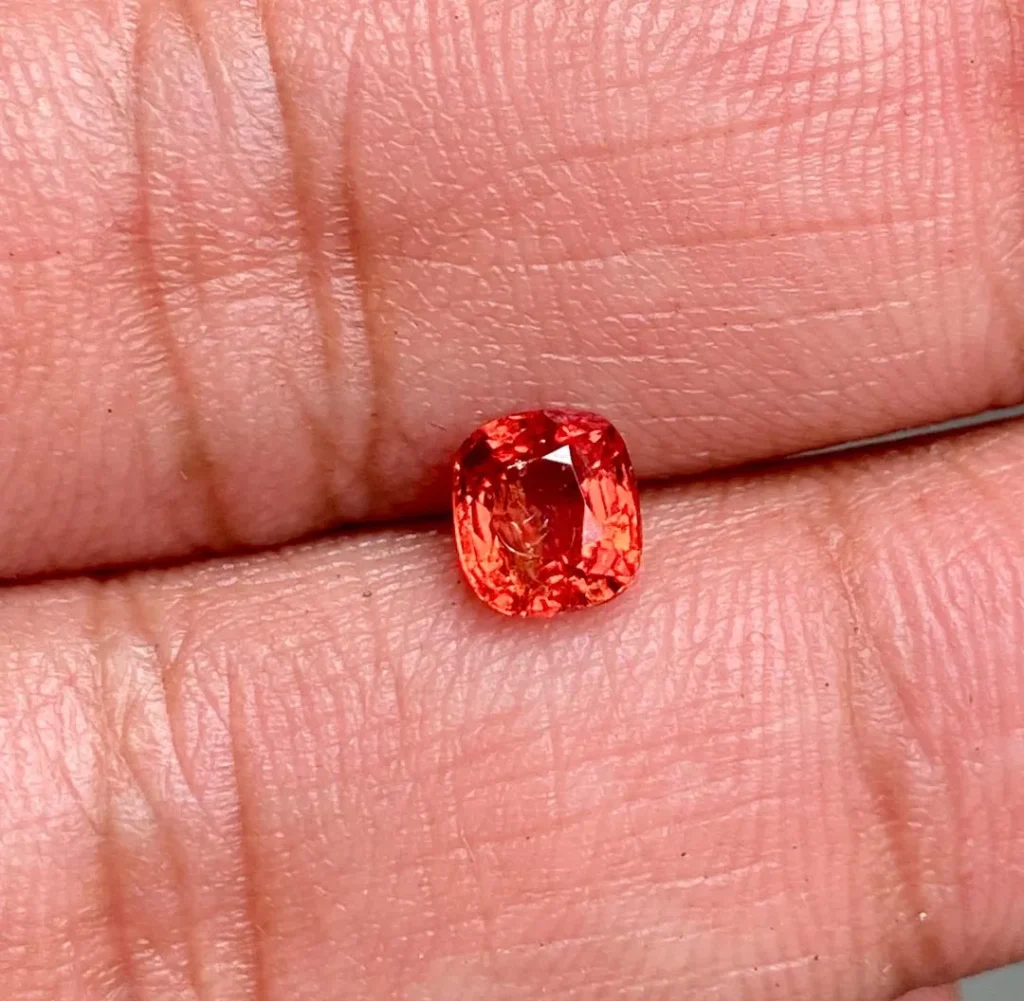
Why Is Spinel Orange? The Science of the Color
Spinel’s color comes down to trace elements trapped in its crystal structure during formation, mainly chromium and vanadium. When chromium dominates, the stone leans red. When vanadium content rises relative to chromium, the color shifts toward orange. It’s a delicate balance ,which is part of why fine orange spinel is so uncommon compared to red or pink material.
Because spinel forms in a cubic crystal system, it’s singly refractive, meaning light travels through it in one direction rather than splitting like it does in double-refractive stones such as sapphire. The result is a clean, even brilliance without the doubling of facet edges you sometimes see in other gems.
Where Orange Spinel Comes From
Spinel is found across a handful of gem-producing regions, and each source has its own character:
- Sri Lanka (Ceylon): Long known as one of the world’s great spinel sources, Sri Lanka produces spinel in an unusually wide color range — including orange — pulled from the same alluvial gravel deposits (illam) that yield the island’s sapphires. Miners traditionally sort this gem-bearing gravel by hand in woven baskets called vatti, washing away lighter sediment to reveal the heavier gem crystals, a technique passed down for generations around Ratnapura.
- Myanmar (Burma): The Mogok Stone Tract is widely regarded by gem dealers as the source of the finest red, pink, and orange spinel in the world, prized for saturated color and strong clarity.
- Tanzania: Deposits around Mahenge and Mahenge-adjacent regions produce orange and “neon” pink-orange spinel with a distinct vividness.
- Vietnam: The Luc Yen region yields spinel across the red-pink-purple-orange range, often with excellent transparency.
Because orange spinel is genuinely uncommon in gem-quality material regardless of origin, provenance alone doesn’t guarantee quality color saturation and clarity matter far more than country of origin when evaluating a stone.
Is Orange Spinel Treated?
One of orange spinel’s biggest selling points is that it’s typically sold untreated. Unlike sapphire and ruby, which are routinely heat-treated to improve color and clarity as an accepted industry standard, spinel generally reaches the market in its natural state. When treatment does occur, reputable dealers disclose it but a large share of the orange spinel in circulation is simply untouched, exactly as it formed underground. For collectors who care about natural origin, that’s a meaningful point of difference from most colored gemstones on the market.
Orange Spinel Durability: Can You Wear It Every Day?
Yes. Spinel rates 8 on the Mohs hardness scale, putting it well above quartz and close to sapphire’s. 9. That makes it genuinely suited to daily wear including engagement rings and other high-contact jewelry without the fragility concerns that rule out softer stones like opal or tanzanite for everyday use.
It also lacks cleavage, meaning it doesn’t have a weak internal plane that makes it prone to chipping along a specific direction, which is part of why lapidaries have always considered it a forgiving stone to cut and set.

What Determines the Value of Orange Spinel?
When evaluating or buying orange spinel, the same core factors that apply to any colored gemstone apply here, roughly in order of impact:
- Color saturation — Vivid, evenly distributed orange commands the highest prices. Overly pale or brownish tones are worth considerably less.
- Clarity — Because spinel typically isn’t treated, natural inclusions are common; eye-clean stones with good transparency are the most sought after.
- Carat weight — Large, fine-color orange spinel above 2–3 carats is genuinely rare, which affects price disproportionately compared to smaller stones.
- Cut quality — A well-proportioned cut maximizes the stone’s natural brilliance and can make color appear more saturated.
- Treatment status — Confirmed untreated stones, especially with lab certification, typically carry a premium over treated material.
How to Care for Orange Spinel
Spinel is low-maintenance compared to many colored gems. Warm water, mild soap, and a soft brush are usually enough to clean it. Ultrasonic and steam cleaners are generally safe given the stone’s hardness and lack of cleavage, but it’s worth checking with your jeweler first if the piece has other, more delicate stones set alongside it. Store it separately from softer gems to avoid surface scratching during storage.
Orange Spinel vs. Ruby: How to Tell Them Apart
Given their shared mining history, it’s worth noting how gemologists distinguish spinel from corundum today. Ruby is doubly refractive and typically shows pleochroism (appearing to shift shade slightly depending on viewing angle), while spinel’s single refraction means its color looks consistent from every angle. Spinel also has a slightly lower refractive index than ruby. In practice, this distinction is made with gemological instruments, not the naked eye, which is exactly why the two were confused for so long.
🌺 Explore Neon Gemstone Hues: Discover why gemologists consider Tanzanian neon spinels a benchmark for color saturation in our Mahenge Spinel Overview.

