
Black spinel is one of the more overlooked members of the spinel family, often mistaken for black onyx, black tourmaline, or black diamond. This guide covers what black spinel is, what causes its color, where it’s mined, and how to care for it.
What Are Black Spinels?
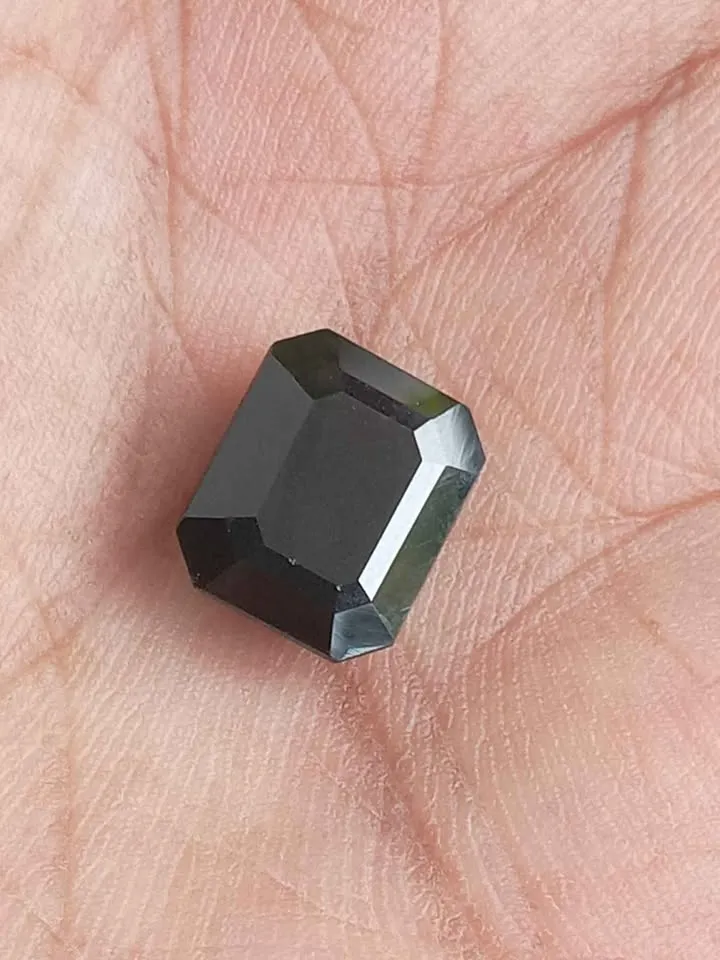
Black spinel is the opaque black variety of spinel, a magnesium aluminum oxide mineral (MgAl₂O₄) that forms its own gem species entirely separate from corundum, tourmaline, and diamond. Where most spinel is transparent to translucent in colors like red, pink, and blue, black spinel is fully opaque, giving it a dense, inky appearance rather than the sparkle typically associated with faceted gemstones.
Black spinel sits at 8 on the Mohs hardness scale, making it highly durable and well-suited to daily wear. It has no cleavage planes, which makes it resistant to chipping and ideal for a wide range of cutting styles, from brilliant and oval cuts to emerald-style step cuts and beads.
What Makes Black Spinel So Special?
Black spinel is genuinely uncommon compared to the red, pink, and blue varieties of spinel, which are more widely sourced and traded. It’s often grouped in jewelry with black onyx and black tourmaline, but the three are chemically distinct minerals that simply happen to share a similar color.
Spinel as a species carries a well-documented history of being mistaken for other gems. The mineralogist Jean-Baptiste Louis Romé de Lisle is credited with formally distinguishing spinel from ruby in 1783, ending centuries of confusion between the two most famously embodied by the Black Prince’s Ruby in the British Crown Jewels, a red gem later identified as spinel rather than true ruby. [Unverified: exact wording or context of Romé de Lisle’s original findings could not be confirmed in this research.] Black spinel shares that same underlying mineral identity, just in opaque black form.
How Is Black Spinel’s Color Created?
Black spinel crystallizes in the cubic system, typically forming octahedral crystals, a shape resembling two pyramids joined base to base, as magnesium, aluminum, and oxygen combine under the heat and pressure of metamorphic rock formation. During this process, trace amounts of iron are incorporated into the crystal lattice, and it’s this iron content, present in higher concentration than in other spinel colors, that produces the stone’s dense black appearance.
Why Is It Black?
The opaque black color comes down to iron content within the crystal structure. The elevated iron level also raises black spinel’s specific gravity and refractive index slightly above those of lighter-colored spinel varieties. Because black spinel is opaque rather than transparent, it doesn’t display the color-through-light effects seen in red or pink spinel its value instead comes from an even, deep black tone and a smooth, lustrous polish.
Where Is It Found?
- Myanmar (Burma) — one of the most established sources of fine spinel in multiple colours, including black
- Sri Lanka — a long-standing source of black spinel alongside the island’s other gem materials
- Thailand and Vietnam — established sources of black spinel in the commercial gem trade
- Tanzania — a modern source of spinel across its full colour range, including black material
Black spinel typically forms in metamorphic rock and is often recovered from alluvial deposits alongside other gemstones like ruby and sapphire, since these minerals frequently form in the same geological environments.
Famous Black Spinel Examples
Black spinel doesn’t carry the same documented history of named historical specimens as red spinel, which includes the Black Prince’s Ruby. One gem trade source cites the largest recorded cut black spinel of around 65 carats, though this specific figure could not be independently verified in this research.
Black Spinel Treatments
Black spinel is one of the more naturally marketed black gemstones on the market. Multiple gem trade sources describe it as not requiring treatment to achieve its color, a notable contrast to black onyx, which is routinely dyed to produce its uniform black appearance. Some spinel varieties overall are occasionally heat treated to improve color and clarity or fracture filled with resin, oil, or glass, but black spinel specifically is generally sold as natural and untreated. Buyers should still ask for treatment disclosure on any specific stone, since practices can vary by supplier.
Black Spinel Composites
Composite treatments are not a significant factor in black spinel. Because the material is opaque and typically untreated, it’s usually sold and cut as single-piece natural stone rather than assembled or layered material.
Do Black Spinel Synthetics Exist?
Yes. Synthetic spinel is produced commercially and has been for decades, including black synthetic material used in jewelry and as a simulant for other black gems. Under magnification, synthetic spinel typically shows curved striae and gas bubble inclusions, features that don’t occur in natural stones.
Black Spinel Simulants
Black spinel is most often confused with black onyx and black tourmaline (schorl), rather than deliberately imitated. Black onyx is a dyed chalcedony variety, identifiable in part by its slightly lower hardness and, in some cases, visible dye concentration along banding. Black tourmaline is softer than spinel, at 7–7.5 on the Mohs scale versus spinel’s 8. Standard gemological testing, hardness, specific gravity, and refractive index,reliably separate all three, since they are chemically unrelated minerals that simply share a color.
How to Care for Black Spinel
At 8 on the Mohs scale, black spinel is a durable stone well-suited to everyday wear, including rings, and its lack of cleavage planes makes it relatively resistant to chipping. Clean black spinel with warm, soapy water and a soft brush. Because it’s typically untreated, both ultrasonic and steam cleaning are generally considered safe, though it’s worth confirming a stone’s treatment history with the seller before using either method.
- “Whether you’re crafting custom rings or wire-wrapping beads, black spinel’s durability makes it ideal for daily wear. You can read more about setting and styling this stone in Cooksongold’s jeweler guide to black spinel.”
- Discover More Red Gemstones: Uncover the meaning, history, and styling tips in our Deep Red Garnet Overview.