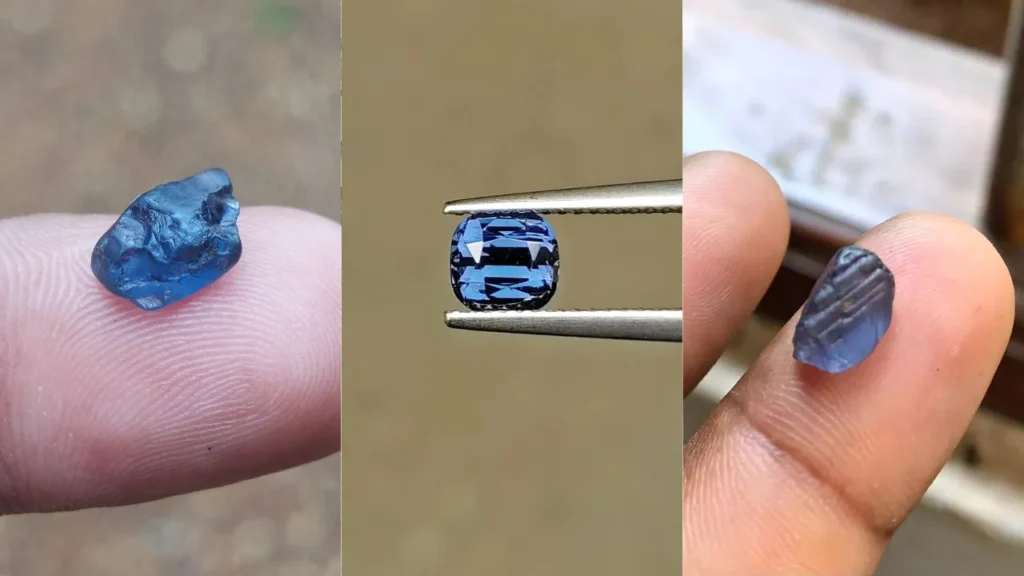
Blue spinel is one of the rarest and most valuable colors in the entire spinel family, owing its vivid hue to one of the least common coloring elements found in any gemstone. This guide covers what blue spinel is, what causes its color, where it’s mined, and how to care for it.
What Is Blue Spinel?
Blue spinel is a variety of spinel, a magnesium aluminum oxide mineral (MgAl₂O₄) that forms its own gemstone group entirely separate from sapphire, despite sharing a similar color. Spinel is an allochromatic gem, meaning pure spinel is colorless, and its wide range of colors comes entirely from trace elements incorporated into the crystal lattice during formation.
Blue spinel sits at 7.5–8 on the Mohs hardness scale, is singly refractive, and belongs to the cubic crystal system. GIA identifies vivid reds and cobalt blues as spinel’s most valued colors,a striking distinction for blue spinel given how rare true saturated blue material actually is.
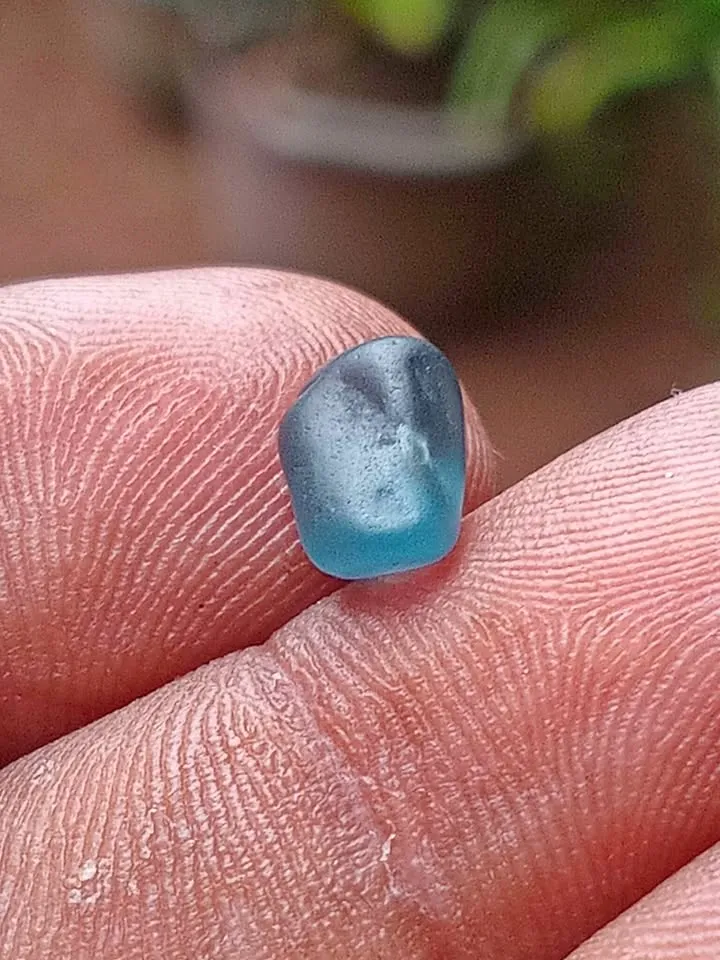
What Makes Blue Spinel So Special?
Blue spinel’s color mechanism was misunderstood for decades. Gemologists long believed iron was responsible for its blue color, working alongside cobalt. It wasn’t until research presented at GIA’s 2018 International Gemological Symposium that the picture became clearer: blue color in blue spinel is now understood to come entirely from cobalt, while iron instead contributes mostly gray and pink tones that can mute or modify the final hue.
Cobalt itself is present in blue spinel only in trace amounts, typically less than 0.1% cobalt oxide by weight, making genuinely vivid, saturated blue spinel one of the rarer colors in the entire gem kingdom. GIA notes that a richly saturated blue spinel is valuable and rare whether or not cobalt is specifically detected in testing, since the color itself is what the market prizes.
How Is Blue Spinel’s Color Created?
Blue spinel forms as magnesium, aluminum, and oxygen crystallize into octahedral crystals under intense metamorphism, often within marble deposits formed from ancient carbonate platforms subjected to repeated tectonic activity. During this process, cobalt ions substitute for magnesium ions within the crystal’s tetrahedral sites, a chemical swap that is directly responsible for blue spinel’s saturated color.
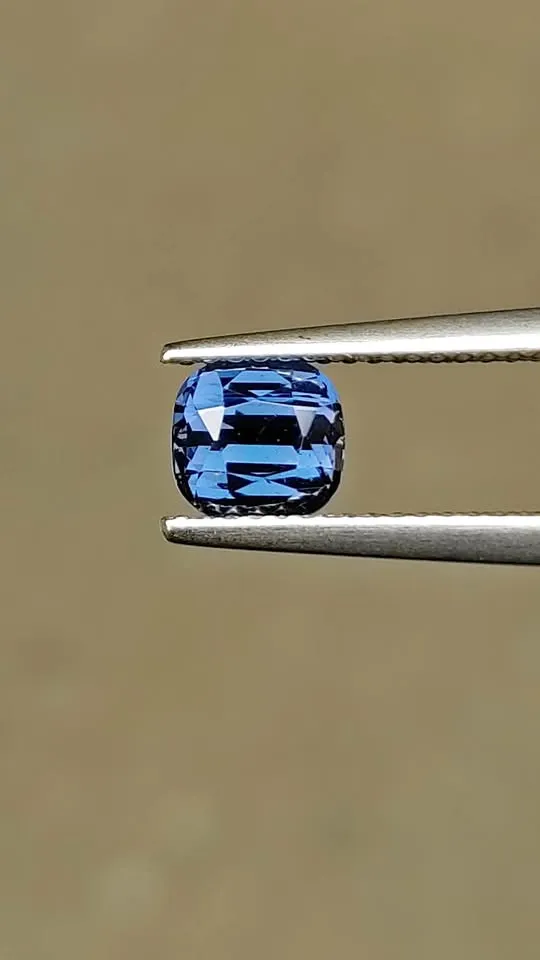
Why Is It Blue?
Cobalt (Co²⁺) is the primary and, according to more recent GIA research, sole cause of the true blue color in spinel, producing a distinctive absorption pattern across a band between roughly 500 and 670 nanometers. Iron, also commonly present in blue spinel, doesn’t itself produce blue instead it modifies the resulting color toward gray or pink, and it’s also the reason natural blue spinel typically shows a detectable magnetic response, a trait not shared by cobalt-free stones.
Where Is It Found?
- Vietnam — the Luc Yen district in the north of the country is described in GIA research as the leading source of vivid blue spinel, with the May Trung and Khe Khi localities producing intensely saturated but typically small material, rarely larger than 1 carat
- Sri Lanka — an established source of cobalt-colored blue spinel
- Tanzania — a modern source of blue spinel alongside the country’s other spinel colors
- Myanmar (Burma) — a historic source of fine spinel across multiple colors, including blue
Famous Blue Spinel Examples
Blue spinel doesn’t carry the same documented history of famous named crown-jewel specimens as red spinel, since fine cobalt-blue material has only been well understood and actively sought after in relatively recent gemological history. A rare and unusual blue “gahnospinel” — a zinc-bearing relative of standard spinel — colored predominantly by cobalt was documented by GIA’s Bangkok laboratory as a notable recent research example, though this specific 1.01-carat stone is a laboratory research specimen rather than a famous historical piece.
Blue Spinel Treatments
Transparent gem spinel overall is rarely treated, but blue spinel is a notable exception within the family. While most spinel colors reach the market untreated, cobalt diffusion treatment of blue spinel to improve color has been reported in the trade in recent years, alongside occasional heat treatment used to improve clarity in pink and red spinel. Treatment remains uncommon even in blue material, but buyers should specifically ask about cobalt diffusion when purchasing blue spinel, since it’s a documented practice that doesn’t apply to most other spinel colors.
Blue Spinel Composites
Composite treatments are not a standard practice for blue spinel; where enhancement occurs, it takes the form of diffusion rather than assembled or layered material.
Do Blue Spinel Synthetics Exist?
Yes. Synthetic cobalt-blue spinel has been produced commercially since at least the mid-20th century via both flame-fusion and flux growth processes, and is one of the more challenging synthetic spinels to distinguish from natural material using color and refractive index alone. GIA research has found that an iron-related absorption band around 460 nanometers appears reliably in natural blue spinel but not in flame-fusion synthetics, making spectroscopic testing — rather than visual inspection,the dependable way to confirm origin.
Blue Spinel Simulants
Because blue spinel closely resembles blue sapphire in color, and both minerals can occur in overlapping deposits, laboratory testing, refractive index, specific gravity, and inclusion analysis,is the reliable ways to tell them apart rather than color alone. Blue spinel’s single refraction and generally lower refractive index (around 1.72–1.74) versus sapphire’s double refraction (around 1.76–1.78) is one of the clearest distinguishing tests available to gemologists.
How to Care for Blue Spinel
At 7.5–8 on the Mohs scale, blue spinel is a durable stone well-suited to daily wear, including rings, and its lack of cleavage makes it relatively resistant to chipping. Clean blue spinel with warm, soapy water and a soft brush. Because most blue spinel is untreated, ultrasonic and steam cleaning are generally considered safe, though it’s worth confirming whether a specific stone has been cobalt diffused before using either method, since treated stones may require gentler care.
- “For a detailed overview of mining locations, optical characteristics, and gemological care, refer to GemSelect’s resource on blue spinel gems.”
- “While amethyst is the most famous purple gem, purple spinel offers superior durability (8 on the Mohs scale) and brilliant single refractivity for daily wear. Learn more in our complete guide to purple spinel.”