
Purple spinel is one of the rarer color varieties in the spinel family, prized for a violet hue that gemologists are still actively researching to fully explain. This guide covers what purple spinel is, what causes its color, where it’s mined, and how to care for it.
What Is Purple Spinel?
Purple spinel is a variety of spinel, a magnesium aluminum oxide mineral (MgAl₂O₄) that forms its own gemstone group entirely separate from ruby and sapphire, which are both corundum. Pure spinel is colorless; the wide range of spinel colors comes from trace transition metals substituting into the crystal structure, making it what gemologists call an allochromatic gem.
Purple spinel sits at 8 on the Mohs hardness scale, is singly refractive, and typically shows a high refractive index around 1.72, contributing to strong brilliance in well-cut stones. Like other spinel varieties, it has no cleavage, making it resistant to chipping.
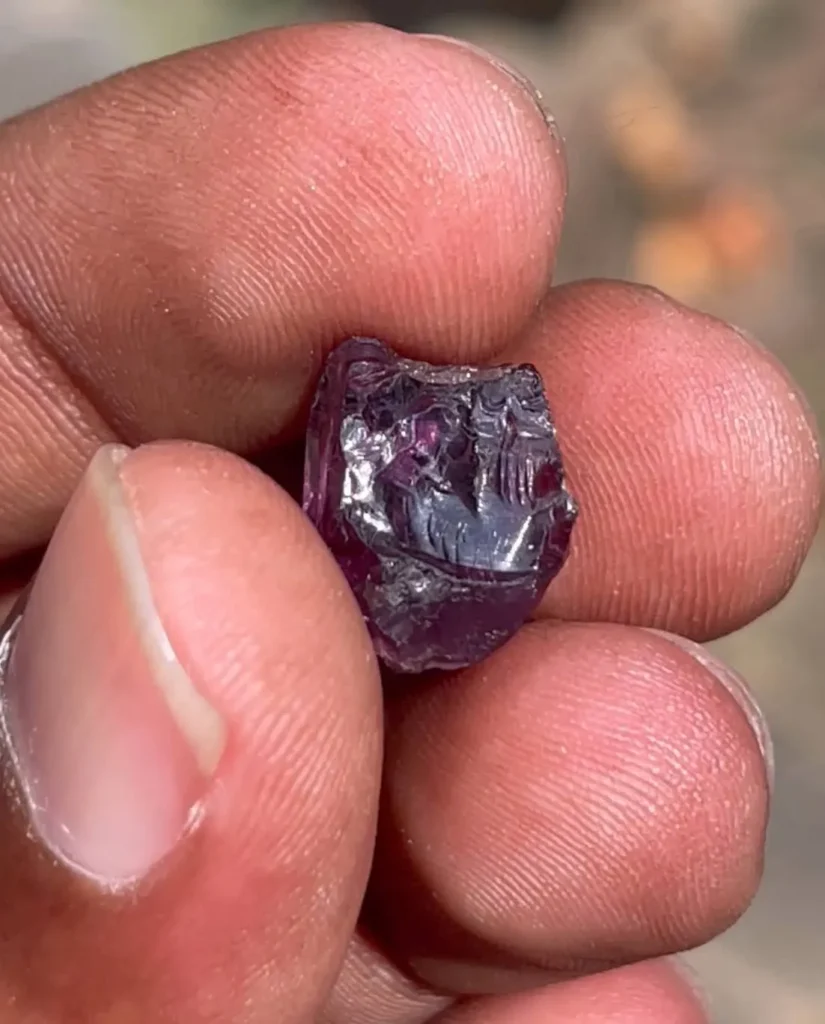
What Makes Purple Spinel So Special?
Spinel as a species spent centuries mistaken for ruby and sapphire, since the minerals often form in the same deposits and can look remarkably similar. It wasn’t until 1783 that spinel was formally identified as a separate mineral from corundum. Purple spinel, however, carries a more specific distinction: gemologists describe its color origin as genuinely complex, and research into exactly what produces it is still ongoing.
A 2021 study published in GIA’s Gems & Gemology journal compared purple spinel from Vietnam and Afghanistan and found the two owed their color to entirely different trace-element combinations,a level of chemical variation unusual enough to make purple spinel a subject of active gemological research rather than a settled case.
How Is Purple Spinel’s Color Created?
Purple spinel forms as magnesium, aluminum, and oxygen crystallize into octahedral crystals under the heat and pressure of metamorphic rock, or occasionally within igneous environments. During formation, trace transition metals — chiefly iron, chromium, cobalt, and vanadium — substitute into the crystal lattice in varying combinations, and it’s the specific mix and ratio of these elements that determines whether a resulting spinel reads as red, blue, pink, or purple.
Why Is It Purple?
Here the research gets genuinely interesting, and sources don’t fully agree. One line of research (Zhao, 2023, cited by gemstonemagnetism.com) attributes purple and violet spinel color primarily to iron, rather than a mixing of chromium-derived red with cobalt-derived blue. But GIA’s 2021 study found a different story in different stones: a Vietnamese purple spinel sample was colored primarily by a rare combination of cobalt and chromium together, unlike anything previously documented in natural spinel, while a comparison sample from Afghanistan was colored by iron alone with almost no other trace elements present.
The practical takeaway for buyers is that purple spinel’s exact color origin can vary meaningfully depending on where the stone was mined, even when two stones look similar to the eye. [Unverified: the broader consensus on purple spinel’s dominant chromophore is still evolving, and I couldn’t confirm a single settled answer across sources.]
Where Is It Found?
- Vietnam — the Luc Yen district, including the Khao Ka placer deposit, is a documented source of cobalt-chromium purple spinel
- Afghanistan — a historic source of iron-colored purple spinel
- Myanmar (Burma) and Tanzania (Mahenge) — both established sources of spinel across a wide color range, including purple and violetish-purple material
- Sri Lanka — an established source of spinel in multiple colors, including purple
Famous Purple Spinel Examples
A notable 13.52-carat violetish purple spinel from the Dr. Edward J. Gübelin Collection has been featured in GIA’s published research on spinel color as an example of how multiple chromophores can blend to produce fine purple material. Beyond this example, purple spinel does not carry the same documented history of famous named historical specimens as red spinel, since spinel only gained recognition as a distinct gem species in the late 18th century and purple material specifically has drawn serious gemological attention only in recent decades.
Purple Spinel Treatments
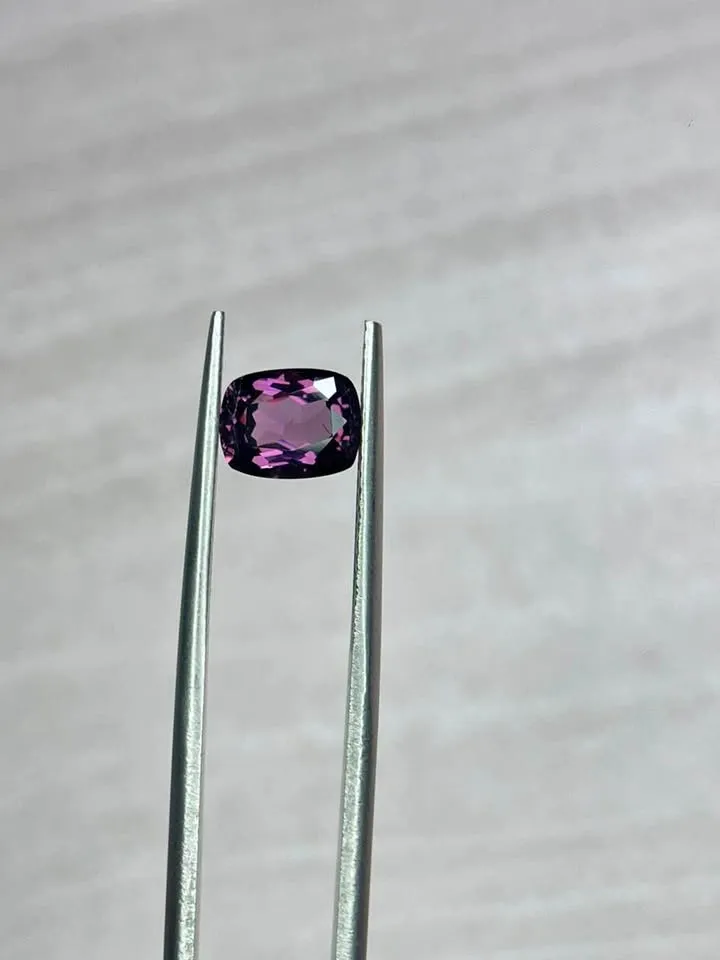
Purple spinel is one of the more naturally marketed gemstones on the market. Spinel generally is described across multiple gem trade sources as requiring no special treatment — its color and clarity are considered naturally attractive enough that heat treatment or other enhancement isn’t commercially necessary. Buyers should still ask for treatment disclosure on any specific stone, since practices can vary by supplier.
Purple Spinel Composites
Composite treatments are not a notable factor in purple spinel; the material sold in the trade is typically natural, single-piece stone.
Do Purple Spinel Synthetics Exist?
Yes. Synthetic spinel is produced commercially across a range of colors and has been for decades, including purple and blue synthetic material, most commonly made using the flame-fusion (Verneuil) process. Synthetic spinel typically shows curved striae and gas bubble inclusions under magnification, features that don’t occur in natural stones.
Purple Spinel Simulants
Purple spinel can be confused with amethyst, purple sapphire, and other violet-toned gems at a glance. Refractive index and specific gravity testing reliably separate purple spinel from these look-alikes, since spinel’s single refraction and specific gravity around 3.6–4.1 differ measurably from double-refractive stones like sapphire and amethyst.
How to Care for Purple Spinel
At 8 on the Mohs scale, purple spinel is a durable stone well-suited to daily wear, including rings, and its lack of cleavage makes it relatively resistant to chipping. Clean purple spinel with warm, soapy water and a soft brush. Because it’s typically untreated, both ultrasonic and steam cleaning are generally considered safe, though it’s worth confirming a stone’s treatment history with the seller first.
“Beyond its physical durability, purple spinel is traditionally associated with emotional balance and mental clarity. You can review Raza Gems’ guide to the 10 benefits of purple spinel for a detailed look at its metaphysical properties.”
“While purple spinel offers a cool, regal alternative to classic gems, pink spinel remains one of the most sought-after varieties in the spinel family. Read our full breakdown on pink spinel value, origins, and characteristics.”