
Blue zircon is a naturally occurring gemstone with a brilliance and fire that rivals diamond and one of the most commonly misunderstood stones in jewelry, thanks to its name being confused with the entirely unrelated lab-created diamond simulant, cubic zirconia. Zircon is a genuine, ancient mineral in its own right, and blue zircon in particular has a stranger, more scientifically debated origin story than most gems on the market.
What Is Blue Zircon?
Blue zircon is a color variety of zircon, a zirconium silicate mineral (ZrSiO₄), and one of the oldest minerals on Earth. Zircon crystals from Australia have been dated to over 4.4 billion years old. It’s worth stating clearly upfront: zircon and cubic zirconia are not the same thing. Cubic zirconia is a lab-created diamond simulant with a different chemical composition (zirconium dioxide), invented in the 1970s specifically to imitate diamond cheaply. Zircon is a natural gemstone that’s been mined and worn for centuries, long before cubic zirconia existed, and the naming similarity is simply an unfortunate coincidence that trips up a lot of buyers.
Blue zircon became especially fashionable in Art Deco jewelry of the 1920s and 1930s, when dealers marketed heat-treated Cambodian material under the trade name “Starlite.”
Why Is Zircon Blue? The Science of the Color
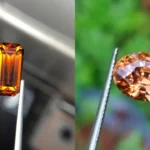
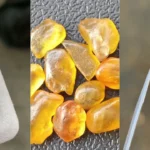
This is where blue zircon gets genuinely unusual: there is no confirmed evidence of naturally occurring blue zircon. Virtually all blue zircon on the market today starts out as brownish or reddish-brown rough, which is then heat-treated in an oxygen-free (reducing) atmosphere at roughly 900–1,000°C to produce the blue color. Depending on treatment conditions, this can also yield golden, colorless, or other shades from the same starting material.
What’s notable is that the exact chemical mechanism behind this color change is still debated among gemologists and mineralogists. Current research points to a valence change in trace elements occurring during heating, but it isn’t yet fully settled science. Only rough from a handful of specific localities responds reliably to this treatment; visually similar brown zircon from many other parts of the world simply won’t turn blue no matter how it’s heated, which is part of why one region in particular has become so central to the blue zircon trade.
Separately from color, zircon is prized for its optical performance: its refractive index (1.81–2.02) is the highest of any gemstone in common use, giving it fire and brilliance that genuinely rivals diamond which is exactly why colorless zircon was one of the most popular diamond substitutes for decades before cubic zirconia and synthetic moissanite took over that role.

Where Blue Zircon Comes From
- Cambodia (Ratanakiri Province): The world’s primary source of zircon rough capable of turning a fine, vivid blue under heat treatment. The deposits sit within volcanic debris fields roughly 700,000 to 2 million years old in the country’s northeastern corner near the Laos and Vietnam borders. Despite persistent trade folklore linking blue zircon to ancient Angkor Wat, there’s no historical evidence supporting that story ,the Ratanakiri source and its heat-treatment process weren’t documented until the 20th century.
- Sri Lanka: A major source of gem-quality zircon in various colors, generally recovered as waterworn pebbles from alluvial gravel deposits around Ratnapura. Dark, radiation-damaged (metamict) green zircon from Sri Lanka can also be heat-treated to a lighter blue, though the resulting color and starting material differ from Cambodia’s classic vivid blue.
- Myanmar, Thailand, and Vietnam: All produce zircon rough, with some material from these regions also responding to heat treatment for blue color, though Ratanakiri remains the benchmark source in the trade.
- Madagascar, Tanzania, and Australia: Additional producers of gem-quality zircon in various colors, contributing to the broader global supply.
Is Blue Zircon Treated?
Yes, essentially always. Unlike gems where treatment is one option among several, heat treatment is how blue zircon color is created in the first place there’s no meaningful natural/untreated blue zircon market to speak of. This isn’t a red flag or a quality concern; it’s simply the accepted, disclosed, standard practice for this specific gem, and has been since at least the early 20th century. Reputable dealers will describe a stone as heat-treated as a matter of course rather than something to hide.
Trade classifications for heat-treated blue zircon include shades like Silky Blue, Lagoon Blue (slightly greenish), Electric Blue, and the rarer, darker Regal Blue.
Blue Zircon Durability: Should You Wear It Every Day?
This deserves a careful answer. Blue zircon rates 6.5–7.5 on the Mohs hardness scale, softer than sapphire, ruby, or spinel, and it’s also somewhat brittle, meaning facet edges and corners can chip more easily than harder gems under impact. It’s a genuinely beautiful stone, but treat it more like you would an emerald or tanzanite than a sapphire when it comes to daily wear: fine for earrings and pendants, and workable for occasional-wear rings, but a protective setting is a sensible precaution if you want it in a piece you’ll wear constantly.
What Determines the Value of Blue Zircon?
- Color — Vivid, evenly saturated blue (sometimes with a slight greenish or violet cast) is the benchmark; the rarer, deeper “Regal Blue” commands the highest premiums.
- Clarity — Eye-clean stones are standard and expected; zircon is generally a clean-cutting gem.
- Cut quality — Given zircon’s exceptional fire, a well-executed cut (typically round brilliant, the same style used to maximize diamond’s sparkle) significantly affects how the stone performs.
- Carat weight — Large, fine-color blue zircon is available more readily than many rare colored gems, though very large stones (5+ carats) still command a premium.
- Treatment stability — Reputable heat-treated material is considered a stable, permanent, standard-practice enhancement, so this factor mainly affects trust and disclosure rather than long-term value retention.

How to Care for Blue Zircon
Clean it with warm water, mild soap, and a soft brush, and avoid ultrasonic and steam cleaners zircon’s brittleness makes it more vulnerable to stress fractures under vibration and heat than harder stones. Store it separately from harder gems like sapphire and spinel to avoid abrasion, and be mindful of facet edges knocking against hard surfaces during regular wear.
Blue Zircon vs. Cubic Zirconia: How to Tell Them Apart
Given how often these two names get confused, it’s worth spelling out the difference clearly. Cubic zirconia is a lab-created zirconium dioxide diamond simulant, colorless by default, cheap to produce, and typically used to imitate diamond rather than valued as a gem in its own right. Blue zircon is a genuine natural mineral, mined and heat-treated for color, with a real gemological history stretching back centuries. The two aren’t related in composition, origin, or market position, the similarity is purely in the name, a coincidence that causes near-constant confusion among casual jewelry buyers.
📌 Scientific Source: Want to explore the history, skull-melting synthesis process, and physical properties of cubic zirconia? Read Wikipedia’s Complete Cubic Zirconia Entry.