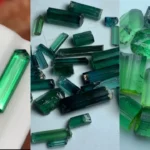
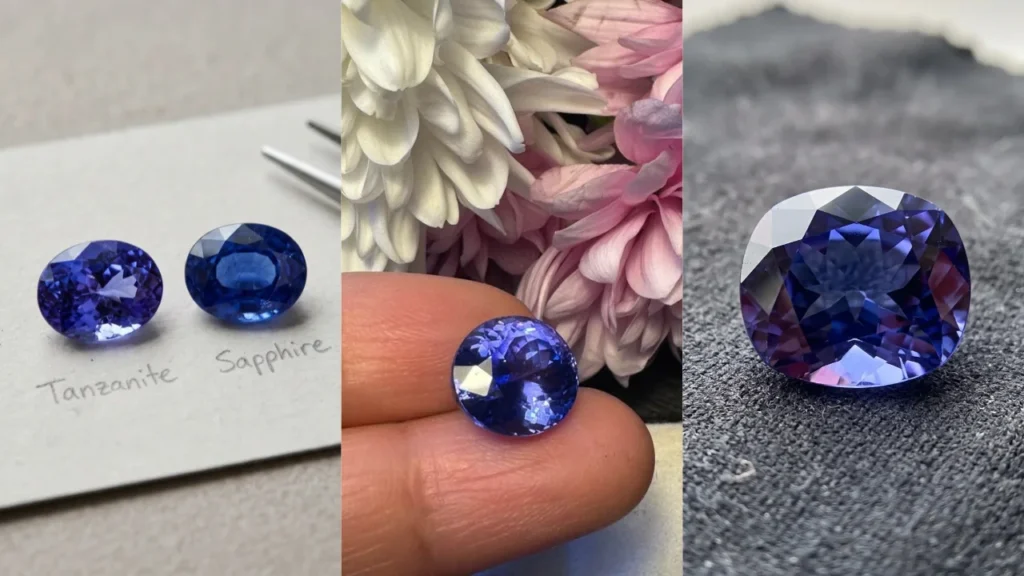
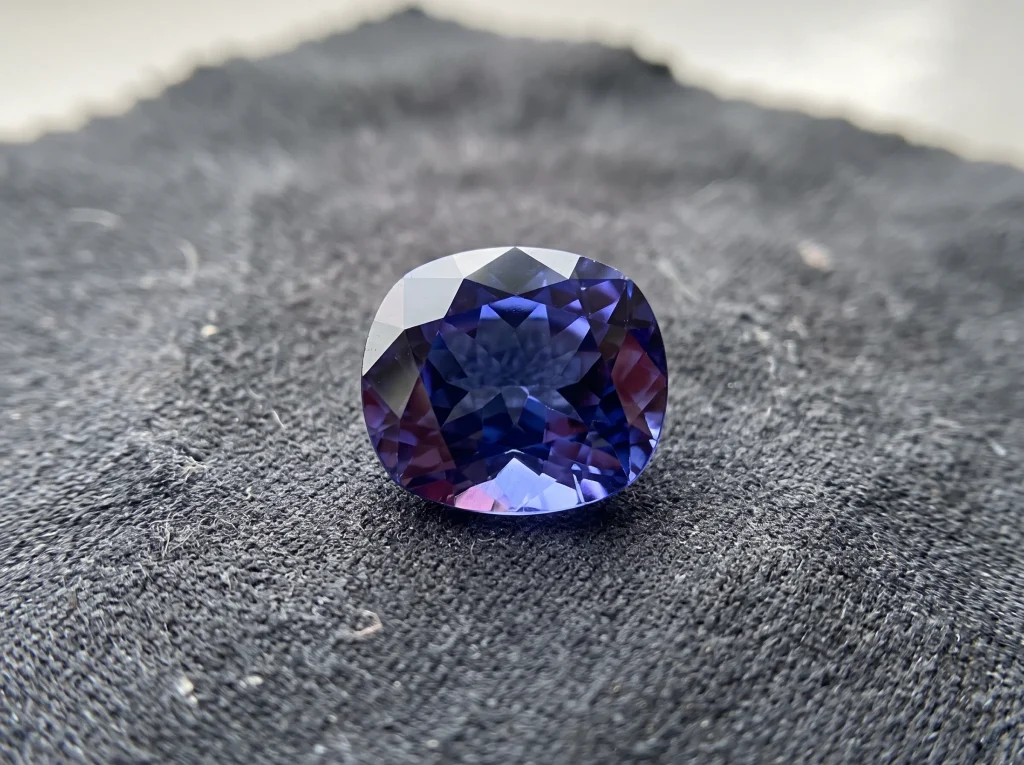
Tanzanite is the blue-violet variety of zoisite, found in commercial quantity in exactly one place on Earth the Merelani Hills near Mount Kilimanjaro, Tanzania. Almost every piece of tanzanite you’ll ever see has been heat treated to reach that signature color, since the rough comes out of the ground brownish or reddish. It’s a genuinely beautiful, genuinely rare gem; the “1000x rarer than diamond” line you’ll see everywhere is marketing shorthand worth a closer look before you repeat it.
Table of Contents
What tanzanite actually is
Tanzanite is a trade name, not a mineral name. The mineral underneath is zoisite, a calcium aluminum sorosilicate, and tanzanite refers specifically to its blue-to-violet, gem-quality form. It was first identified in 1967 near Mount Kilimanjaro, and Tiffany & Co. who recognized its commercial potential early and renamed it from the more clinical “blue zoisite,” ran the marketing campaign that made it a household name, memorably advertising that tanzanite could be found “in Tanzania and at Tiffany’s.”
Hardness sits at 6 to 6.5 on the Mohs scale across most sources (a couple cite up to 7), and it has perfect cleavage, meaning it can split cleanly along a flat plane under a sharp knock. That combination moderate hardness and perfect cleavage is the single most important practical fact for anyone considering tanzanite for a ring.
The claim that needs a second look
“Tanzanite is 1000 times rarer than diamond” shows up, nearly word for word, across a huge share of the pages written about this stone. It’s not fabricating. It traces back to the genuine fact that tanzanite comes from a single, geologically small deposit, while diamonds are mined across dozens of countries on every continent except Europe and Antarctica. But turning that into a precise “1000x” multiplier is doing more work than the underlying geology actually supports. Nobody I found cites a specific comparative production-volume study behind the figure; it reads as a marketing extrapolation built on top of a true premise, repeated so often it now sounds like a measured statistic.
The more defensible, honest version: tanzanite comes from one deposit of finite, actively being-mined size, which is why it’s sometimes called a “one generation gemstone” within a few decades, by most industry estimates, the known accessible supply could run out. That’s a real scarcity story. It doesn’t need an unverifiable multiplier attached to be compelling.
Almost nobody mentions this plainly: it’s heat treated, as standard practice.
This is worth stating clearly rather than burying it, because most competing guides mention it only in passing. Tanzanite rough typically comes out of the ground brown or reddish-brown. The vivid blue-to-violet color that makes tanzanite famous is, in the overwhelming majority of stones on the market, the result of heat treatment, not a naturally occurring blue crystal pulled straight from the earth. This is standard, accepted, disclosed practice across the trade, not a deceptive secret. But it’s a meaningfully different situation from a gem like untreated spinel or mandarin garnet, where natural color is the norm and treatment is the exception. With tanzanite, treatment is the norm, and a genuinely untreated blue stone is the rare exception worth a premium.
Why it shows different colors depending on the angle
Tanzanite’s other defining trait is strong trichroism in its raw, uncut state; a single crystal can show blue, violet, and burgundy-brown depending on which direction you view it from. Cutters orient the stone deliberately to maximize the blue-violet face-up color buyers want, which means the rough crystal’s natural color range is wider and stranger than the finished gem you see in a jewelry case ever reveals.
Where it comes from
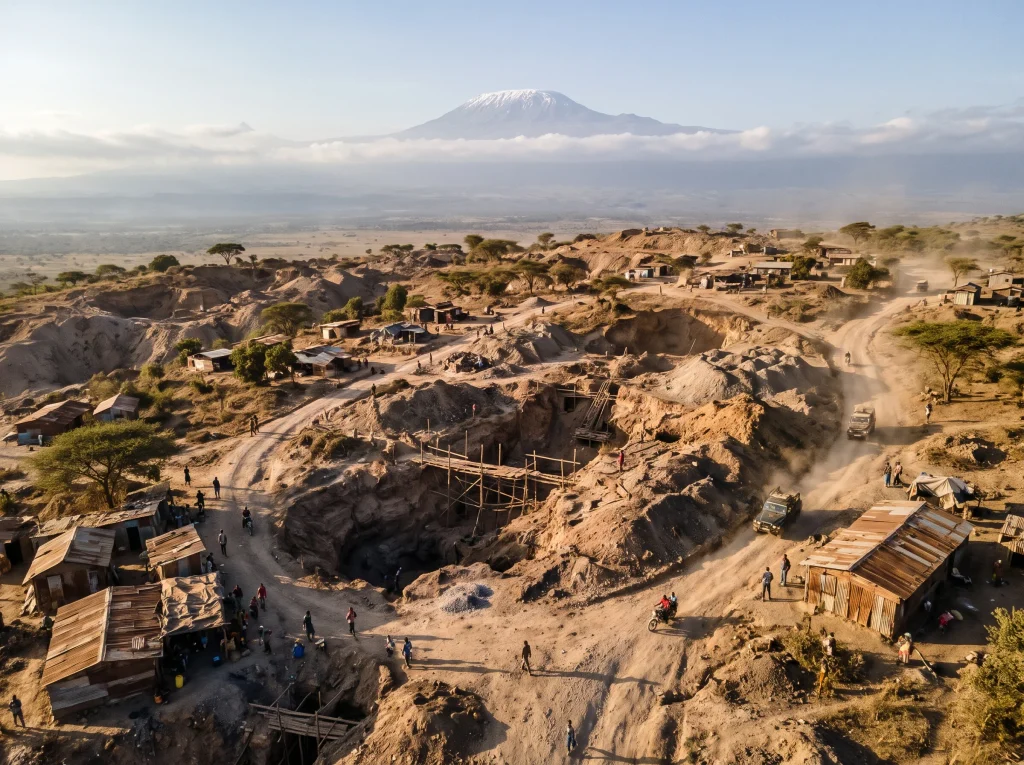
- Merelani Hills, northern Tanzania, near Mount Kilimanjaro — the only commercially significant source on Earth. Every source agrees on this, there is no meaningful secondary locality in the trade.
Wearing it day to day
This is the section to read carefully before buying a tanzanite ring. At 6 to 6.5 on the Mohs scale with perfect cleavage, tanzanite is genuinely more fragile than most gems regularly sold for rings, softer than quartz family stones, and prone to a clean split under a sharp impact in a way that tougher gems simply aren’t.
- Not ideal for an everyday ring worn without protection. A bezel, channel, or pavé setting that shields the stone’s edges meaningfully reduces chip and cleavage risk.
- Well suited to earrings and pendants, where the stone sees far less impact than a ring does.
- If you do want it in a ring, treat it as a special-occasion piece or choose a protective setting, and expect to handle it more carefully than a sapphire or diamond in the same style of ring.
- Everyday wear verdict: genuinely gorgeous, genuinely more delicate, the honest advice from GIA’s own buyer’s guide is to consider a protective setting or reserve it for a ring you won’t wear constantly.
Caring for it
Mild soap, warm water, a soft brush. Skip ultrasonic and steam cleaning entirely, tanzanite’s cleavage plane and the thermal stress of these methods are a bad combination, and this is one of the more consistent warnings across every source checked. Store it separately, ideally in its own soft pouch, since its moderate hardness means other jewelry in the same box can scratch it.
Tanzanite next to sapphire
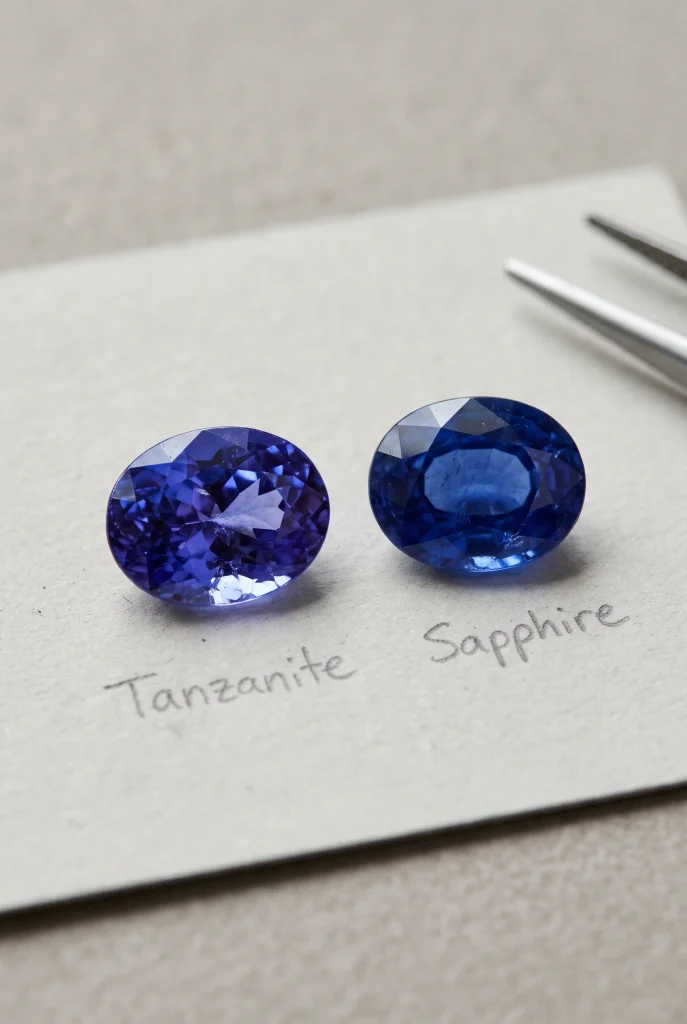
- Hardness — sapphire at 9 Mohs is dramatically more durable than tanzanite at 6–6.5, with no cleavage plane to worry about
- Color range — sapphire spans nearly every color; tanzanite is specifically blue-to-violet, defined by that narrower signature range
- Treatment — both are commonly heat treated, but tanzanite’s treatment rate is closer to universal, while natural-color sapphire remains a meaningful, findable segment of the market
- Price per carat — tanzanite generally runs lower than fine sapphire at comparable size and saturation, part of why it’s marketed as an accessible alternative
- The honest buying takeaway — if everyday durability matters more than budget, sapphire is the safer choice; if you want tanzanite’s specific color and can commit to protective settings and careful wear, it’s a legitimately rewarding stone on its own terms
FAQ
Is tanzanite a real gemstone or a treated fake? It’s a real, naturally occurring mineral. the blue-violet variety of zoisite. The vivid color in most stones comes from heat treatment of naturally brown rough, which is standard, disclosed industry practice, not fakery.
Is tanzanite tougher than diamond or sapphire? No. At 6–6.5 Mohs with perfect cleavage, tanzanite is considerably softer and more prone to chipping or splitting than either diamond (10) or sapphire (9).
Is tanzanite really 1000 times rarer than diamond? It comes from a single deposit, which is genuinely rare, but the specific “1000x” figure appears to be a marketing extrapolation rather than a sourced, measured statistic. Treat the underlying single-locality scarcity as the real story.
Can tanzanite be worn in an engagement ring? Yes, but with a protective setting, bezel, channel, or pavé given its moderate hardness and cleavage risk. Many buyers choose tanzanite for earrings or pendants instead, where impact risk is lower.
Why does tanzanite rough look brown before treatment? Natural trace-element chemistry in the unheated crystal produces brown and reddish tones. Heat treatment shifts the color to the blue-violet most buyers associate with tanzanite.