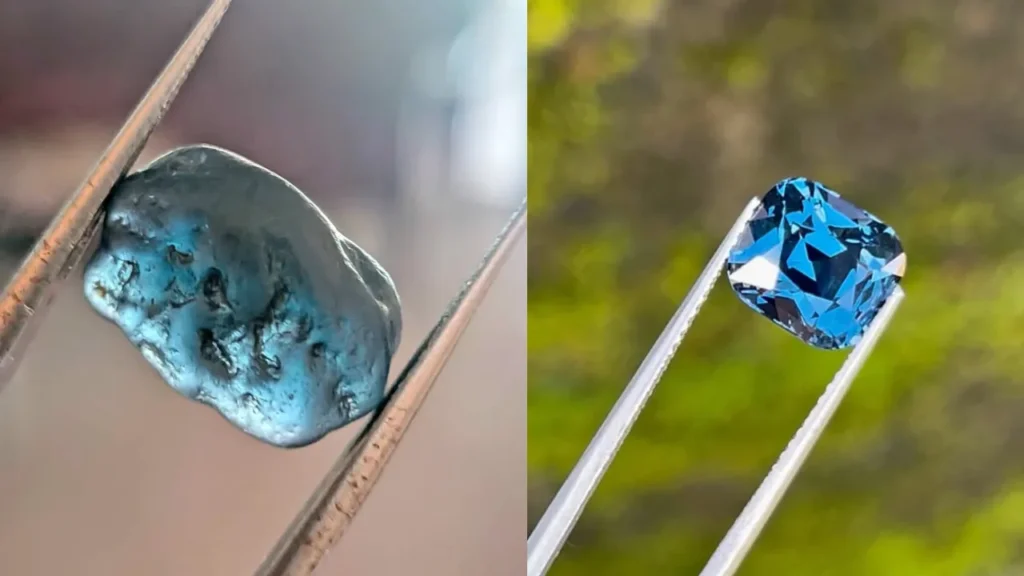
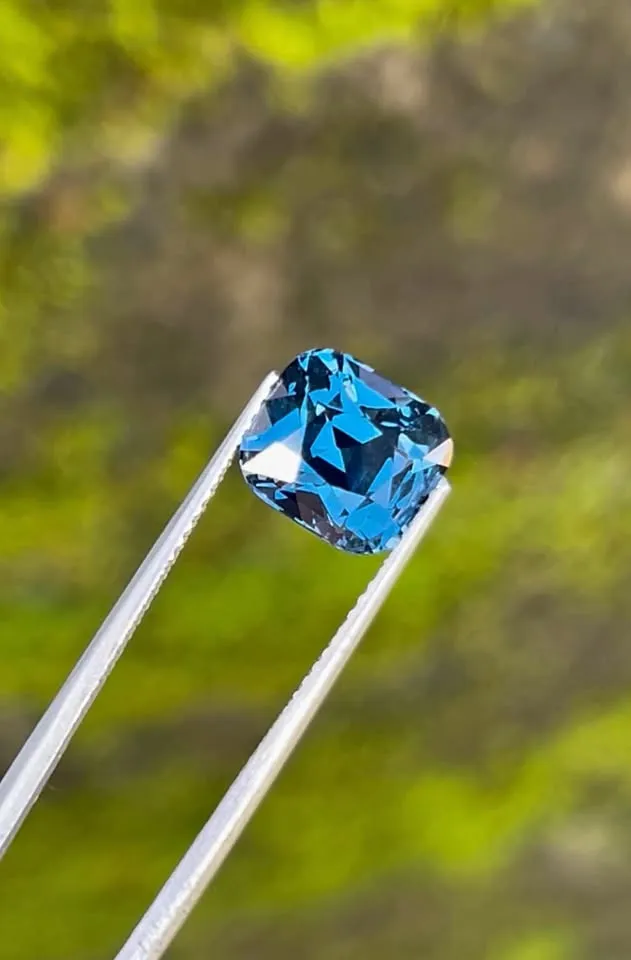
Cobalt spinel is among the rarest blue gemstones in the world, a color so vivid and pure that gem dealers have compared it to the finest sapphires, minus the heat treatment nearly every sapphire on the market goes through. It’s not simply “blue spinel.” It’s a specific, uncommon geochemical event, and most of it comes from just a handful of places on earth.
What Is Cobalt Spinel?
Cobalt spinel is a rare variety of spinel (magnesium-aluminum oxide) whose intense, electric blue color comes specifically from trace amounts of cobalt (Co²⁺) replacing magnesium within its crystal structure. This distinguishes it from other blue spinels, which can owe their color to iron instead and often lean greyish or violet rather than pure blue.
Not every blue spinel is a cobalt spinel the term refers specifically to stones where cobalt is the dominant coloring agent, confirmed through spectroscopic testing. That distinction matters for value: a cobalt-colored stone with a vivid, saturated royal blue commands significantly more than an iron-colored blue spinel with a similar face-up appearance.
Like its red and orange cousins, spinel has a long history of being mistaken for other gems. Before modern gemology could separate mineral species by chemical composition, vivid blue spinels were frequently sold and worn as sapphire, a confusion that persisted in royal and aristocratic jewelry for generations.
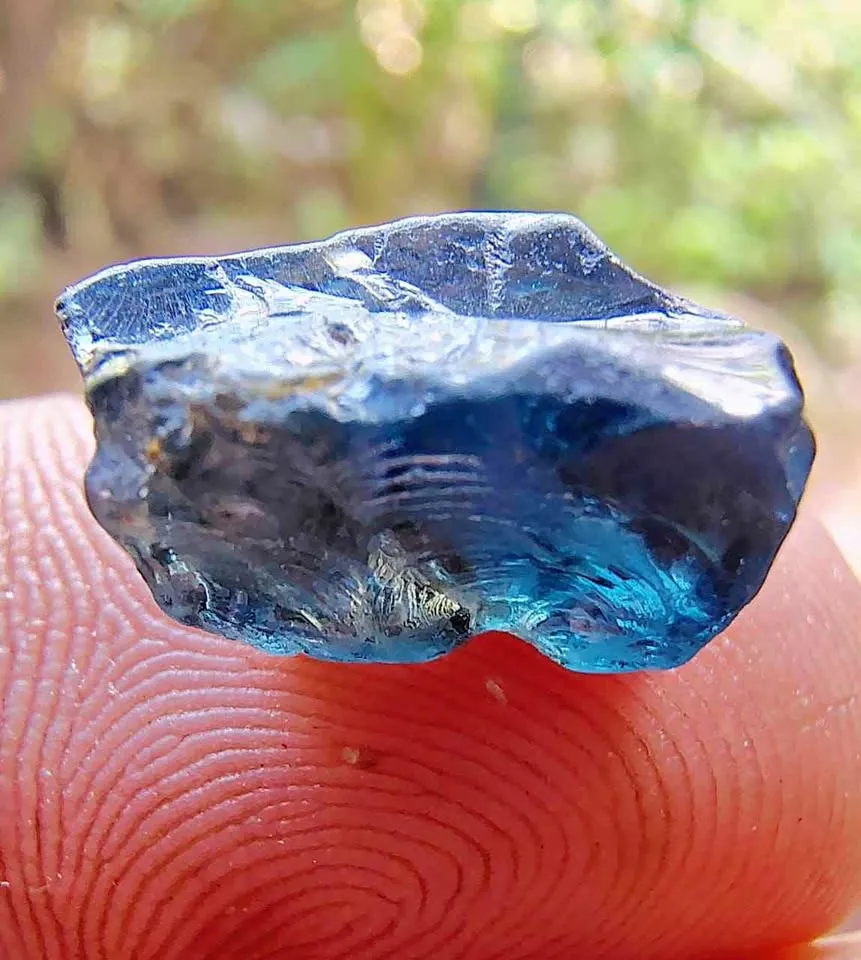
Why Is Cobalt Spinel Blue? The Science of the Color
Spinel forms in a cubic crystal system, meaning it’s singly refractive light travels through it along a single path rather than splitting the way it does in double-refractive gems like sapphire. Combined with cobalt’s unusually strong blue absorption spectrum, this produces a clean, saturated blue with excellent brilliance and none of the visible facet-doubling you sometimes see in double-refractive stones.
Cobalt is a relatively uncommon trace element to find incorporated into spinel’s crystal lattice during formation, which is the core reason cobalt spinel is so scarce compared to red, pink, or even iron-colored blue spinel.
Where Cobalt Spinel Comes From
Confirmed cobalt spinel deposits are limited to a small number of locations worldwide:
- Vietnam (Luc Yen district): The most consistent modern source of fine cobalt spinel. Gem-quality crystals form in marble and skarn deposits shaped by intense metamorphism, and Luc Yen material tends toward a vivid, slightly violet-tinged blue — some of the most saturated blue gemstones known to gemology.
- Sri Lanka (Ceylon): Sri Lanka is one of the world’s most diverse spinel-producing countries, and confirmed cobalt material does occur here — though it’s genuinely rare even by Sri Lankan standards. As with the island’s sapphires, cobalt spinel is typically recovered from alluvial gem gravel deposits known locally as illam, hand-panned using traditional woven baskets called vatti, a method still practiced around Ratnapura today.
- Tanzania (Mahenge): Better known for neon pink and red spinel, but cobalt-bearing blue material has also been documented here, appearing on the market less frequently than Vietnamese stones.
Because true cobalt spinel is confirmed only through lab testing, provenance alone isn’t proof of a cobalt-colored stone — reputable dealers should be able to provide gemological documentation confirming the cause of color, not just the country of origin.
Is Cobalt Spinel Treated?
Most cobalt spinel on the market is untreated, which is a major part of its appeal. Unlike sapphire, where heat treatment is the accepted industry norm to improve color, cobalt spinel typically reaches buyers exactly as it formed underground. That said, treatment isn’t unheard of — reports of heating and even cobalt diffusion treatments do exist in the trade, which is why certification from a reputable gemological lab confirming natural, untreated origin matters more here than with many other gemstones.
Cobalt Spinel Durability: Can You Wear It Every Day?
Yes. Cobalt spinel shares the same physical properties as the rest of the spinel family: 8 on the Mohs hardness scale, no cleavage, and a tendency to fracture conchoidally rather than chip along weak planes. That combination of hardness and toughness makes it a genuinely practical choice for rings and other daily-wear jewelry, not just a display piece for a collection.
What Determines the Value of Cobalt Spinel?
- Color — The most valuable stones show a vivid royal-to-electric blue with no grey or violet modifiers, and hold their saturation even in low light.
- Confirmed cause of color — Lab-confirmed cobalt coloring (versus iron-colored blue spinel) significantly affects price, even between visually similar stones.
- Clarity — Eye-clean material is ideal, though larger stones with minor inclusions are still accepted given overall rarity.
- Treatment status — Untreated stones with certification carry a real premium; heat treatment noticeably reduces value.
- Carat weight — Cobalt spinel above 1 carat is already uncommon; larger fine-color stones are exceptionally rare and priced accordingly.
- Origin — Vietnamese (Luc Yen) material often commands the highest premiums for color intensity and purity, though fine Sri Lankan and Tanzanian stones can still carry strong value.
How to Care for Cobalt Spinel
Cobalt spinel is low-maintenance for a fine gemstone. Clean it with warm water, mild soap, and a soft brush. Its hardness and lack of cleavage generally make it safe for ultrasonic and steam cleaning, though it’s worth checking with your jeweler if the setting includes other, more delicate stones. Store separately from softer gems to prevent surface abrasion.
Cobalt Spinel vs. Sapphire: How to Tell Them Apart
Given their shared history of confusion, the practical differences matter. Sapphire is doubly refractive and often shows pleochroism — a subtle shift in shade depending on viewing angle — while cobalt spinel’s single refraction gives it a consistent color from every direction. Cobalt spinel also has a lower refractive index than sapphire. As with red spinel and ruby, telling the two apart reliably requires gemological instruments, not the naked eye.
Loved learning about rare blue spinels? Check out our complete guide to Grey Spinel: Origin, Color, and Value to see how iron creates its unique metallic sheen