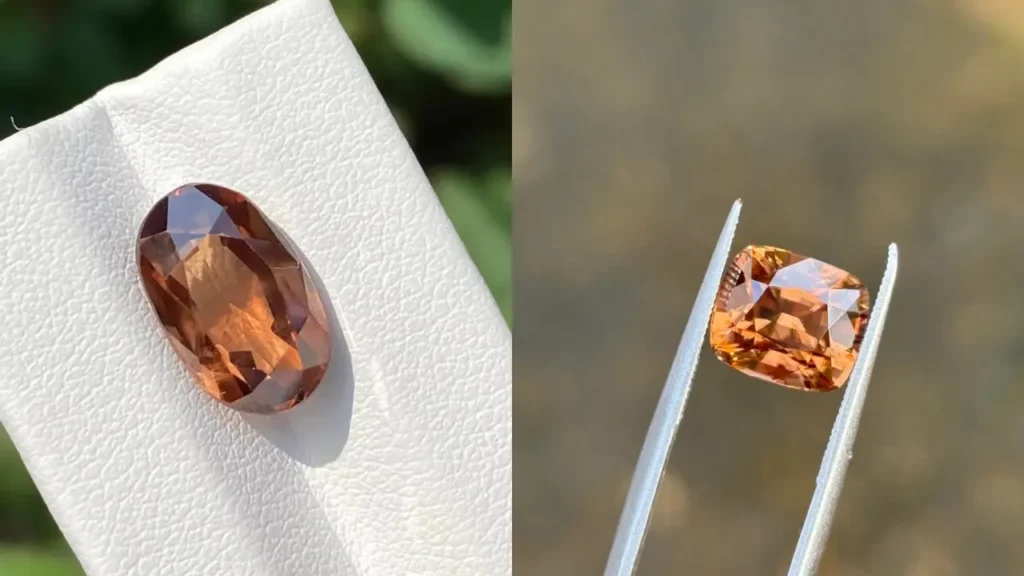
Brown zircon is, in a real sense, the original: it’s zircon’s most common natural color and the very rough that gets heat-treated to produce most of the blue, red, and golden zircon on the market today. It’s also one of the oldest gem names still in use, carrying a trade term” “hyacinth,” that predates modern gemology by roughly two thousand years.
What Is Brown Zircon?
Brown zircon is a color variety of zircon, a zirconium silicate mineral (ZrSiO₄) and one of the oldest minerals on Earth, with crystals dated to over 4.4 billion years old. Brown is widely considered zircon’s most commonly occurring natural color, alongside reddish-brown and yellowish-brown tones — a genuinely different position from blue or red zircon, both of which are rare in nature and usually reach the market via heat treatment of exactly this kind of brownish rough.
Historically, reddish-brown to orange-brown zircon was known by the trade name “hyacinth” (also spelled “jacinth”), one of the oldest gem names in continuous use in Western history. It appears in classical Greek texts, the Vulgate Bible, and medieval lapidaries centuries before zircon was even formally identified as a distinct mineral species in 1783. Modern gemology has mostly retired the name in favor of straightforward color descriptions like “brown zircon” or “reddish-brown zircon,” though “hyacinth” still turns up in historical scholarship, antique jewelry auction catalogs, and among collectors.

Why Is Zircon Brown? The Science of the Color
Brown is essentially zircon’s default, most naturally abundant color rather than the product of a single rare trace element, the way chromium produces ruby’s red or cobalt produces certain blues. Zircon’s color chemistry is tied closely to its atomic structure and radiation history: trace amounts of naturally occurring uranium and thorium, present in many zircon crystals, gradually damage the mineral’s crystal lattice over geological time through a process called metamictization.
Undamaged, fully crystalline zircon is referred to as “high” zircon and tends to include the brown, red, and other vivid colors typically cut for fine gemstones. Zircon that has undergone more extensive radiation damage becomes “low” or metamict, generally shifting toward green or greenish-brown tones with somewhat different optical properties. Brown zircon in the gem trade is generally high-type material, prized in its own right for its natural, unaltered color.
Brown Zircon: The Starting Point for Blue and Red
Here’s what makes brown zircon’s story genuinely different from most colored gemstones on this site: it’s frequently the raw material, not just another finished color. Much of the blue zircon on the market — particularly the celebrated material from Cambodia’s Ratanakiri province — begins as brownish rough, then is heat-treated at roughly 900–1,000°C in a reducing (oxygen-free) atmosphere to develop its signature blue. Similarly, heating brownish “hyacinth” zircon in an oxidizing atmosphere around 900°C can shift the color toward yellow, orange, or red. In other words, if you already have our blue zircon or red zircon guide open, you’re reading about material that quite likely started life looking a lot like the stone in this article.
Where Brown Zircon Comes From
- Sri Lanka: A major, longstanding source of gem-quality zircon across all colors, including brown and reddish-brown “hyacinth” material. Zircon here is typically recovered from the same alluvial gem gravel deposits,known locally as illam ,that also produce the island’s sapphires and spinel, traditionally hand-panned using woven baskets called vatti around Ratnapura.
- Cambodia, Myanmar, Thailand, and Vietnam: All significant producers of brownish zircon rough, much of which supplies the international heat-treatment trade for blue and other colors.
- Australia, Brazil, Madagascar, Tanzania, and France: Additional documented sources contributing to the wider global supply of natural zircon in various colors, including brown.
Is Brown Zircon Treated?
Generally, no,and this is brown zircon’s clearest point of distinction from blue or red zircon. Because brown is zircon’s natural, commonly occurring color, most brown zircon sold today is untreated, sold and valued specifically as natural, unenhanced material. Reputable dealers frequently highlight this directly, since “natural” and “untreated” carry real weight for buyers who’ve grown accustomed to heat treatment being standard practice for other zircon colors, as well as for sapphire and ruby generally.
Brown Zircon Durability: Should You Wear It Every Day?
Treat it the same as other zircon colors. It rates 6.5–7.5 on the Mohs hardness scale, softer than sapphire or spinel, with some brittleness that makes facet edges more vulnerable to chipping under impact than harder stones. It’s a solid choice for earrings, pendants, and occasional-wear rings; for daily-wear rings, a protective setting is a sensible precaution.
What Determines the Value of Brown Zircon?
- Natural, untreated status — Since this is brown zircon’s core appeal, well-documented natural origin matters more here than color intensity alone.
- Color depth and clarity of tone — Rich, warm brown or reddish-brown tones without murkiness are more desirable than dull, flat brown material.
- Clarity — Zircon is generally eye-clean by nature; visible inclusions meaningfully affect value.
- Carat weight — Larger, clean brown zircon is more available than fine material in rarer colors like blue or red, keeping brown zircon comparatively accessible even at bigger sizes.
- Cut quality — A well-executed cut showcases zircon’s characteristic fire and brilliance, which brown material shares with every other color in the family.
How to Care for Brown Zircon
Clean it with warm water, mild soap, and a soft brush, and avoid ultrasonic and steam cleaners given zircon’s general brittleness and vulnerability to stress fractures under vibration and heat. Store separately from harder gems like sapphire and spinel to prevent surface abrasion.
Brown Zircon vs. Smoky Quartz: How to Tell Them Apart
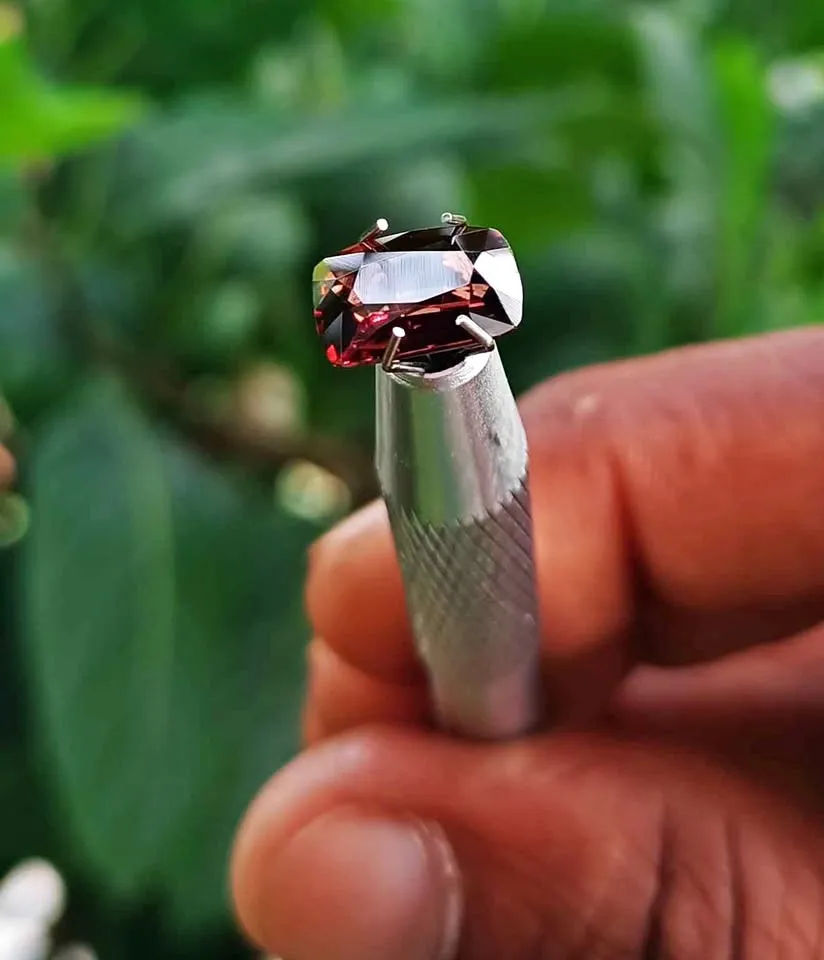
Brown zircon is sometimes compared to smoky quartz, a much more common and affordable brown gem. The clearest distinction is optical performance: zircon’s notably higher refractive index and strong double refraction give it considerably more fire and brilliance, along with a visible doubling of back-facet edges that smoky quartz, a singly refractive gem, doesn’t show. Zircon is also somewhat harder than quartz (6.5–7.5 versus quartz’s 7, depending on the specific zircon type), though the practical difference in daily wear is minor. Smoky quartz is far more abundant and inexpensive, while natural brown zircon carries the appeal of genuine rarity and an unusually long, documented gemological history.
Related Guide
Curious why red zircon exhibits more brilliance and brilliance than almost any other natural red gem? Check out our full analysis in Red Zircon — Meaning, Value, and Optical Characteristics.
📌 External Reference: Want to explore the chemical makeup, lattice distortions, and uranium-thorium dating properties of this mineral? Read Wikipedia’s Complete Zircon Entry.