
Green spinel is one of the rarest color varieties in the entire spinel family, rarer, in fact, than blue. Where most spinel colors come from a single dominant trace element, true green spinel forms through a more delicate and uncommon chemical process, which is exactly why fine examples are so hard to find on the market.
What Is Green Spinel?
Green spinel is a natural color variety of spinel (magnesium aluminum oxide) displaying green as its primary body color, ranging from soft pastel green to richer, more saturated tones, sometimes with a secondary blue or teal cast. It’s worth being upfront about something most sellers gloss over: gemological research indicates that spinel with green as its true dominant color is genuinely uncommon in nature. A significant share of what’s marketed as “green spinel” is actually blue-green or teal-toned material where green is a secondary rather than primary hue — which doesn’t make those stones any less beautiful, but it does mean a buyer should look closely at whether a stone is truly green-dominant before paying a premium for rarity.
Spinel as a whole has a long history of being mistaken for other gems the Black Prince’s Ruby in the British Imperial State Crown is a red spinel, not a ruby but green spinel’s story is less about historical confusion and more about scarcity itself.

Why Is Spinel Green? The Science of the Color
Most spinel colors trace back to a single trace element: chromium for red and pink, cobalt for blue. Green works differently. Current gemological research attributes green spinel’s color to intervalence charge transfer between two iron states — ferrous iron (Fe²⁺) and ferric iron (Fe³⁺) — interacting within the crystal structure, rather than a single element simply tinting the stone. This more complex color-forming mechanism is part of why green spinel with a strong, dominant green color is so much less common than red, pink, or blue material.
Because spinel is cubic in crystal structure, it’s singly refractive, meaning light travels through it along one path rather than splitting the way it does in double-refractive gems like sapphire. That gives green spinel a clean, even brilliance similar to the rest of the spinel family, once you do find a fine example.
Where Green Spinel Comes From
Green spinel has been recovered from most of the major spinel-producing regions, though fine material with true green as the dominant color remains scarce regardless of source:
- Myanmar (Burma): One of the most historically significant spinel sources, producing material across the color range including green.
- Sri Lanka (Ceylon): A major and diverse spinel source, with green material typically recovered from the same alluvial gem gravel deposits — known locally as illam — that also yield the island’s sapphires. These gravels are traditionally hand-panned using woven baskets called vatti, a technique still practiced around Ratnapura today.
- Tanzania: Mahenge and Tunduru have both produced spinel across a wide color range, including green and green-toned material.
- Vietnam and Madagascar: Both regions contribute to global green spinel supply, generally in smaller, less consistent quantities than the sources above.
Because green spinel is genuinely rare regardless of where it’s mined, origin alone isn’t a reliable shortcut to quality — a stone’s actual color purity and saturation matter more than which country it came from.
Is Green Spinel Treated?
Green spinel is typically sold untreated, in keeping with spinel as a whole. Unlike sapphire and ruby, which are routinely heat-treated as standard industry practice, there’s no widely used or reliable treatment for enhancing spinel’s color, so what reaches the market is generally exactly as it formed underground. For buyers who prioritize natural, unenhanced stones, that’s a meaningful point in green spinel’s favor.
Green Spinel Durability: Can You Wear It Every Day?
Yes. Green spinel shares the same physical properties as the rest of the spinel family: 8 on the Mohs hardness scale, with no cleavage plane that would make it prone to chipping. That combination makes it a genuinely practical choice for rings and other jewelry that sees regular wear, not just an occasional-wear collector’s stone.
What Determines the Value of Green Spinel?
- Color purity — A stone where green is clearly the dominant, primary color (rather than a secondary tint on a blue or teal base) is the rarest and most valuable.
- Saturation — Richer, more vivid green commands higher prices than very pale or washed-out material.
- Clarity — Eye-clean stones are preferred, though spinel is generally a fairly clean gem overall.
- Carat weight — Fine green spinel above a couple of carats is uncommon and priced accordingly.
- Cut quality — A well-proportioned cut maximizes brilliance and helps a more subtle color read as richer and more saturated.
How to Care for Green Spinel
Green spinel is low-maintenance. Clean it with warm water, mild soap, and a soft brush. Its hardness and lack of cleavage generally make it safe for ultrasonic and steam cleaning, though it’s worth checking with your jeweler first if the piece includes other, more delicate stones. Store it separately from softer gems to prevent surface scratching.
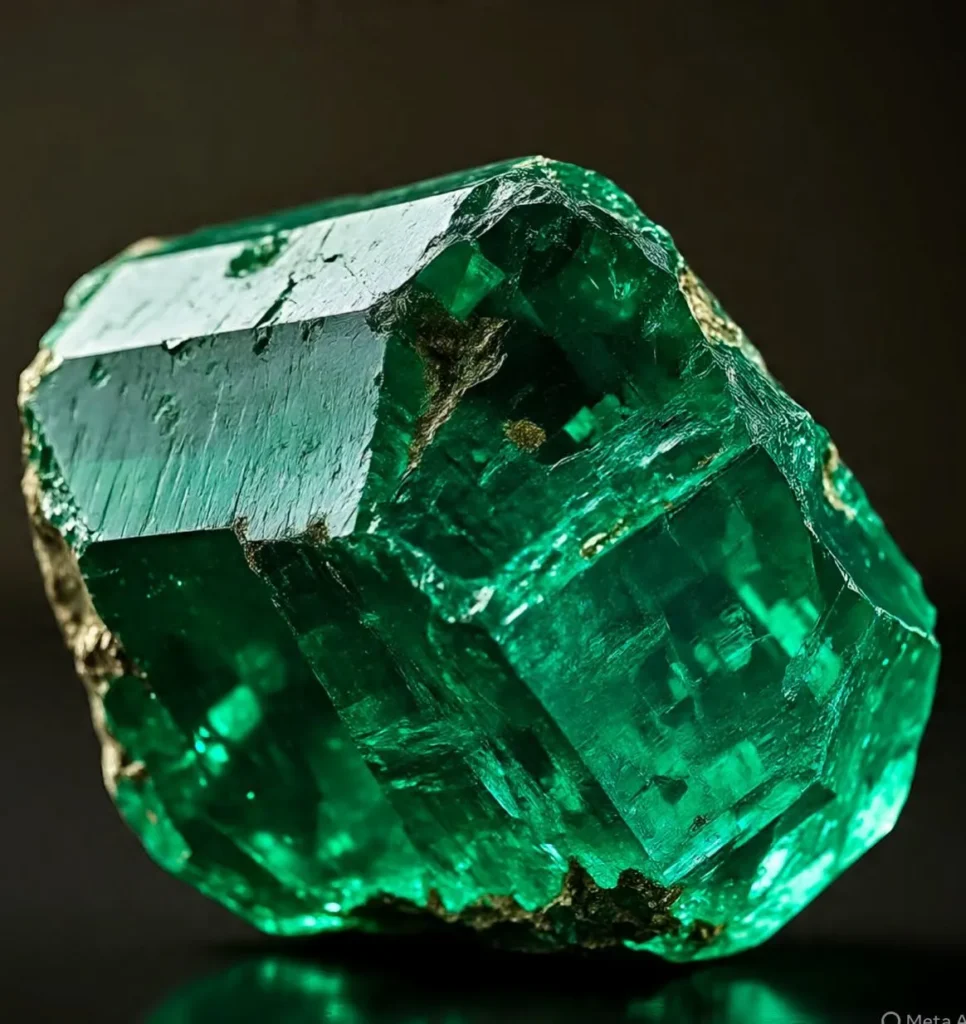
Green Spinel vs. Emerald: How to Tell Them Apart
Buyers looking for a green gem alternative often compare spinel to emerald, but the two differ in some important ways. Emerald’s green comes from chromium and/or vanadium and is almost always treated with oil to improve clarity, a near-universal industry practice. Green spinel, by contrast, is typically untreated and, thanks to its single refraction and lack of cleavage, tends to be a more durable, lower-maintenance stone for daily wear. Emerald generally shows more visible inclusions as a matter of course, while clean green spinel is comparatively easier to find, even if fine, strongly saturated examples remain rare in their own right.
“While black diamond is famous for its high price tag, natural black spinel provides a nearly identical metallic luster and impressive 8 Mohs hardness for daily wear. Explore ourcomplete guide to black spinel value and characteristics.”