
Pink spinel has spent centuries in the shadow of ruby and sapphire, even though it’s a completely different mineral. This guide covers what causes its color, where it’s mined, how it’s graded, and how to care for it.
What Is Pink Spinel?
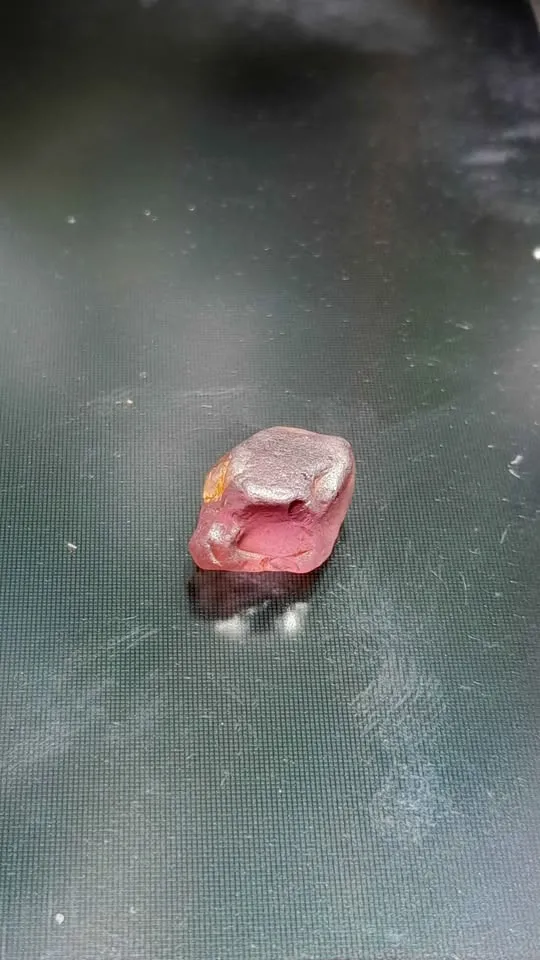
Pink spinel is a variety of spinel, a magnesium aluminum oxide mineral that forms its own gemstone group entirely separate from ruby and sapphire (both corundum). Spinel occurs in almost every spectral color, and pink is one of its most commercially important shades. Pink spinel sits at 8 on the Mohs scale and, like garnet and diamond, is singly refractive, giving well-cut stones strong, even brilliance.
What Makes Pink Spinel So Special?
For most of gem history, spinel was mistaken for ruby and sapphire, since the minerals often form in the same deposits and can look remarkably similar. The most famous example is the Black Prince’s Ruby, a large red gem that has been part of the British Imperial Crown since the 14th century and is, in fact, a spinel, not a ruby.
It wasn’t until 1783 that spinel was formally identified as a separate mineral from corundum, when mineralogist Jean-Baptiste Louis Romé de Lisle distinguished the two. That discovery effectively gave birth to the modern science of gemology, since gemologists needed new tools to reliably tell spinel and corundum apart.
How Does Pink Spinel’s Color Form?
Pink spinel crystallizes as an octahedral crystal within the cubic system, with trace transition metals substituting into its structure during formation. The specific balance of those trace elements, chiefly chromium, with supporting roles from vanadium and iron,determines exactly where a stone falls on the pink-to-red spectrum.
Why Is It Pink?
Chromium is the primary coloring agent, the same element responsible for red in ruby and green in emerald. Lower chromium concentrations tend to produce lighter pink and lilac tones, while higher concentrations push a stone further toward vivid pink or red. Some pink spinel also fluoresces strongly under long-wave UV light because of its chromium content.
Where Is It Found?
- Myanmar (Burma) — historically the source of the world’s finest red, pink, and orange spinel
- Tanzania — the Mahenge region produces a saturated, “neon” hot pink spinel considered by many in the trade to be the best pink spinel available
- Tajikistan — the Pamir Mountains, including the Kuh-i-Lal deposit, a long-documented historical source
- Sri Lanka — an established source of spinel across a range of colours
Famous Pink Spinel Examples
The Black Prince’s Ruby remains spinel’s most famous historical claim to fame, worn as a “ruby” in the English crown jewels for over 600 years before spinel was recognized as a distinct mineral. Its deeper provenance beyond its presence in the Imperial Crown could not be independently confirmed in this research.
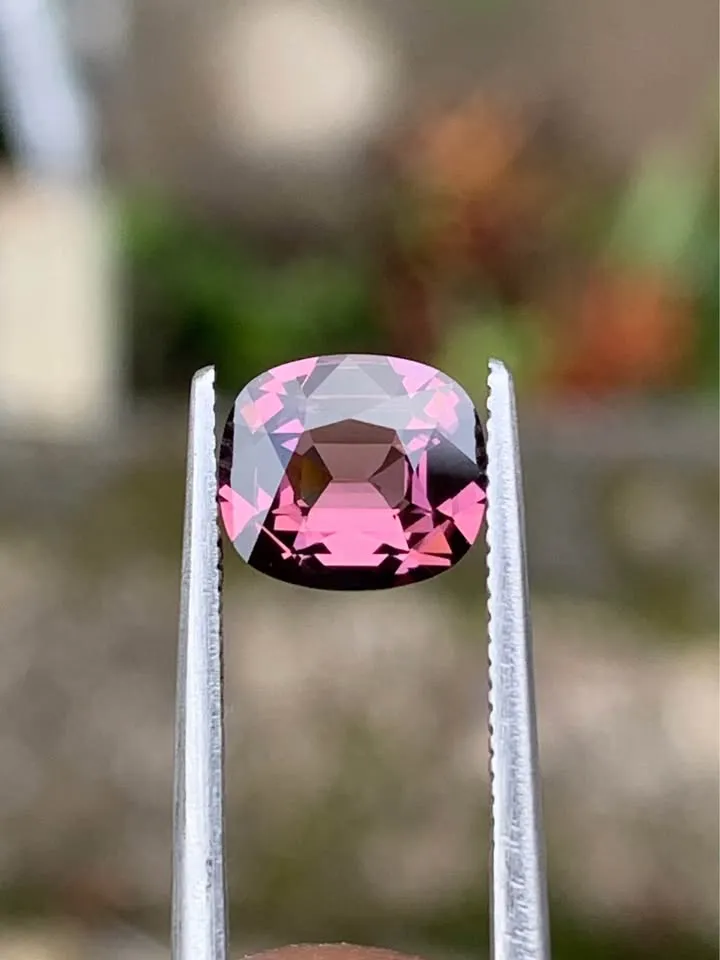
[Image: Faceted pink spinel gemstones, including Mahenge material]
Photo: [add credit when image is sourced]
Pink Spinel Treatments
Pink spinel is typically untreated. Unlike ruby, sapphire, and many other colored gemstones, spinel generally reaches the market with no heat treatment, irradiation, or fracture filling applied. Buyers should still ask for disclosure on any specific stone, since exceptions exist, but pink spinel’s largely untreated reputation is one of its strongest selling points compared to pink sapphire.
Pink Spinel Composites
Composite treatments are not a notable factor in pink spinel; the vast majority of material sold is natural, single-piece stone.
Do Pink Spinel Synthetics Exist?
Yes. Unlike garnet, synthetic spinel is produced commercially and has been for decades — it’s one of the most common materials used to imitate other birthstones and gems. Synthetic pink spinel typically shows curved striae and gas bubble inclusions under magnification, features that don’t occur in natural spinel.
Pink Spinel Simulants
Because natural spinel can itself resemble ruby and pink sapphire, laboratory testing (refractive index, inclusion analysis, and in some cases magnetic response) is the reliable way to separate the three. Natural red and pink spinels have shown detectable magnetism in recent GIA research, a trait not shared by corundum.
How to Care for Pink Spinel
At 8 on the Mohs scale, pink spinel is one of the more durable colored gemstones available, well-suited to rings and everyday wear, and has no cleavage, making it relatively resistant to chipping. Clean with warm, soapy water and a soft brush. Because most pink spinel is untreated, ultrasonic and steam cleaning are generally considered safe, though it’s worth confirming a stone’s treatment history first.
“If you’re exploring sleek dark gemstones, check out our complete guide to black spinel.”