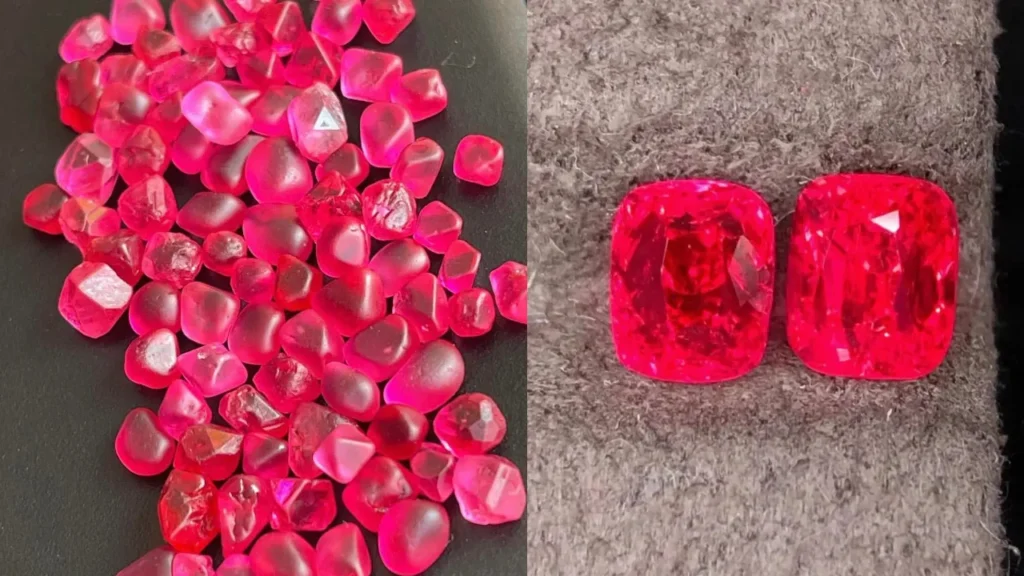
Jedi spinel is a rare, informally named grade of natural spinel known for a vivid pinkish-red color and an almost glowing fluorescence under light. The nickname is relatively recent by gem-trade standards, but the stones themselves have quickly become some of the most sought-after spinel in the world.
What Is Jedi Spinel?
Jedi spinel refers to natural, untreated spinel with an evenly saturated color ranging from pinkish red to red, in medium-to-high saturation, without dark or muddy tones. The name isn’t a separate mineral species or an official gemological grade in the way “ruby” or “sapphire” are — it’s a trade nickname for a specific, exceptional quality tier within red-to-pink spinel, and it has since been formalized into a color-grading standard by the Asian Institute of Gemological Sciences (AIGS).
The name traces back to the early 2000s, when field gemologist Vincent Pardieu was shown a group of unusually vivid pinkish-red spinels in Myanmar by gem dealer Yuval “Hemi” Englisher. Struck by their neon-like glow — a quality he hadn’t seen in spinel from any other source — Pardieu began calling them “Jedi” spinel, playing on the Star Wars franchise’s idea of light overcoming the “dark side.” The nickname caught on fast across the gem trade and became part of the wider surge in spinel’s popularity over the past two decades.
Why Does Jedi Spinel Glow? The Science of the Color
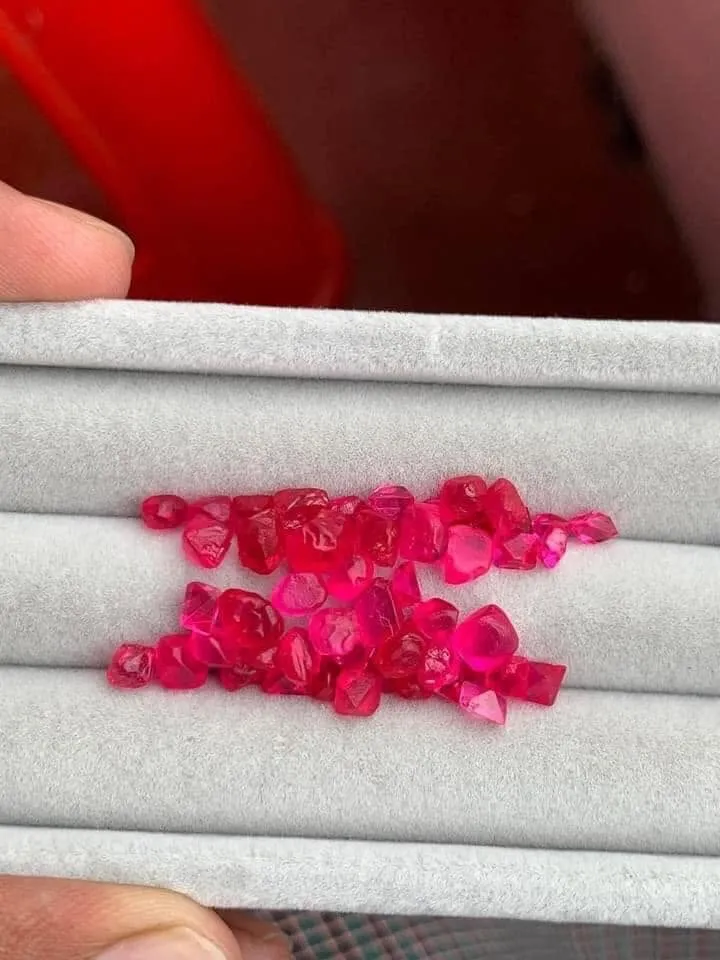
Like red spinel generally, Jedi spinel’s color comes from chromium (Cr³⁺) replacing aluminum within its crystal structure. What sets Jedi-grade material apart is a particular combination: high chromium content paired with very low iron. Iron tends to mute and darken red tones in spinel, so material with minimal iron content keeps the color bright and clean rather than muddy.
That same chromium is also responsible for Jedi spinel’s signature trait: strong red fluorescence under both long-wave and short-wave UV light. Combined with the stone’s high clarity and brilliance a product of spinel’s cubic, singly refractive crystal structure, the result is a stone that appears to hold its own internal light source, which is exactly the effect that earned it the nickname.
Where Jedi Spinel Comes From
Jedi-grade spinel is most closely associated with a specific part of Myanmar (Burma):
- Mogok Stone Tract: The original source Pardieu encountered, and still the region most associated with the term. Mogok has produced some of the world’s most celebrated red and pink spinel for centuries.
- Namya mine: A more localized deposit within the wider Mogok region, discovered in the 1990s, known for particularly fine Jedi-quality material. Supply from Namya has become increasingly limited in recent years.
Myanmar isn’t the only source, though it dominates the trade narrative. Fine pinkish-red spinel meeting Jedi-level color and clarity has also surfaced from Sri Lanka, where spinel of many colors — including this vivid red-pink range — is recovered from the same alluvial gem gravel deposits, known locally as illam, that also yield the island’s sapphires. These gravels are traditionally hand-panned using woven baskets called vatti, a method still practiced around Ratnapura today. Because “Jedi spinel” describes a color and clarity standard rather than a guaranteed origin, buyers should ask for documentation of both origin and treatment status rather than assuming Myanmar provenance from the name alone.
Is Jedi Spinel Treated?
Jedi spinel is defined, in part, by being untreated. Unlike sapphire and ruby, where heat treatment is the industry norm, spinel has no widely used or reliable treatment to enhance color, and the AIGS standard for Jedi-grade material specifically requires natural, untreated stones. That’s a meaningful part of the appeal: what you see is exactly what formed underground, with no enhancement involved.
Jedi Spinel Durability: Can You Wear It Every Day?
Yes. Like all spinel, Jedi spinel rates 8 on the Mohs hardness scale and has no cleavage plane, making it well-suited to daily wear in rings and other high-contact jewelry. One practical note for faceted stones set in rings: sharp, well-defined facet edges (a hallmark of fine spinel cutting) are more prone to abrasion damage over years of wear than a rounder cut, so a protective setting is worth considering for ring use specifically.
What Determines the Value of Jedi Spinel?
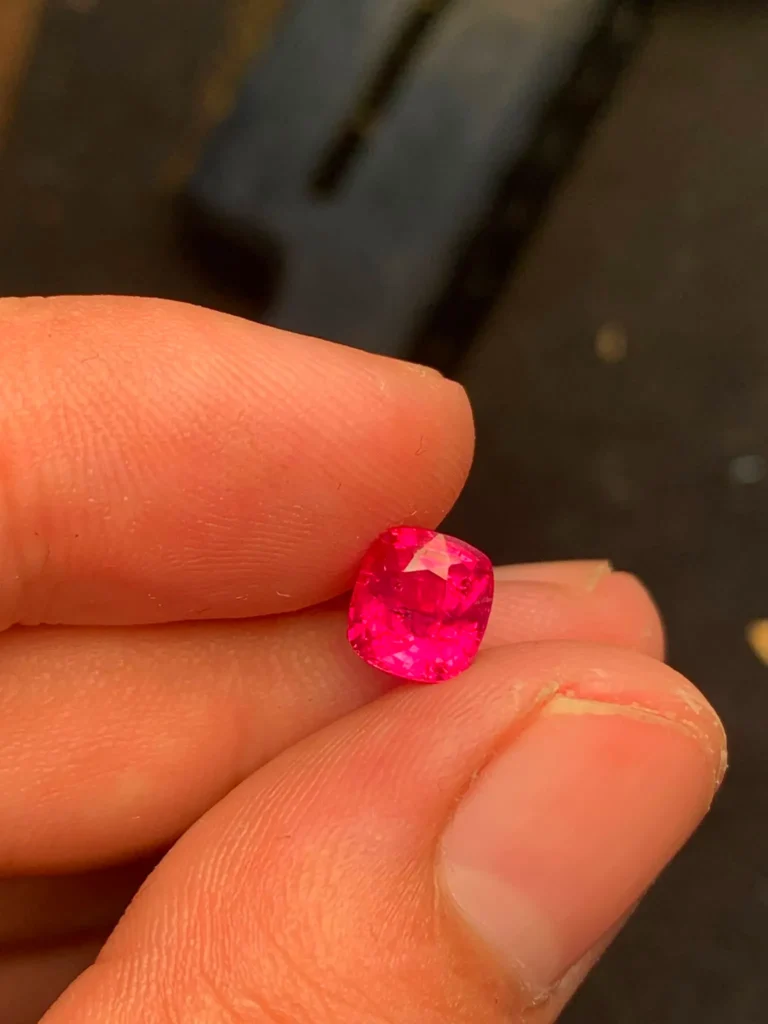
- Color saturation and hue — Even, vivid pinkish-red to red without dark or brownish tones commands the highest prices.
- Fluorescence — Strong, visible red fluorescence under UV is part of the Jedi standard and adds to desirability.
- Clarity — Eye-clean material with minimal visible inclusions is the benchmark; spinel is generally a clean gem to begin with.
- Carat weight — Fine Jedi-grade material over one carat is genuinely rare, and large clean stones command a steep premium.
- Origin documentation — Certified Mogok or Namya origin, confirmed by a recognized gem lab, typically carries the strongest premium, though well-documented Sri Lankan material in the same color range is also valued.
How to Care for Jedi Spinel
Clean it with warm water, mild soap, and a soft brush. Its hardness and lack of cleavage generally make it safe for ultrasonic and steam cleaning, though it’s worth checking with your jeweler if it’s set alongside more delicate stones. Store separately from softer gems to prevent surface scratching, and be mindful of sharp facet edges catching on fabric or knocking against hard surfaces in daily wear.
Jedi Spinel vs. Ruby: How to Tell Them Apart
Given spinel’s long history of being confused with ruby, it’s worth noting the practical differences. Ruby is doubly refractive and often shows pleochroism, a subtle shift in shade depending on viewing angle, while Jedi spinel’s single refraction gives it a consistent color from every direction. Jedi spinel also tends toward a brighter, more neon quality than ruby, since it lacks the iron content that can mute ruby’s red with darker undertones. As with other spinel colors, gemological testing — not the naked eye is what reliably tells the two apart.
⚡ Explore Vivid Blue Gems: Discover why gemologists consider electric cobalt varieties to be the holy grail of the spinel family in our Cobalt Spinel Overview.