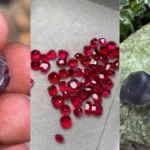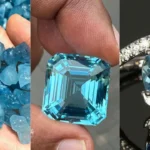

Sri Lanka has been called Ratna Dweepa, the “Island of Gems,” for over two thousand years ,not as a modern marketing flourish, but as a name recorded by ancient chroniclers and used by the island’s own kings. Long before gemology existed as a formal science, Sri Lanka was already the world’s most trusted source of fine colored stones, and in many ways, it still is.
A Name That Predates Modern Sri Lanka Itself
Ancient texts referred to the island as Ratna Dweepa, literally “Island of Gems” a name that appears in historical records stretching back to at least the 4th century BC. The Greek navigator Nearchus documented the island’s gem wealth as early as 334 BC, and centuries later, travelers including Marco Polo and the Moroccan explorer Ibn Battuta wrote home about the extraordinary stones coming out of Ceylon. This wasn’t a minor detail in their accounts it was one of the defining reasons the island held such importance in ancient trade networks stretching from the Mediterranean to China.
The city most responsible for that reputation still carries the name today: Ratnapura, Sinhalese for “City of Gems,” sits roughly 101 kilometers southeast of Colombo on the Kalu River and remains Sri Lanka’s gem-mining heart to this day.
When Gems Belonged to Kings
Between roughly 500 and 1500 AD, spanning the Anuradhapura and Polonnaruwa periods of Sri Lankan history, gem mining wasn’t the open trade it is today it operated under strict royal control. Sinhala kings held monopoly rights over the island’s gem wealth, understanding that the stones washing down from the central highlands represented more than riches: they were instruments of international prestige, diplomacy, and power. Ratnapura became the epicenter of this royally patronized industry, and historical accounts credit it as the first locality on the island where sapphire mining was systematically organized.
That royal-era infrastructure — organized mining, controlled trade routes, careful stewardship of the resource — laid groundwork that, in modified form, still shapes how Sri Lanka approaches gem mining today: small-scale, tightly regulated, and deliberately resistant to the large-scale industrial mining seen in some other gem-producing nations.
Illam and Vatti: A Mining Tradition Passed Down for Generations
What makes Sri Lanka’s gem deposits genuinely unusual, geologically speaking, is how they formed. Over 90% of the island’s landmass consists of high-grade metamorphic rock dating back three to four billion years among the oldest exposed rock on Earth. Over millions of years, erosion released gem crystals from these ancient host rocks, carrying them downstream via ancient river systems into what became gem-bearing alluvial gravel deposits, known locally as illam.
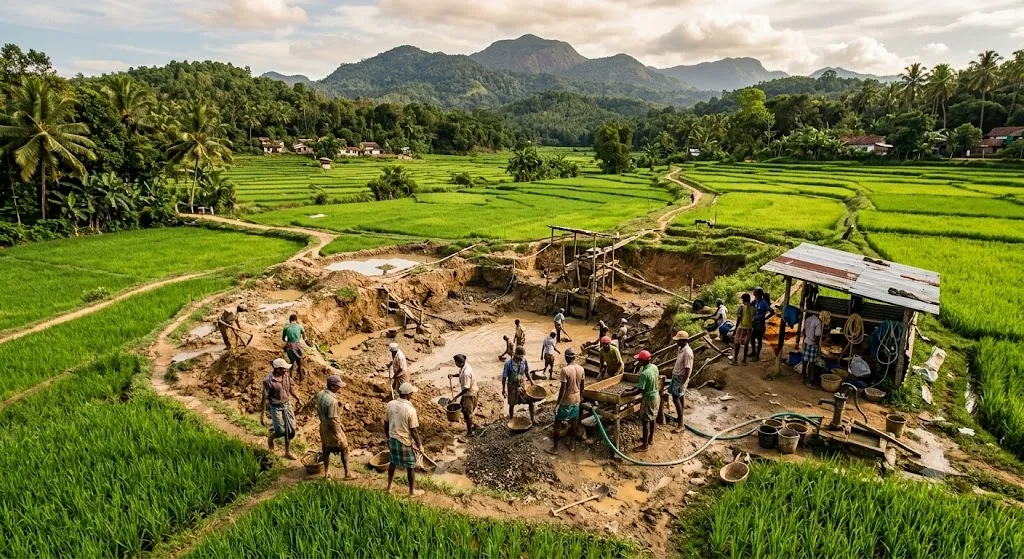
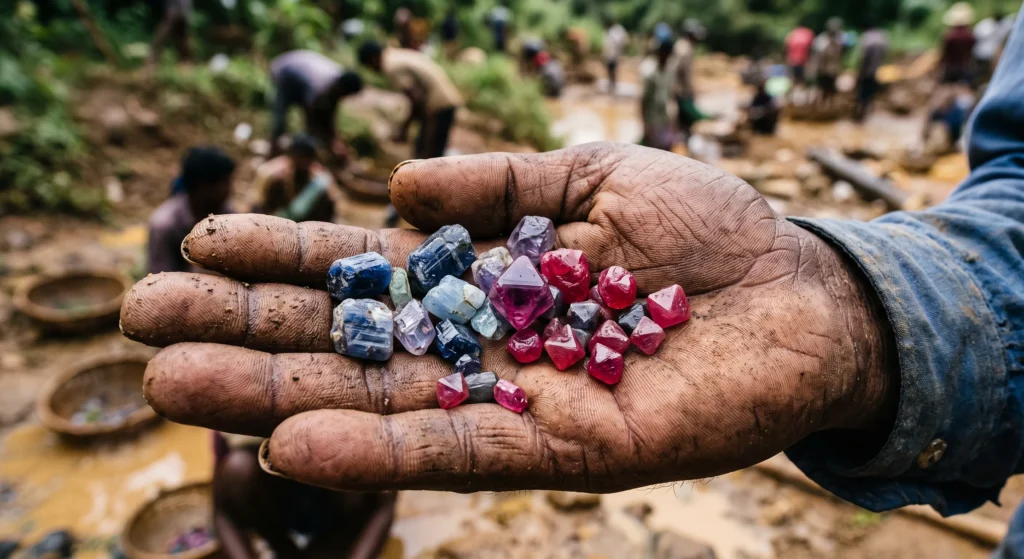
Unlike the hard-rock mining seen in many other gem-producing countries, Sri Lankan gem miners work these secondary alluvial deposits using methods that have changed remarkably little over centuries. Small teams hand-dig mining pits — typically 5 to 50 feet deep — pumping out groundwater as it seeps in, then dig horizontal tunnels in several directions once they reach the productive gravel layer, a technique specifically designed to minimize surface disruption to the farmland and rice paddies above. The gem-bearing gravel, clay, and sand slurry is then processed through sluicing: miners swirl the mixture in conical, hand-woven baskets called vatti, using centrifugal motion to let the heavier gem crystals (traditionally called jathi, meaning “of good birth” or “true stones”) settle to the bottom while lighter sediment washes away.
It’s a method that requires real skill, passed down through generations of mining families, and it means Sri Lanka’s gem wealth has been extracted, quite literally, from beneath working rice paddies for over two thousand years, without the large-scale landscape disruption associated with industrial mining elsewhere.

An Extraordinary Diversity, Concentrated on One Island
Sri Lanka produces roughly 40 of the 85 known gemstone varieties found anywhere in the world an extraordinary concentration for an island of its size,and part of why it remains ranked among the top five gem-producing nations globally despite its modest geographic footprint. The island is most famous internationally for its blue sapphires, prized for a cornflower-blue hue that collectors and dealers consider unmatched by material from any other source, along with the exceptionally rare padparadscha sapphire, a delicate pink-orange variety found almost nowhere else in comparable quality.
But sapphire is only part of the story. Sri Lanka’s alluvial gravels also yield spinel across nearly its entire color range, zircon in shades from blue to green to the rare “Matura diamond” colorless variety, moonstone, garnet, chrysoberyl (including cat’s-eye and alexandrite), and more. This is directly relevant if you’ve been reading through our spinel and zircon color guides the illam/vatti mining tradition described in nearly every one of those articles is this same tradition, described here in full for the first time.
Where the Gems Come From, Region by Region
While Ratnapura remains the best-known name, Sri Lanka’s gem geography extends well beyond it:
- Ratnapura District (including Pelmadulla and Kalawana): The historic heart of the industry and still its largest producer, especially of sapphire.
- Elahera Gem Fields: Located in the Matale District near the Wasgomuwa nature reserve, a significant alluvial source northeast of Ratnapura.
- Bibile: In the central-eastern Uva Province, known for Ceylon blue sapphire mined from pits dug directly into valley-floor rice paddies.
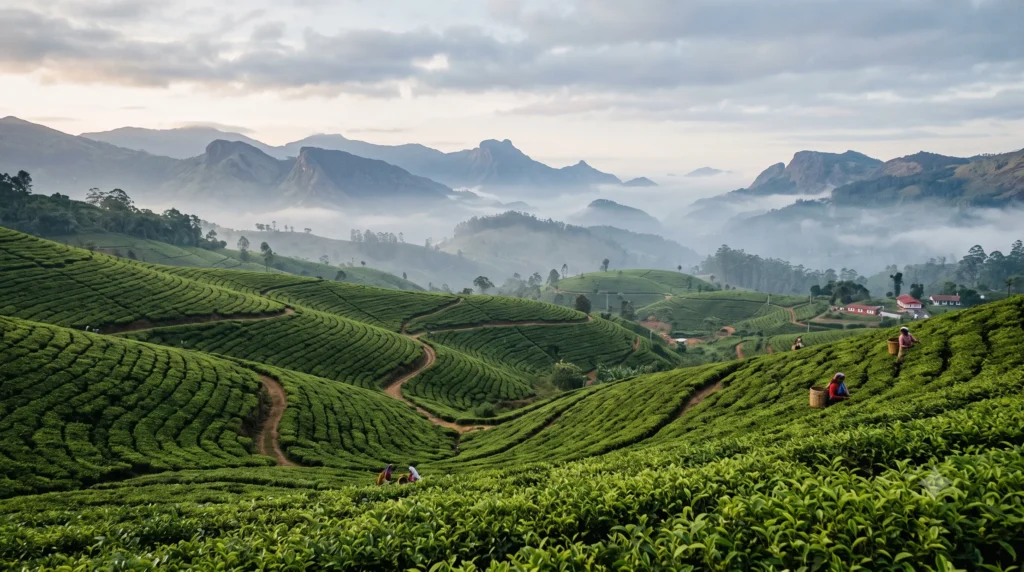
- Nuwara Eliya: A mountainous tea-growing region that also yields gem material.
- Metiyagoda: On the southwest coast, specifically known for moonstone.
- Rakwana and Tissamaharama: Additional established gem-bearing districts.
Each region has its own particular character and specialties, but nearly all share the same underlying alluvial illam geology and traditional vatti extraction methods.
A Living Tradition, Not a Museum Piece
What’s genuinely remarkable about Sri Lanka’s gem heritage is that it isn’t preserved behind glass — it’s still how the industry actually operates. Small-scale, low-impact, family-run mining remains the norm rather than the exception, and the same basic techniques used centuries ago, adapted with modern tools like pumps for groundwater management, are still what pull sapphires, spinels, and zircons out of the ground around Ratnapura today. The industry continues to employ thousands of people directly — miners, sorters, cutters, polishers, and traders — and gemstones remain deeply woven into Sri Lankan cultural identity, appearing not just in jewelry and export trade but in traditional and religious contexts across the island.
For a stone bought today, that history isn’t incidental. A sapphire or spinel recovered through illam alluvial mining and sorted by hand in a vatti basket carries a direct, unbroken line back to a mining tradition that predates most of the world’s recorded gemological history — which is part of what makes Sri Lankan provenance genuinely meaningful, not just a marketing detail.
/
🇱🇰 Explore Gems Found in Sri Lankan Mines: Sri Lanka’s eco-friendly pit mining yields a rich array of natural mineral species beyond sapphire. Learn more about these remarkable Ceylon treasures in our dedicated category hubs:
- Discover brilliant colors and market value in our Spinel Gemstone Category.
- Learn about double refraction and high dispersion in our Zircon Gemstone Category.