


Aquamarine is a pale-to-deep blue gemstone whose name literally means “water of the sea” in Latin a fitting description for a stone that’s been associated with oceans, sailors, and calm for as long as it’s been mined. It’s the birthstone for March, the gem of 19th wedding anniversaries, and a genuine sibling to emerald, even though the two look nothing alike.
What Is Aquamarine?
Aquamarine is the blue-to-blue-green variety of beryl, a silicate mineral species found in igneous and metamorphic rocks around the world. It shares its parent mineral with several other well-known gems: emerald (the green variety, colored by chromium and vanadium instead of iron), morganite (pink), heliodor (yellow to yellow-green), and goshenite (colorless). Aquamarine and emerald are genuine sister stones, chemically speaking, despite looking nothing alike.
The name comes from the Latin aqua marinus — “water of the sea” — a description that’s held up remarkably well across centuries of use, since the stone’s characteristic pale-to-medium blue really does evoke shallow ocean water.
Why Is Aquamarine Blue? The Science of the Color
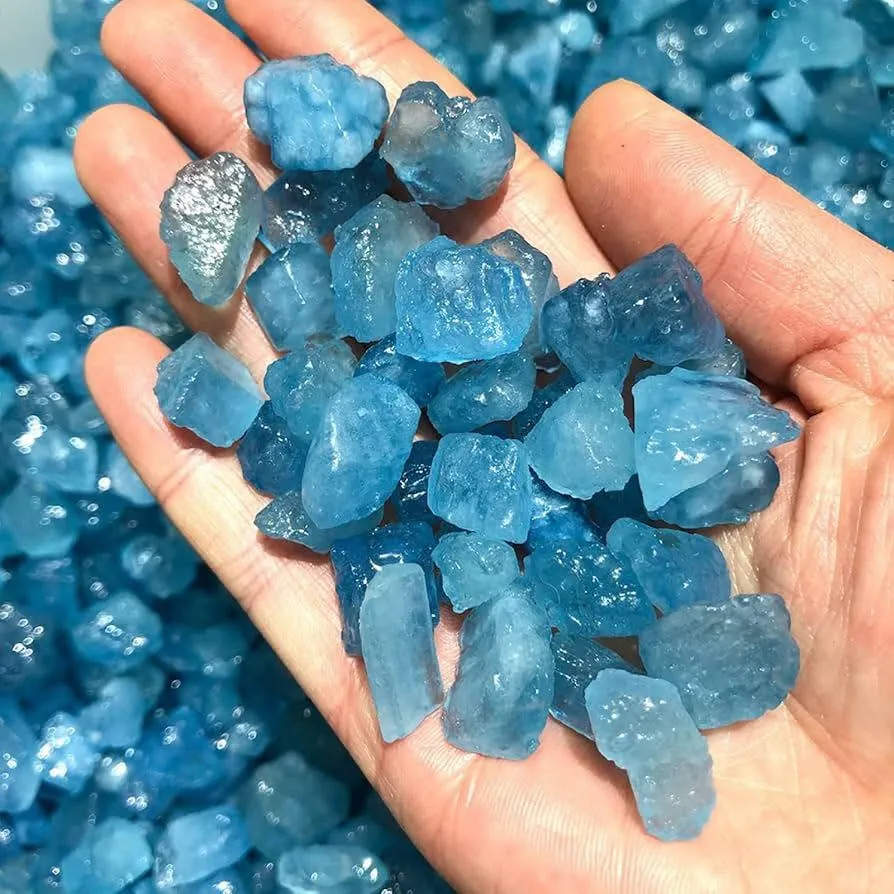
Aquamarine’s color comes from iron impurities within its crystal structure, specifically the Fe²⁺ (ferrous) ion. In its natural, unheated state, aquamarine typically shows a greenish-blue or blue-green cast, caused by the combined presence of both Fe²⁺ and Fe³⁺ (ferric) iron. A rarer, more intensely saturated blue variety called Maxixe results from a particular combination of these iron states, though this color is notably unstable and prone to fading with light exposure.
Nearly all aquamarine sold today has been heat-treated at a controlled temperature (roughly 400°C) to remove the greenish tint and shift the color toward a purer, more valuable blue. This treatment is stable, permanent, and considered standard industry practice — not something to be wary of, but worth knowing so you understand what “aquamarine blue” actually means on the market versus in nature.
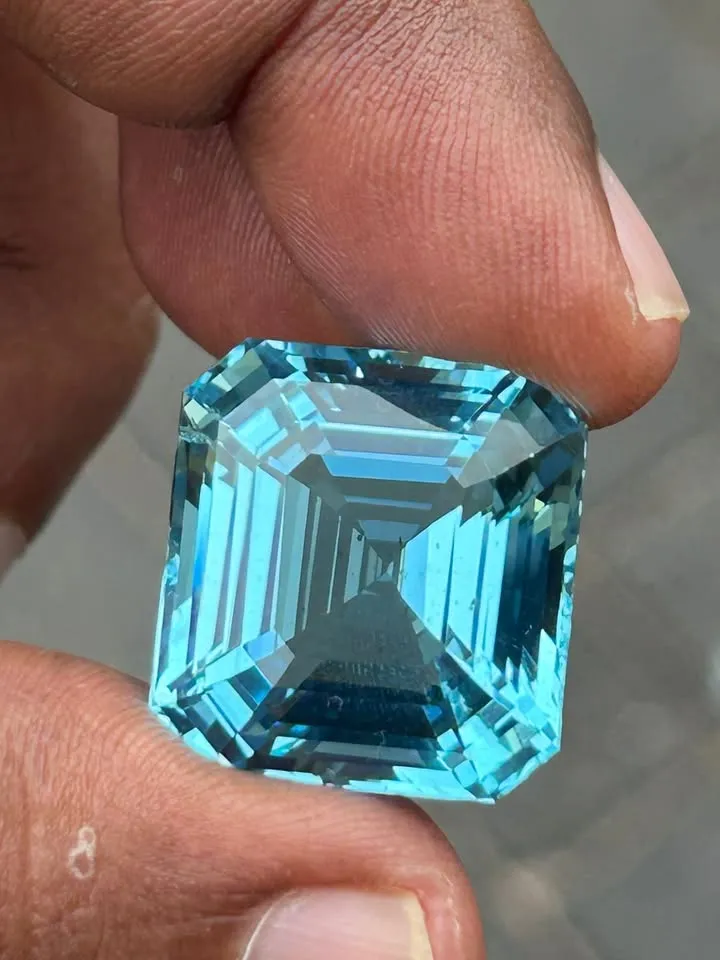
Aquamarine forms in granite pegmatites, coarse-grained igneous rock formations, typically growing as elongated, six-sided prismatic crystals. Unlike its sister emerald, which is famously included and fragile, aquamarine crystals tend to grow large and remarkably clean — some documented crystals have exceeded 100 pounds, and gem-quality material of 25 carats or more is genuinely available on the market, a rarity among comparably prized colored gemstones.
Aquamarine Meaning and Symbolism
Aquamarine’s association with the sea isn’t just etymological — it runs through centuries of folklore. Ancient sailors carried aquamarine as a talisman for protection on ocean voyages, believing it could calm rough waters and guard against seasickness. As far back as 480 BC, the stone was considered treasure of the mermaids, its protective power thought to strengthen when the gem was immersed in water. That maritime symbolism has persisted into the present day, where aquamarine remains a popular gift for those who travel by sea.
Beyond its ocean associations, aquamarine has long been linked to courage, clarity, and calm communication — traits that made it a traditional gift for couples working through difficult periods, and part of why it’s the recognized gemstone for 19th wedding anniversaries. It’s also the modern birthstone for March, alongside bloodstone as the traditional alternative.
Is Aquamarine a Precious or Semi-Precious Stone?
Aquamarine is technically classified as a semi-precious gemstone, a category that historically distinguished it from the “big four” precious stones (diamond, ruby, sapphire, and emerald). In practice, this classification says more about historical market convention than actual quality or beauty. Fine aquamarine, particularly in deep, saturated color, can be genuinely rare and command real prices, even if it sits outside the traditional “precious” category.
Aquamarine Durability: Is It Good for Everyday Jewelry?
Yes. Aquamarine rates 7.5 to 8 on the Mohs hardness scale comparable to its sister stone emerald, and notably more durable in practice, since aquamarine is far less prone to the internal inclusions and fractures that make emerald a more delicate choice for daily wear. This makes aquamarine a genuinely practical option for engagement rings and other jewelry worn regularly, though like any gemstone, it isn’t entirely immune to chipping or cracking from a hard impact.
Where Does Aquamarine Come From?
- Brazil: The world’s leading source, with mines spread across the country, including the historic (now largely exhausted) Santa Maria de Itabira mine, source of the trade’s benchmark deep-blue color grade.
- Africa (Mozambique, Nigeria, Madagascar, Zambia, Kenya, Tanzania): Now collectively the largest current supplier of aquamarine to the global market, including fine “Santa Maria Africana” material comparable in quality to the original Brazilian source.
- Pakistan: Aquamarine is mined at high elevation in the Karakoram Mountains, alongside other notable sources in Afghanistan and Russia.
- Sri Lanka, Myanmar, Australia, China, India, and the USA: Additional established sources contributing to the broader global supply, generally in smaller quantities than the primary producers above.
How to Care for Aquamarine
Clean it with warm water, mild soap, and a soft brush. Given its solid hardness (7.5–8) and relative resistance to fracturing compared to other beryls, aquamarine is generally considered safe for ultrasonic and steam cleaning, though it’s worth confirming with your jeweler if the piece includes other, more delicate stones.
📌 Sourcing & Origins: Curious how Sri Lanka’s historic river deposits compare to Brazilian pegmatites when sourcing fine beryl and precious gems? Explore our Sri Lankan Gem Heritage Overview.
Exploring Other Natural Blue Gems?
If you’re comparing aquamarine with other natural blue gemstones, learn what to look for in our expert guides:
• Compare brilliant fire and double refraction in our Zircon Buying Guide.
• Discover untreated pastel and cobalt varieties in our Spinel Buying Guide.

