
Pink amethyst is real amethyst, genuine quartz, not a synthetic or mislabeled substitute ,but it’s also one of the more confusingly marketed stones in the crystal trade, with real disagreement over exactly where “true” pink amethyst comes from. Before buying one, it’s worth understanding both what makes it authentic and where the marketing gets murky.
What Is Pink Amethyst?
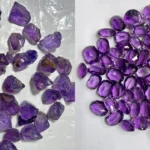
Pink amethyst is a color variety of amethyst, which is itself the purple form of quartz (silicon dioxide, SiO₂). Like standard purple amethyst, its color forms through iron impurities activated by natural gamma radiation within the crystal structure, but pink amethyst specifically owes its softer pink hue to small inclusions of hematite (iron oxide) distributed through the quartz. It typically appears less transparent than classic purple amethyst, with a softer, more opaque pink color running through the crystal body, and often forms as masses, prismatic shards, botryoidal (grape-like) clusters, or druzy coatings rather than the large, well-terminated points associated with purple amethyst.

Is Pink Amethyst Real? Addressing the Confusion Directly
Yes, genuinely pink amethyst is real amethyst, not a fake or a rebranded different mineral. But there’s a real, unresolved naming dispute worth knowing about before you buy: some sources maintain that “true” pink amethyst comes specifically from a single deposit in Patagonia, Argentina, tied to ancient volcanic activity in the region, and that pink-toned amethyst from Brazil should more accurately be called “rose amethyst” instead. In practice, the market doesn’t consistently follow this distinction most pink amethyst sold today, including the well-documented material from Ametista do Sul in Rio Grande do Sul, Brazil, is marketed simply as “pink amethyst” regardless of which naming convention a given seller follows.
This isn’t a case of deception so much as inconsistent industry terminology around a relatively new, still-settling trade category. If precise origin matters to you, ask the seller directly which deposit their material comes from rather than relying on the label “pink amethyst” alone to tell you.
Pink Amethyst vs. Rose Quartz: How to Tell Them Apart
These two are frequently confused, understandably, given the color overlap, but they’re genuinely different minerals with different causes of color. Rose quartz gets its pink tone from trace titanium, iron, and manganese, and typically forms as massive, translucent material without the crystal faces amethyst shows — it’s also one of the most common and widely available crystals in the world, found on nearly every continent. Pink amethyst, by contrast, is a crystalline quartz colored by hematite inclusions and iron-plus-radiation exposure, and its known sources are far more geographically limited. Visually, pink amethyst often shows a more defined crystal structure (points, druzy texture, geode formations) where rose quartz tends toward smooth, massive material.
Where Pink Amethyst Comes From
- Ametista do Sul, Rio Grande do Sul, Brazil: The best-documented and most commercially available source. Amethyst geodes here form within ancient volcanic basalt, where gas bubbles trapped as lava cooled created cavities later filled by silica-rich, iron-bearing fluid over millions of years.
- Patagonia, Argentina: Cited by some sources as the origin of “true” pink amethyst specifically, tied to a single, individual mining site and considered by this account to be genuinely rare given how localized the deposit is.
- Uruguay, Russia, and the USA: Additional sources of lavender-to-pink-toned amethyst, though material from these regions is less consistently marketed under the specific “pink amethyst” name.
Given the geological similarity between these deposits volcanic basalt cavities formed through comparable processes it’s plausible that genuine pink, hematite-colored amethyst occurs in more than one of these locations rather than being exclusive to a single site, even though trade naming conventions haven’t fully settled the question.

Pink Amethyst Meaning and History
Amethyst broadly has a long symbolic history, traditionally associated with clarity, calm, and protection, and pink amethyst specifically has become popular in recent years within crystal and wellness communities, where it’s often connected to themes of emotional openness and gentleness — fitting associations for its softer color compared to standard purple amethyst. It’s worth noting this is a relatively new addition to the gem and crystal market compared to purple amethyst’s much longer trade history, and there’s limited formal gemological research specifically on this variety compared to more established gemstones.
Pink Amethyst Durability: Is It Good for Jewelry?
Amethyst, including the pink variety, rates 7 on the Mohs hardness scale a solid, workable hardness for jewelry, comparable to citrine and other quartz varieties, though softer than sapphire or spinel. It’s reasonably durable for rings, pendants, and other jewelry, though as with any quartz variety, it’s best to avoid sharp impacts and prolonged sun exposure, which can fade amethyst’s color over time (a trait shared across the amethyst family, not unique to the pink variety).
What Determines the Value of Pink Amethyst?
- Color saturation — A clean, even pink without excessive greying or cloudiness is more desirable than pale or muddy material.
- Crystal formation — Well-formed points, attractive druzy texture, or striking geode formations command higher prices than shapeless mass material, particularly in the specimen/collector market.
- Documented origin — Given the ongoing naming confusion, sellers who can clearly document a specific mine or region (such as Ametista do Sul) generally command more buyer trust and, often, higher prices.
- Size and specimen quality — As with many crystal varieties, pink amethyst is bought both as cut jewelry stones and as raw or polished display specimens, with large, well-formed geode specimens sometimes commanding significant prices in the collector market.
How to Care for Pink Amethyst
Clean it with warm water, mild soap, and a soft brush. Avoid prolonged direct sunlight, which can fade amethyst’s color over time, and store it away from harder gemstones that could scratch its surface. Ultrasonic cleaners are generally considered safe for solid pieces, though specimens with delicate druzy or crystal-point formations are better cleaned gently by hand.
💡 Gemology Note: Pink amethyst isn’t the only unusual color variety in the quartz family. Green amethyst (prasiolite) is another distinct pastel gem prized for its cool mint and olive tones. Learn how it’s identified and valued in our Green Amethyst Gemstone Guide.