
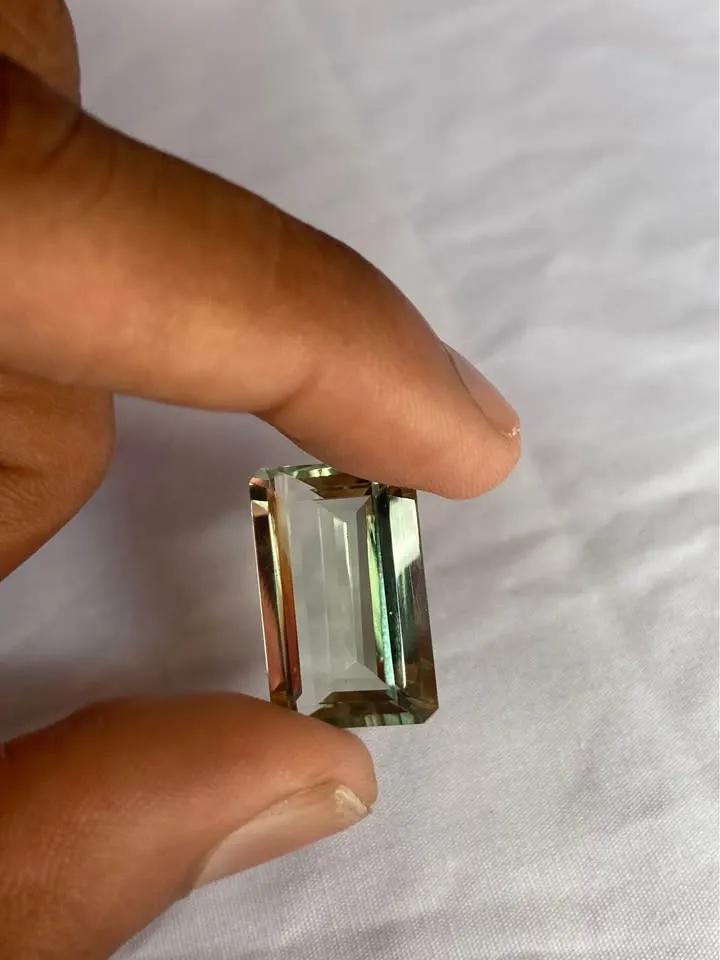
Green amethyst is a light to medium green variety of quartz. Most of what you see for sale is heat-treated amethyst or quartz. True natural green amethyst (called prasiolite) is rare.
The trade often uses the name “green amethyst,” but the Federal Trade Commission says that name is not correct. The proper name is prasiolite.

What Green Amethyst Actually Is
It belongs to the quartz family. Its chemical formula is SiO₂.. The green color comes from iron in a specific form (Fe²⁺).
Hardness is 7 on the Mohs scale. That makes it hard enough for rings, earrings, and pendants with normal care. It has no cleavage, so it does not split easily like emerald. It can still chip if hit hard on a sharp edge.
The refractive index sits between 1.544 and 1.553. This gives it a soft glass-like shine rather than the sharp flash of sapphire or diamond.
Natural vs Treated: The Real Difference
Natural prasiolite forms when amethyst or certain quartz is heated by the earth over long periods. Known natural deposits are small. They include parts of Poland, Brazil, Canada, and Namibia.
Almost all commercial green amethyst is treated. Sellers heat pale amethyst (often from Brazil) to 400–500 °C. The heat changes the iron and turns the stone green. The color is stable under normal conditions. Some material is also irradiated.
Treated stones usually show an even, bright mint or olive green. Natural stones tend to be softer, slightly uneven, and sometimes carry a yellow or gray tint.
Lab reports from places like GIA will say “color caused by heat treatment” or “natural color” when they can tell the difference.
Color and Quality Factors
The most liked colors are even mint green or soft leek green. Stones that lean too yellow or too dark olive sell for less.
Clarity is usually good. Large visible inclusions lower the price. Cut matters because the stone is only hardness 7. A thin girdle or sharp corners can chip.
Size for size, green amethyst costs far less than emerald or tsavorite. That is one reason many people choose it for everyday jewelry.
How to Buy Green Amethyst Without Regret
Ask the seller three direct questions:
- Is the color natural or treated?
- Can you show a lab report if the stone is over one carat?
- Where did the rough come from?
Look for even color and a clean polish. Avoid stones with cloudy patches or obvious heat cracks that look like “fried eggs” under a loupe.
For rings you plan to wear daily, choose a bezel or low-prong setting. High prongs leave the edges open to knocks.
Compare it to other green stones before you decide. Chrysoprase is usually opaque and apple-green. Tsavorite is brighter, rarer, and more expensive. Green amethyst sits in the middle for price and look.
Simple Care Tips
Wash it with lukewarm water, mild soap, and a soft cloth. Rinse and dry.
Avoid ultrasonic cleaners, steam, and harsh chemicals. Long hours in strong sunlight can slowly lighten the color, so store it in a dark place when not wearing it.
Keep it separate from harder stones like diamonds or sapphires so they do not scratch it.
A Quick Note on Meaning
Many crystal guides link green amethyst to the heart chakra, calm, and new beginnings. These ideas come from modern crystal traditions, not science. Enjoy them if they feel useful, but base your purchase on the stone’s looks, durability, and price.
Green amethyst gives you real green color, solid hardness for daily wear, and a lower price than most other green gems. When you know it is usually treated and you buy from a clear seller, it is a smart, attractive choice.
You can learn more about the mineral properties and origins of green amethyst on the Wikipedia page for prasiolite.
Learn about green amethyst meanings, Mohs hardness, and jewelry care tips onKenkengems.
You can learn more about chalcedony varieties and green mineral inclusions in our detailed article onmoss agate.