Most gemstones are found the same way: someone digs them out of the ground. Taaffeite broke that rule completely. It was found already cut, polished, and sitting in a tray of ordinary stones, and nobody realized what it was until a curious gemologist stopped to look twice.
That accidental discovery is why taaffeite has become one of the most talked-about rare gems among collectors, even though most people have never heard the name. This guide covers everything worth knowing about taaffeite: how it was found, why it’s still so rare eight decades later, how to tell it apart from its near-twin spinel, what it costs, and what to check before buying one.
1. What Is Taaffeite?
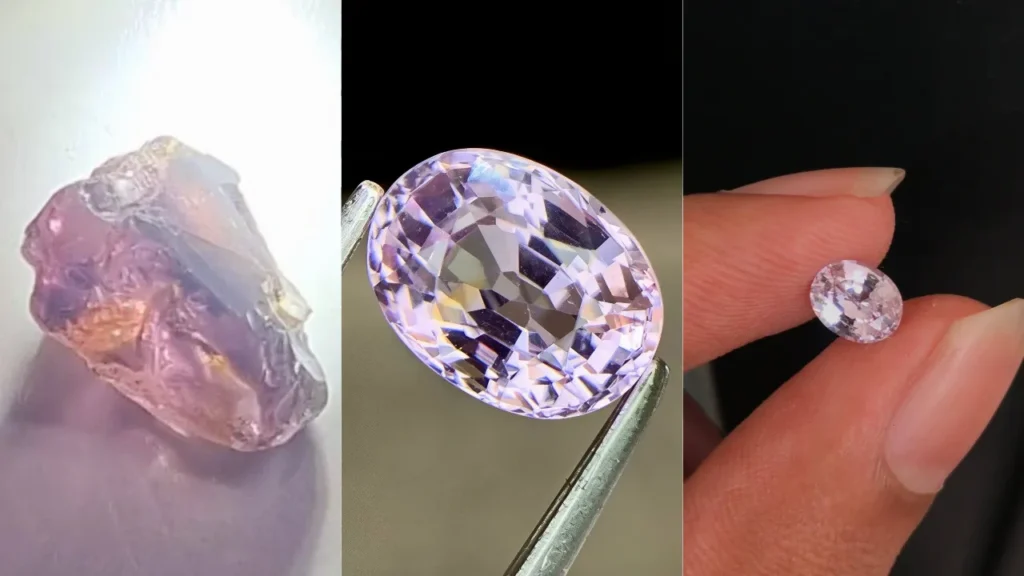
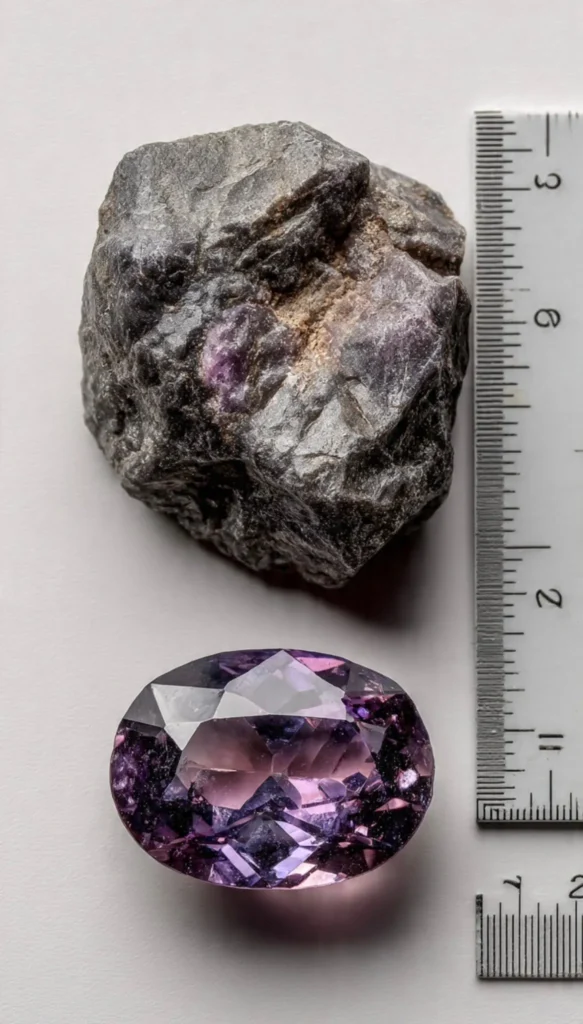
Taaffeite is a rare mineral made of beryllium, magnesium, and aluminum oxide. Its official mineral name is magnesiotaaffeite-2N’2S, though almost everyone just calls it taaffeite.
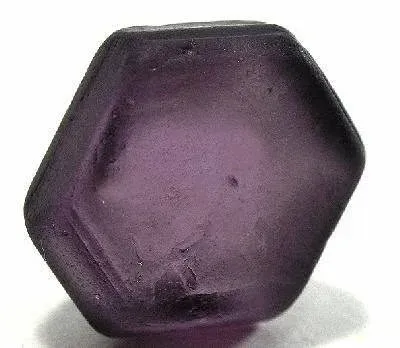
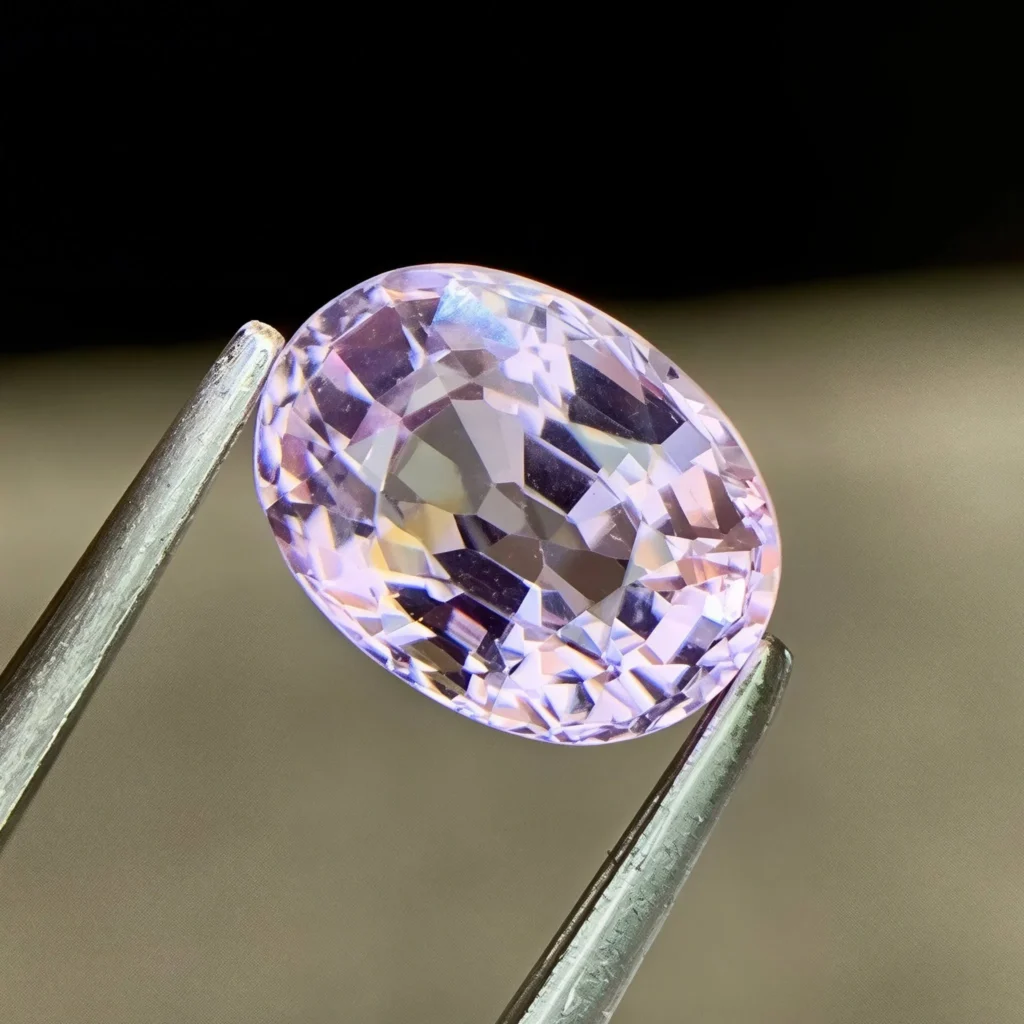
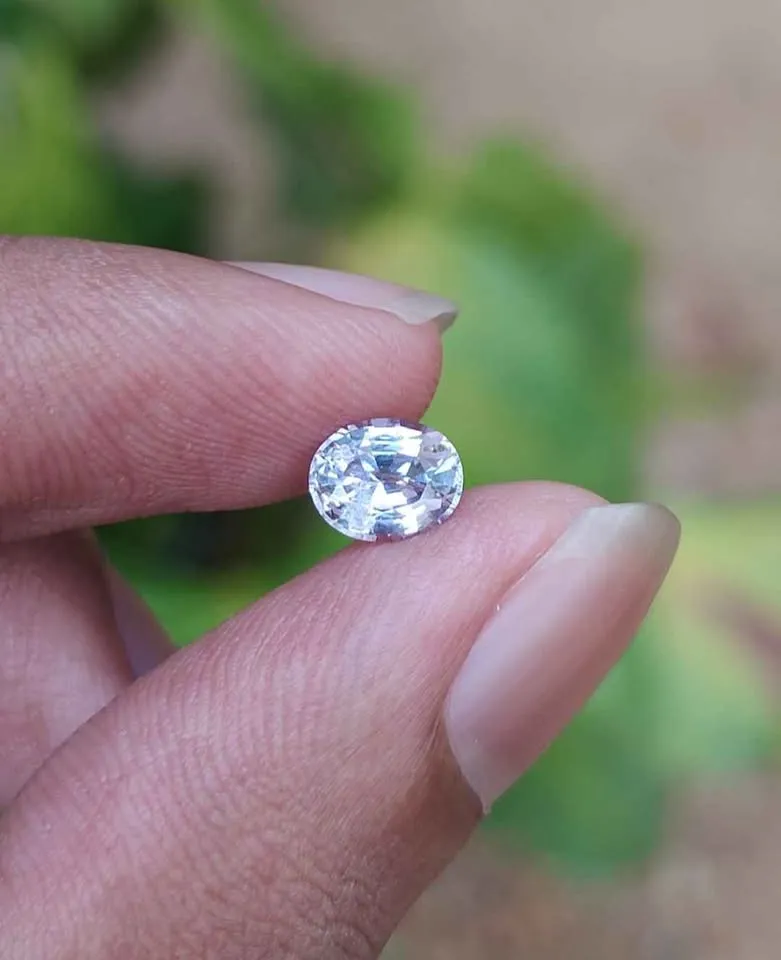
It forms in a hexagonal crystal structure. Most pieces are small and pale, ranging from lavender to mauve. Rarer pieces show deeper violet, pink, red, blue, brown, or occasionally green. The color comes from trace amounts of iron, chromium, or manganese trapped inside the crystal as it formed.
Taaffeite scores 8 to 8.5 on the Mohs hardness scale, which is harder than quartz and topaz, and close to chrysoberyl. That hardness is what makes taaffeite tough enough for jewelry rather than just a display case.
2. The Story of How Taaffeite Was Discovered
In October 1945, a Dublin-based gemologist named Richard Taaffe bought a batch of old cut gems from a local jeweler named Robert Dobbie. Taaffe came from an aristocratic Austrian family, and friends in Dublin affectionately called him “Uncle Yaxy.” Gem collecting was his passion.
Most of the stones in the parcel were spinel, a gem that had spent centuries being mistaken for ruby in royal jewelry. But one small mauve stone, weighing about 1.4 carats, didn’t sit right with Taaffe. It looked exactly like the spinels around it. Under closer inspection, though, it bent light in a way spinel never does.
Puzzled, Taaffe sent the stone to the Laboratory of the London Chamber of Commerce. At first, even the scientists there weren’t sure what they were looking at. Further testing eventually confirmed it: this was a mineral nobody had ever identified before. Part of the original stone was used up during the analysis; the rest was cut down to 0.55 carats and returned to Taaffe. That small stone is still considered the first official taaffeite ever recognized.
Why This Discovery Was Unusual
This is what makes the discovery genuinely rare in the history of gemology, not just as a mineral but as a scientific event. Nearly every other gem species was first identified from rough, uncut material, where the natural crystal shape gives scientists an obvious clue about what they’re looking at. This stone was identified purely from a finished, faceted piece, evidence that had already been sanded away by a jeweler’s wheel.
Gem dealer Carl Larson of Pala International has called this kind of discovery “extraordinary,” since an observer working from a cut stone loses most of the clues a rough crystal would normally offer. To this day, it remains the only gemstone species first identified from a faceted specimen rather than a rough one.
3. Why Is Taaffeite So Rare?
Taaffeite isn’t mined the way diamonds or sapphires are. No mine anywhere targets it specifically, because there simply isn’t enough of it in one place to justify that. It forms only under very particular geological conditions, inside certain limestone and skarn rocks where beryllium, magnesium, and aluminum happen to combine in exactly the right way.
Instead of being mined directly, this gem turns up as a surprise. Miners digging for spinel or chrysoberyl occasionally pull out a stone that turns out to be something else entirely once someone checks it properly with the right equipment. Because it hides so well among spinel, nobody really knows how much of it has been overlooked or sold as ordinary spinel over the decades.
In 1982, a report in the journal Gems & Gemology noted that only ten specimens were known to exist anywhere in the world. Even now, dealers who specialize in rare stones say they might only handle a couple dozen over several years of active trading, and only a handful of those are fine enough quality to stand out.
The Taprobanite Mix-Up
This gem’s rarity has confused even trained scientists more than once. In the early 1980s, a striking red stone from Sri Lanka was thought to be a brand-new mineral and given its own name, taprobanite, after Taprobane, the ancient name for the island of Sri Lanka. Further chemical analysis eventually showed that the “new” mineral was just taaffeite after all, an interesting case of a rare gem briefly being mistaken for something even rarer.
4. Where Does Taaffeite Come From?
The primary source of this gem-quality material is Sri Lanka, especially the gem gravels around Ratnapura, where much of the world’s supply of sapphire and spinel also originates. Smaller amounts have come from Tanzania’s Tunduru region and from Myanmar. Lower-grade material has also turned up in China and Russia.
5. Taaffeite vs. Spinel: How Gemologists Tell Them Apart
If you set a pale mauve taaffeite next to a pale mauve spinel, you probably couldn’t tell them apart just by looking. Their hardness, weight, and even the way they bend light overlap heavily. This is exactly why taaffeite spent centuries hiding in spinel parcels without anyone noticing it was something different.
The one property that reliably separates the two is called birefringence, or double refraction. Spinel is singly refractive, meaning light passes through it along a single path, similar to a diamond. Taaffeite is doubly refractive, meaning its internal crystal structure splits light into two separate paths. Gemologists test for this using a tool called a polariscope.
| Property | Taaffeite | Spinel |
|---|---|---|
| Chemical formula | BeMg₃Al₈O₁₆ | MgAl₂O₄ |
| Crystal system | Hexagonal | Cubic |
| Refraction | Doubly refractive | Singly refractive |
| Mohs hardness | 8 to 8.5 | 8 |
| Refractive index | 1.717–1.730 | 1.712–1.762 |
| Specific gravity | 3.60–3.62 | 3.54–3.63 |
Because the numbers overlap so much on paper, a visual check or even a basic refractive index test often isn’t enough on its own. The birefringence test, backed by a proper lab report, is really the only dependable way to confirm a stone is taaffeite rather than spinel.
6. Taaffeite’s Even Rarer Cousin: Musgravite
This gem belongs to a small mineral family that also includes musgravite, first found in the Musgrave Ranges of South Australia in 1967. The two minerals are chemically related, but musgravite forms in a trigonal crystal system rather than the hexagonal one seen here.
Musgravite is generally considered rarer still. Some gemologists rank it, alongside a mineral called painite, above taaffeite on the list of the world’s scarcest gem minerals. Telling taaffeite and musgravite apart usually requires advanced lab equipment, since the two can look nearly identical to the naked eye.
7. The Radioactive Halos Hidden Inside Some Taaffeites
Some Sri Lankan taaffeites contain tiny black mineral inclusions, believed to be thorianite or uraninite, both naturally radioactive minerals. Over long periods of geological time, these inclusions give off alpha particles that damage the surrounding crystal structure in a small, ring-shaped zone around them.
Under magnification, this shows up as a faint, layered halo circling the inclusion, sometimes called a pleochroic halo. It’s a striking thing to see through a jeweler’s loupe, and it also gives gemologists a clue about a stone’s age and geological history.
![Image: Close-up microscope photo of a pleochroic halo inside a taaffeite gemstone, showing concentric rings around a dark inclusion]
8. How Much Does Taaffeite Cost?
There’s no official price index for taaffeite the way there is for diamonds, so any specific number you see online is really one dealer’s snapshot rather than a fixed market rate. That said, prices reported by specialist gem dealers tend to cluster into fairly consistent tiers, based mainly on three factors: color saturation, clarity, and carat size.
- Pale, lightly colored stones (the most common kind found): roughly $800 to $2,500 per carat
- Stones with richer, more saturated lavender or violet color: roughly $5,500 to $7,500 per carat
- Intensely colored, eye-clean stones, which are extremely uncommon: up to $15,000 to $35,000 per carat
Red taaffeite sits in a category of its own. Only about a dozen red specimens are known to exist, and they rarely come up for sale at all. When fine taaffeites do appear at auction, they tend to sell quickly. In 2018, a 5.34-carat lavender taaffeite sold at Bonhams for $20,000. Because so few taaffeites come to market in any given year, treat any price you see as a starting point for a conversation with a dealer, not a fixed number you can rely on.
9. Is Taaffeite Practical for Jewelry?
Yes, within reason. At 8 to 8.5 on the Mohs hardness scale, it can hold up to daily wear better than many people expect from such a rare gem. Because most cut stones are small, it tends to suit rings with smaller settings, earrings, or pendants rather than large statement pieces designed to show off size.
Given how uncommon and valuable fine specimens are, many owners still treat a taaffeite more like a piece of a collection than an everyday accessory. That’s a personal choice rather than a durability limitation. The stone itself can handle regular wear just fine, and jewelers who work with rare colored gems generally recommend the same settings they’d suggest for a fine sapphire: protective bezel or halo settings for rings, and simple prong settings for earrings or pendants where the stone faces less daily impact.
10. How to Buy Real Taaffeite Safely
Given how easily this gem gets confused with spinel and how much money is at stake with a rare stone, a few basic precautions go a long way toward protecting a buyer.
- Ask for a gemological lab report confirming birefringence and identity, not just the seller’s word
- Buy from a dealer who specializes in rare colored gems rather than a general jewelry retailer
- Ask about the stone’s origin, since Sri Lankan and Myanmar material has the strongest track record for quality
- Compare the asking price against recent sales of similar size, color, and clarity before deciding
11. Synthetic and Imitation Stones to Watch For
Because genuine specimens are so hard to find, buyers occasionally run into synthetic or simulated versions being sold under the same name. No commercially produced synthetic version of this exact mineral currently exists on the market, since its unusual chemistry makes it impractical to grow in a lab at scale. That’s actually good news for buyers: if something is marketed as “lab-grown” or “synthetic” under this name, that claim alone is worth questioning.
The more common issue is simple misidentification, either accidental or intentional. Because pale mauve spinel looks so similar, some sellers unknowingly list spinel as the rarer stone, and a smaller number do so knowingly to charge a premium. Glass imitations and doublets, where a thin layer of the real material is fused to a cheaper base, have also shown up occasionally in lower-end markets.
The birefringence test described earlier catches nearly all of these cases. A polariscope check takes only a few minutes in a gemological lab and is inexpensive relative to the value of the stone being verified. For any purchase above a token amount, it’s worth treating a lab report as a standard part of the transaction rather than an optional extra. Reputable dealers who specialize in rare colored gems will expect this request and usually have documentation ready before you even ask.
12. How to Care for a Taaffeite Gemstone
This gemstone doesn’t need any special treatment beyond what most fine gems require. Clean it with lukewarm water, a small amount of mild soap, and a soft brush, then dry it with a soft cloth. Avoid ultrasonic and steam cleaners if the stone has visible inclusions or fractures, since vibration and heat can sometimes worsen existing internal stress, particularly around the radioactive inclusions and pleochroic halos described earlier.
Store this jewelry separately from harder stones like sapphire or diamond, since even small amounts of contact over time can scratch the surface and dull its polish. It lacks a perfect cleavage plane, which means it resists chipping reasonably well compared to some other gems of similar hardness, but it’s still worth handling with the same care you’d give any rare, faceted stone. If a piece is set in a ring worn daily, an annual check by a jeweler to confirm the setting is still secure is a reasonable habit, given how difficult a lost stone this rare would be to replace.
13. Notable Specimens and Where to See Them
A handful of well-documented specimens have ended up in museums and major private collections, which gives collectors and researchers a rare chance to study fine examples up close. The second stone ever recognized, weighing 0.86 carats, is held at the Geological Museum in London. A third, identified at a GIA laboratory in New York, sits alongside a larger 5.34-carat dark brownish-purple gem in a private collection known as the S1 collection.
A flawless 13.22-carat mauve oval, reportedly the largest clean example known, is held by a private Sri Lankan collector. Because so few large, clean specimens exist, a stone of that size is considered exceptional even by the standards of a gem this rare. Most people who own one will never see another taaffeite of comparable size and clarity in person.
Frequently Asked Questions About Taaffeite
Is taaffeite rarer than a diamond? Yes, significantly. Taaffeite is far scarcer in terms of known specimens, though diamond is mined and traded at a completely different industrial scale.
What causes taaffeite’s color? Trace amounts of iron, manganese, and especially chromium are responsible for its lavender, violet, pink, and rare red tones.
How can you tell if a taaffeite is real? A lab test for birefringence using a polariscope is the standard method. Visual inspection alone isn’t reliable, since spinel looks nearly identical to the naked eye.
Where does most taaffeite come from? Sri Lanka is the primary source, with smaller amounts from Tanzania and Myanmar, and lower-grade material from China and Russia.
Is taaffeite the same as musgravite? No. The two are closely related and belong to the same mineral family, but musgravite has a different crystal structure and is considered even rarer than taaffeite.
Can taaffeite be worn every day? Its hardness of 8 to 8.5 makes it durable enough for regular wear, though many owners choose to treat a fine taaffeite more like a collector’s piece given its rarity and value.
“Learn more about radiation halos in Sri Lankan taaffeite in GIA’s Micro-World feature.”
“To learn more about prasiolite’s origins, explore ourcomplete guide to green amethyst.”