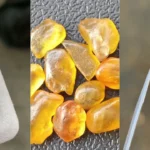

Spinel might be the best-kept secret in colored gemstones: nearly diamond-hard, almost always untreated, available in more colors than any single gem species has a right to, and priced well below the ruby and sapphire it was mistaken for throughout most of history. It’s also easy to get wrong if you don’t know what to look for. This guide covers what actually matters when buying spinel, regardless of which color you’re considering.
Understand What You’re Actually Comparing It To
For centuries, spinel wasn’t recognized as its own species it was mined alongside ruby and sapphire and often sold as one or the other. The Black Prince’s Ruby in the British Imperial State Crown is a famous example of a “ruby” that turned out to be spinel. That history is directly relevant to buying today: spinel offers a genuinely comparable look and performance to ruby and sapphire in many colors, at a meaningfully lower price point, simply because it hasn’t carried the same market recognition until relatively recently. Knowing this helps you evaluate spinel on its own terms rather than as a “lesser” alternative to corundum.

Choose Your Color First — Then Understand Origin’s Role
Spinel’s color range is one of the widest of any gem species: red, pink, orange, yellow, green, blue (including rare cobalt-colored blue), grey, violet, brown, and colorless, plus specific trade names like “Jedi” and “Mahenge” spinel that describe particular quality tiers or single-deposit origins rather than separate species. Origin plays a real role in value here, more so than with many gems:
- Myanmar (Burma), especially the Mogok Stone Tract, is historically the most prestigious spinel source and commands premium pricing, particularly for red and pink material.
- Sri Lanka offers exceptional color diversity and is generally considered better value than Myanmar material of comparable quality, while still being genuinely fine spinel.
- Tanzania (Mahenge) produces the vivid neon pink-red spinel that transformed the market after a landmark 2007 discovery of a specific, single-deposit origin that’s part of the gem’s identity, not just a general source.
- Vietnam (Luc Yen) is the world’s most consistent source of rare cobalt-colored blue spinel specifically.
A dealer who can tell you the specific origin of a stone, not just “spinel,” but “Burmese spinel” or “Mahenge spinel” is generally a more trustworthy source than one who can’t.
Understand the Four Cs, Spinel-Specific
Color: Look for strong saturation, a pure hue without excessive grey or brown modifiers, and a tone that isn’t too dark or too pale the same principles that apply to ruby and sapphire grading, since spinel is judged by comparable standards.
Clarity: Spinel is generally a clean-cutting gem, so eye-clean material is a reasonable expectation across most colors and price points. Visible inclusions meaningfully affect value more than they might in gems where inclusions are considered normal or even desirable (spinel has no equivalent to demantoid garnet’s prized horsetail inclusions, for instance).
Cut: A well-proportioned cut maximizes spinel’s natural brilliance, which comes from its cubic, singly refractive crystal structure. Poorly cut stones look noticeably duller even at strong color saturation.
Carat weight: Fine spinel above 2–3 carats is genuinely uncommon in most colors, and large stones in the rarest colors (cobalt blue, green, fine Mahenge material) command a steep premium relative to smaller stones of similar quality.
Is It Treated? (Usually Not — And That’s the Point)
This is one of spinel’s biggest selling points relative to ruby and sapphire: there’s no widely used or reliable treatment for enhancing spinel’s natural color, so the vast majority of spinel on the market reaches buyers exactly as it formed underground. This is a genuine, verifiable point of difference from corundum, where heat treatment is standard practice. That said, always ask directly and request documentation for significant purchases treatment disclosure is still good practice even when treatment itself is rare.
Natural vs. Synthetic: The Question That Actually Matters More
Because natural spinel is so rarely treated, the real question to ask isn’t usually “is this treated?”it”‘s “Is this natural or lab-created?” Synthetic spinel has existed since the 1920s, is inexpensive to produce, and is widely used to imitate other gemstones in costume and birthstone jewelry. It’s especially common in certain colors yellow spinel, for example, is genuinely rare in nature, and a significant share of what’s sold as “yellow spinel” is actually synthetic. A price that seems unusually low for the carat weight and color offered is often the first sign of synthetic material. Reputable dealers state natural origin clearly; if a listing doesn’t specify, ask before you buy.
Durability: One of Spinel’s Real Strengths
Spinel rates 8 on the Mohs hardness scale, well above quartz, close to sapphire’s 9, and has no cleavage plane, meaning it doesn’t have an internal weak point prone to chipping in a particular direction. This makes most spinel colors genuinely practical for daily wear, including engagement rings, without the durability caveats that apply to gems like demantoid garnet or zircon. One partial exception: fine spinel is often cut with sharp, well-defined facet edges, which can be more prone to abrasion over years of hard wear than a rounder cut. It’s worth considering a protective setting if the piece will see constant daily use.
Red Flags to Watch For
- A listing that doesn’t specify natural vs. synthetic. Given how rare synthetic ambiguity should be with spinel (since treatment itself is rare), a vague listing is a bigger warning sign here than with gems where treatment is standard.
- An unusually low price for yellow, green, or cobalt blue spinel specifically—these are the colors where synthetic material or misattributed natural material most often gets mixed into the market.
- No stated origin for a stone marketed under a specific place-based name—if a listing says “Mahenge spinel” or “Jedi spinel” without documentation, ask for confirmation, since these terms carry real premiums tied to specific origin or quality standards.
- Certification that doesn’t match the listing description. Always cross-check any provided lab report against the actual stone’s stated color, weight, and origin claims.
What to Expect to Pay
Spinel remains genuinely undervalued relative to ruby and sapphire of comparable visual quality, which is a large part of its appeal to collectors. Common colors and smaller carat weights are generally accessible, while rare colors (cobalt blue, true green, fine Jedi, or Mahenge material) and larger stones command real premiums that reflect genuine scarcity rather than market hype. As with any gemstone purchase, price should track directly with the specific combination of color, origin, clarity, cut, and carat weight rather than the word “spinel” alone.
Explore Each Spinel Color in Depth
For a full breakdown of any specific color’s history, sourcing, and value considerations, start with our complete spinel color guide, or go directly to: