
Rhodolite is a rose-red to purplish-red garnet formed by a natural blend of two other garnet species, pyrope and almandine, rather than being a distinct mineral of its own. First described in 1898 from a discovery in North Carolina, it’s become one of the most popular garnets in modern jewelry precisely because it delivers a rich, saturated color at a fraction of the price of comparably vivid rubies or pink sapphires.
What Is Rhodolite Garnet?
Rhodolite isn’t a separate mineral species, it’s a variety name for a garnet that falls in the compositional overlap zone between pyrope (magnesium aluminum garnet) and almandine (iron aluminum garnet), two members of the pyralspite garnet series. The traditional description puts rhodolite at roughly one part almandine to two parts pyrope, though gemologists now recognize that real-world rhodolite compositions vary more than that ratio suggests, often carrying trace amounts of spessartite and grossular as well. In practice, gemologists identify rhodolite less by exact chemistry and more by refractive index (typically 1.74–1.78) and its signature color range. The name comes from the Greek rhodon, meaning “rose,” referencing the rhododendron flower, a nod to its characteristic pinkish-purple tone. The stone was first identified in 1898 from Cowee Valley, North Carolina, in material distinctly lighter and more purplish than the dark brownish-red almandine that dominated the commercial garnet trade at the time.
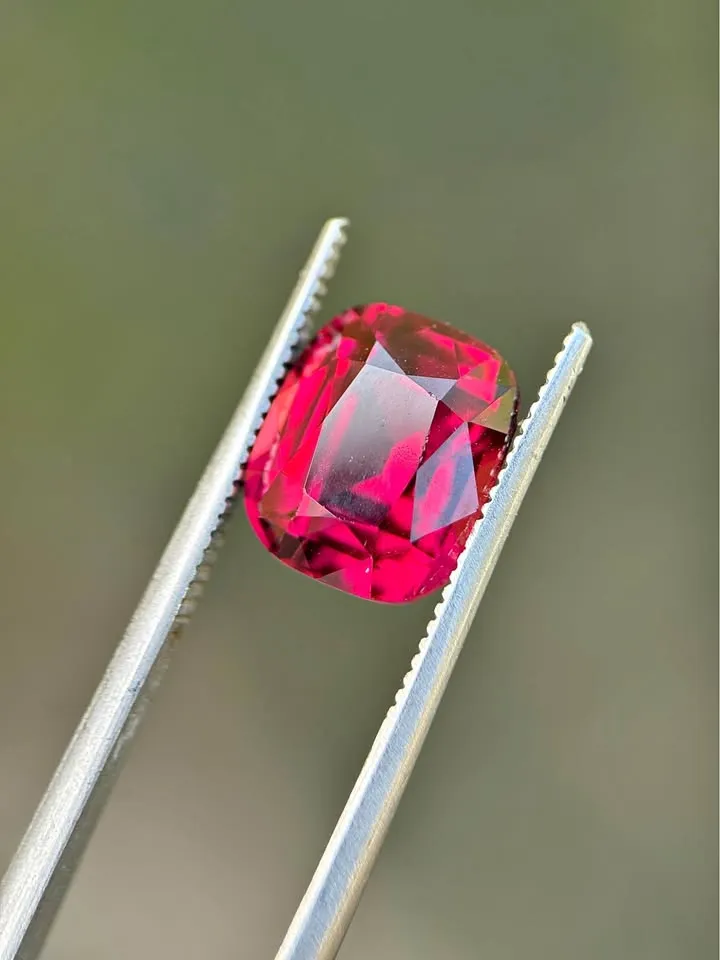
Why Is It Purple-Red?
Rhodolite’s color comes from the balance between two chromophores inherited from its parent species: magnesium from pyrope, which produces a lighter, more transparent red, and iron from almandine, which deepens the color and pushes it toward brownish-red. Where a rhodolite sits closer to the pyrope end of that spectrum, generally in the 50–75% pyrope range, the result is the lighter, more purplish-pink color the variety is prized for. Trace manganese (spessartite influence) and occasionally chromium can also lighten or shift the hue further toward pink or raspberry tones. This blended chemistry is also why rhodolite’s color is entirely natural: it’s a direct product of how much magnesium versus iron the crystal incorporated as it formed, not something applied afterward.
Where It Comes From
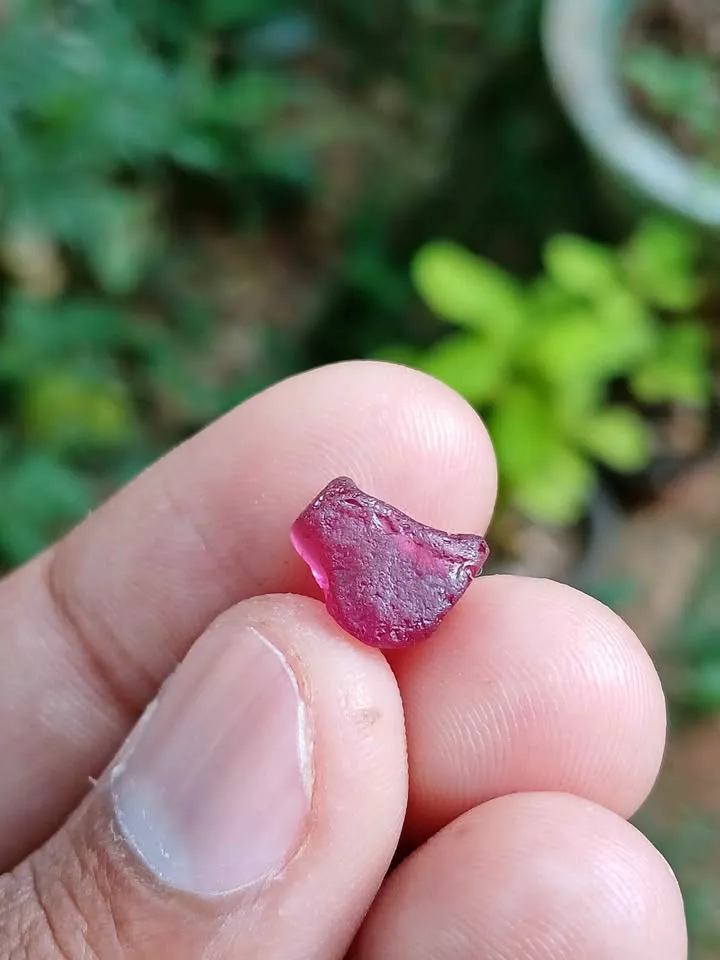
Rhodolite forms in metamorphic rocks under the heat and pressure conditions typical of pyralspite garnet formation, commonly appearing as dodecahedral crystals or as rounded pebbles concentrated in alluvial gravel deposits after erosion.
East Africa is the modern commercial backbone of the rhodolite trade. Tanzania and Mozambique both produce significant volumes, with Mozambique material sometimes marketed as “Mozambique garnet” for its deep claret-red tone. Sri Lanka is also a genuine and long-documented rhodolite source,the Smithsonian’s National Museum of Natural History holds a 15.75-carat rhodolite specimen sourced from Sri Lanka in its permanent mineral collection, and the variety has been recovered for generations from the island’s alluvial gem gravels, locally called illam, alongside almandine, spessartine, and grossular garnets in the Ratnapura district. Traditional miners there still use hand tools and the woven vatti basket to wash and sift gravel by hand, a technique that predates mechanized mining by centuries and remains in use today because mechanized mining is restricted on the island. Madagascar and India also contribute smaller volumes to the global supply.
Is It Treated?
Rhodolite garnet is almost universally untreated. Like other garnets, its color is locked into the crystal structure at formation through its magnesium-iron chemistry, and there is no standard heat treatment or enhancement process used commercially to alter or improve rhodolite’s color the way heat is used on sapphire or citrine. What’s sold in the market today is, with a rare exception, natural and unenhanced. There’s no widely established synthetic rhodolite in the jewelry trade either. The one caution for buyers: because trade names like “raspberry rhodolite” or “cranberry rhodolite” are marketing terms rather than strict gemological categories, it’s worth asking a seller for the actual species identification (rhodolite vs. purple almandine, for instance) rather than relying on a fruity color name alone.
Durability: Can You Wear It Every Day?
Rhodolite sits at roughly 6.5 to 7.5 on the Mohs hardness scale, putting it in a similar durability bracket to quartz and comparable to most other garnet varieties a reasonably practical choice for rings and everyday jewelry. A few real caveats:
- Inclusions are normal. Rhodolite is classed as a “type II” clarity stone, meaning included material is expected. Needle-like inclusions, and occasional included zircon or apatite crystals with visible stress halos, are common and don’t necessarily indicate poor quality but heavily included stones are more vulnerable to chipping or cracking under impact than eye-clean material.
- No unusual sensitivity. Unlike spessartine, rhodolite doesn’t carry the same heightened warnings around heat and chemical exposure, though standard care (avoiding harsh chemicals and sudden temperature swings) still applies to any garnet.
- Everyday wear verdict: clean, well-cut rhodolite handles rings and daily wear well. As with any type II garnet, a heavily included stone is a better fit for earrings or pendants than a ring that takes daily knocks.
What Determines Value
- Color saturation and hue. Vivid, saturated raspberry-purple to rose-red tones bring the strongest prices; overly pale or overly brown/muddy stones are worth considerably less.
- Origin. Mozambique and Tanzanian material with deep, saturated claret tones often commands a premium, though origin alone isn’t a reliable price guarantee — color quality matters more.
- Clarity. Because rhodolite is a type II stone, some inclusions are expected — but eye-clean or near-eye-clean stones still carry a real premium.
- Carat weight. Rhodolite is more available in larger sizes than many other garnets, so size alone doesn’t drive dramatic premiums the way it does with rarer species — color remains the primary value lever even at larger carat weights.
- Treatment status. Since rhodolite is almost always untreated, this isn’t typically a price differentiator, but documentation still reassures cautious buyers.
- Cut quality. A well-executed cut maximizes rhodolite’s natural brilliance and evenness of color; a poor cut can leave the stone looking dull or unevenly toned regardless of rough material quality.
How to Care for Rhodolite Garnet
Clean rhodolite with warm water, mild soap, and a soft brush. Ultrasonic and steam cleaners are generally considered safer for rhodolite than for more sensitive garnets like spessartine, but it’s still good practice to avoid them if the stone has visible inclusions, since fractures near the surface can be stressed by heat or vibration. Store rhodolite separately from harder gems like sapphire or diamond to prevent surface scratching, and remove rings before manual labor, sports, or heavy housework. Have a jeweler check prong settings periodically, as with any daily-wear ring stone.
Rhodolite Garnet vs. Amethyst: Don’t Confuse Them
Rhodolite is sometimes mistaken for amethyst because both can show a similar purple-to-purplish-red color range, especially in lower-saturation stones. The distinction matters for buyers:
- Species: Rhodolite is a pyrope-almandine garnet (silicate); amethyst is a variety of quartz colored by iron and irradiation, a completely different mineral family.
- Look: Rhodolite typically shows a warmer, rosier undertone even at its most purple, while amethyst tends toward a cooler, more saturated violet-blue tone, particularly in Siberian-grade material.
- Hardness and brilliance: Rhodolite (6.5–7.5 Mohs) is generally harder than amethyst (7 Mohs is close, but amethyst has weaker dispersion), and rhodolite typically shows noticeably stronger brilliance and fire due to its higher refractive index.
- Value: Fine rhodolite in strong raspberry-red tones frequently outprices comparable amethyst per carat, despite amethyst being more widely recognized by name.
A refractive index test resolves the identification with certainty, the visual overlap alone isn’t a reliable way to tell them apart, especially at lower saturations.
💡 Garnet Family Spotlight: Looking for a warmer, high-energy alternative to berry-pink rhodolite? Learn about fiery mandarin and orange varieties in our Spessartine Garnet Guide.
🇱🇰 Origin Note: Curious how Sri Lanka’s historic river gravels produce world-class rhodolite, sapphires, and rare collector gems? Explore all our origin features in the Sri Lankan Gem Heritage Hub.