

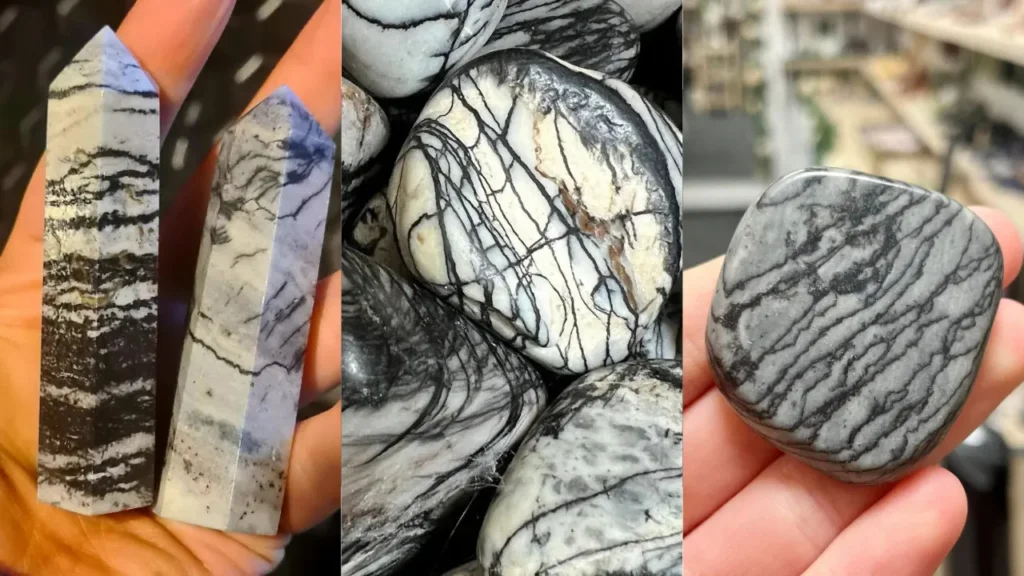
Spider web jasper is a dark-veined, opaque jasper prized for a genuinely rare trait among ornamental stones: no two pieces share the same pattern. It’s also a name applied loosely enough in the trade that buyers often can’t tell whether they’re holding true jasper, a look-alike agate, or dyed material sold under the same label a mix-up worth sorting out before you buy.
What is Spider Web Jasper? (The Spiderweb Stone)
Spider web jasper is an opaque variety of jasper, itself a form of chalcedony, cryptocrystalline (microscopically fine-grained) quartz (SiO₂). Its defining feature is a network of fine, contrasting lines running through the stone, typically black or dark brown veining against a lighter red, brown, green, or tan background, resembling a woven web. Jasper sits at 6.5–7 on the Mohs hardness scale, is opaque rather than translucent, and takes a strong vitreous-to-waxy polish. What separates jasper from close relatives like agate is opacity: hold a light behind a piece, and true jasper won’t let it through, while agate will show a translucent glow.
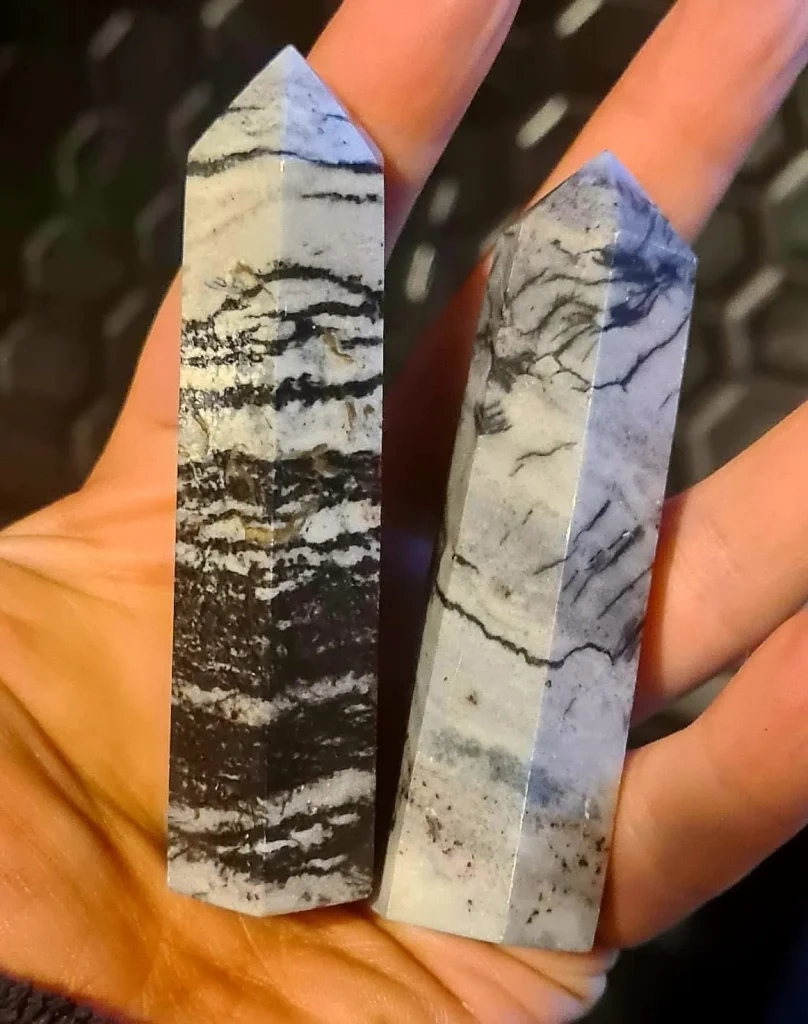
Spider Web Jasper vs. Spiderweb Stone
Although they go by different names in the commercial market, spider web jasper and “spiderweb stone” are the exact same material. The name simply refers to the distinct, contrasting matrix lines that run through the chalcedony, resembling a woven web. Whether a seller labels it a jasper or a stone, you are buying the same cryptocrystalline quartz.
How to Identify Real Spiderweb Jasper
The easiest way to verify genuine spiderweb jasper is the flashlight test. Because true jasper is completely opaque, holding a bright light directly behind the stone should not let any light pass through. If the stone glows or appears translucent at the edges, you are likely looking at a dyed agate or look-alike material rather than true jasper.
Spider Web Jasper Value and Price
Spider web jasper is an abundant and affordable gemstone, making it highly accessible for collectors and jewelry makers. Tumbled stones and small cabochons typically cost between $3 and $10, while larger, high-contrast display spheres or towers usually range from $20 to $50. The most valuable pieces feature sharp, unbroken black or brown “webbing” against a stark, contrasting background.
Table of Contents
Is It Really “Spider Web Jasper,” or Something Else? The Honest Answer
This is worth sorting out before buying, since the name gets applied loosely across at least three genuinely different materials in the trade. True spiderweb jasper is opaque chalcedony with web-like mineral banding. Spider web agate is a translucent chalcedony with a similar visual pattern, the two are frequently sold interchangeably online despite being distinguishable with a simple light test. Spider web obsidian is a different material entirely: volcanic glass, not a quartz variety at all, identifiable by its glassier luster and lower durability profile.
None of this means spider web jasper isn’t real it genuinely is, and it’s well documented from Arizona, Mexico, Madagascar, Australia, and India. The caution is narrower: because the “spider web” name describes a visual pattern rather than a strictly defined mineral composition, sellers aren’t always precise about which of the three materials they’re actually listing, and casual listings (Etsy, eBay, small crystal shops,which is most of what ranks for this term) rarely specify. [Unverified: I found no single authoritative source drawing a hard line on which material each seller means by default.]
How Is the Web Pattern Formed?
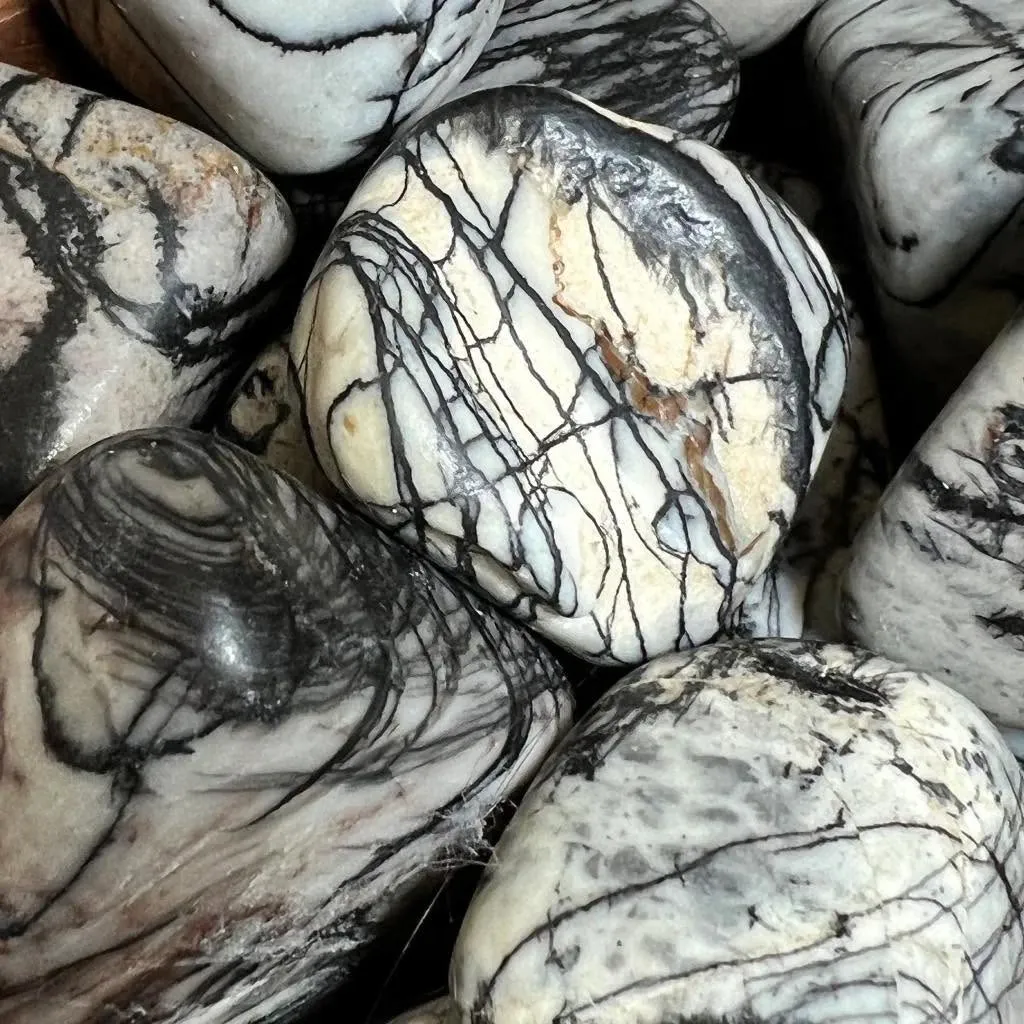
Jasper forms when silica-rich groundwater deposits microcrystalline quartz within cavities and fractures in volcanic rock over long periods. Unlike agate, which typically develops smooth, even, concentric bands from that same process, jasper incorporates a much higher volume of foreign mineral matter, commonly exceeding 20% by weight, making it fully opaque. Spider web jasper’s specific webbing forms when that mineral matter concentrates along a network of fine fractures within the stone before the silica fully solidifies, creating a contrasting lattice of lines rather than the smoother, more even banding typical of most other jasper varieties.
Why Does It Have That Color and Pattern?
Iron oxides are the most commonly cited cause of the red and brown background color in spiderweb jasper. The darker, often black, webbing lines typically come from manganese oxide that is concentrated specifically along the stone’s fracture network rather than spreading evenly through the matrix, which is why the pattern reads as distinct lines rather than an overall color shift. Because each stone’s fracture network forms uniquely, no two pieces of spider web jasper share an identical pattern, which is a large part of the material’s appeal to collectors.
Where It Comes From
- Arizona, United States, the most consistently documented and widely available source, known for black-and-green or black-and-red webbing specifically
- Mexico associated with the region’s volcanic activity
- Madagascar cited across gem reference sources as a source locality
- Australia and India additional documented sources contributing further color and pattern variation
There is no established Sri Lankan source for spider web jasper, so unlike several other RootAndCarat.com articles, no genuine local mining connection applies here.
Is It Treated?
Jasper generally reaches the market untreated, since its color and pattern come from stable natural mineral inclusions that don’t typically require enhancement. Dyeing does occur across jasper varieties broadly to intensify or standardize color in lower-grade material, so it’s worth knowing what to look for: color pooling in surface cracks rather than following the stone’s natural fracture lines, or unusually uniform, saturated color across an entire piece, are both signs of applied dye rather than natural banding.
Durability: Can You Wear It Every Day?
Spiderweb jasper measures 6.5–7 on the Mohs scale, comparable to quartz-family stones generally.
- Solid everyday hardness. In this range, it handles normal daily wear reasonably well.
- No cleavage, good chip resistance. Jasper’s fine-grained structure and lack of cleavage planes make it relatively resistant to chipping compared to more brittle stones of similar hardness.
- Generally safe for brief water exposure. Untreated jasper tolerates ordinary contact with water well; dyed material is more sensitive and best kept away from prolonged soaking or harsh chemicals.
- Everyday wear verdict: rings and bracelets handle daily wear well given the hardness and chip resistance, though protected settings still extend the life of the polish on any opaque ornamental stone.
How to Care for Spider Web Jasper
Clean with warm, soapy water and a soft brush. Because most spiderweb jasper is untreated, ultrasonic and steam cleaning are generally considered safe but confirm a specific piece hasn’t been dyed first, since dyed material can be more sensitive to heat and chemical exposure. Store separately from harder gemstones to avoid surface scratching.
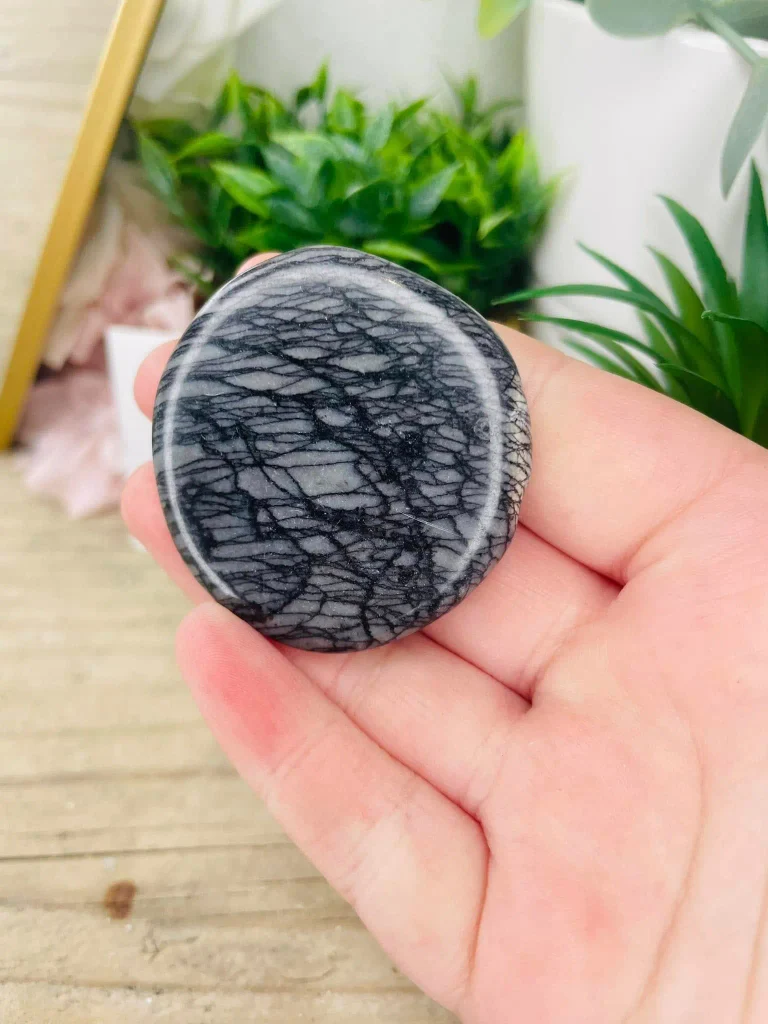
Spider Web Jasper vs. Spider Web Agate: Telling Them Apart
- Transparency: Jasper is opaque; agate is translucent. Hold a light behind the stone, and agate will let some through, but jasper won’t.
- Composition: Both are chalcedony (microcrystalline quartz), but jasper contains a much higher volume of mineral impurities, which is what makes it opaque.
- Pattern character: Both can show web-like patterning, which is exactly why the two get confused and sold interchangeably online.
- Shared buyer lesson: ask the seller directly which material a “spider web” listing actually is the visual pattern alone won’t tell you, and the light test only confirms opacity, not full identification.
Related Guide
Interested in exploring traditional varieties of microcrystalline quartz? Check out our full analysis in Red Jasper — 8 Fascinating Facts About This Ancient Stone.

