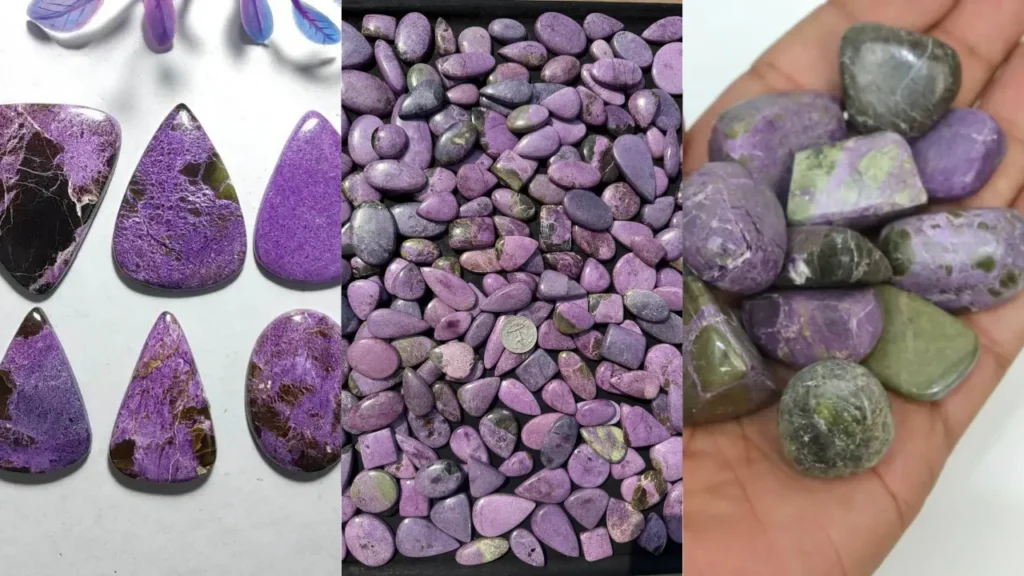
Stichtite is a rare, chromium-colored carbonate mineral ranging from soft pink to deep violet-purple, most famous as the purple component of the popular ornamental stone Atlantisite. It’s also sometimes searched as “stitchite,” an easy misspelling of a name that already trips people up. It comes from Robert Carl Sticht, the mine manager it was named after in 1910, not from any connection to stitching or sewing.
What Is Stichtite?
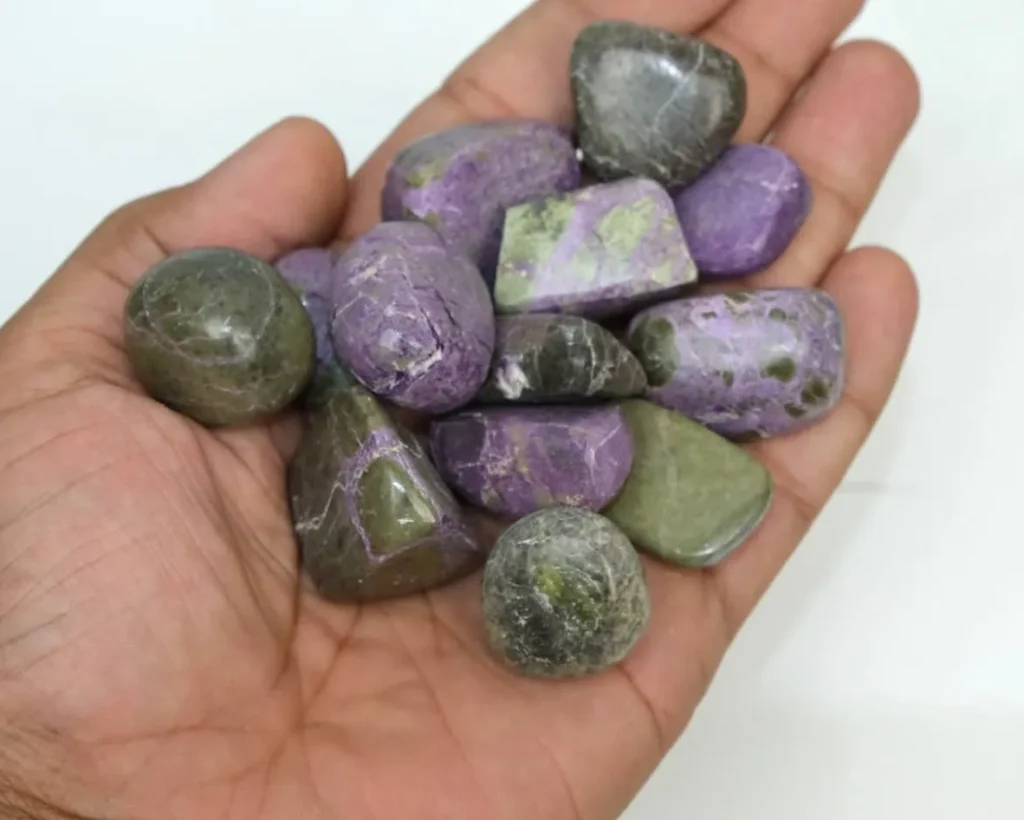
Stichtite is a hydrated magnesium chromium carbonate mineral with the chemical formula Mg₆Cr₂CO₃(OH)₁₆·4H₂O, first discovered in 1910 at Dundas on Tasmania’s west coast and named after Robert Carl Sticht, then manager of the nearby Mount Lyell copper mine. It’s a valid mineral species recognized by the International Mineralogical Association, crystallizing in the trigonal system, though individual crystals are microscopic, stichtite is found in compact masses or fine micaceous (flaky) aggregates rather than as visible, well-formed crystal points. It’s structurally related to the minerals hydrotalcite and barbertonite, differing mainly in which metal cations and how much water are present in the layered structure.
Stichtite vs. Atlantisite: A Distinction Worth Knowing
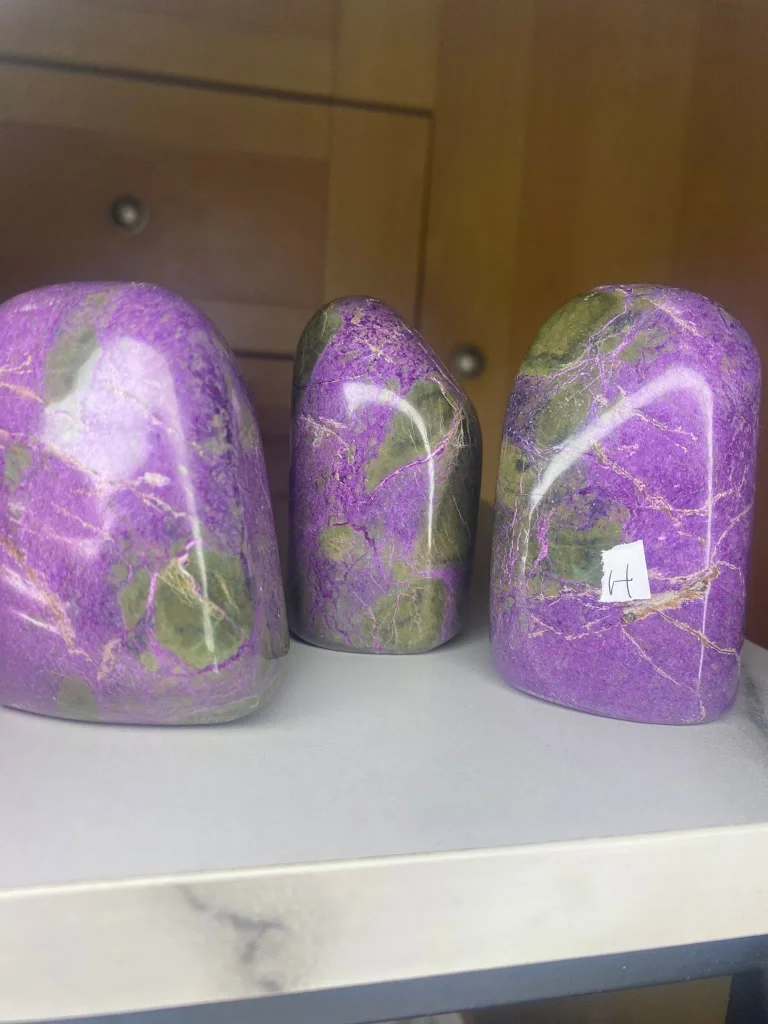
This is worth understanding clearly before buying, since the two names are used almost interchangeably in casual listings but technically mean different things. Stichtite is the mineral itself, the purple or pink component. Atlantisite is the trade name (trademarked, according to several sources, by Gerald Pauley for material specifically from Stichtite Hill in Tasmania) for the combination rock where stichtite is intergrown with green serpentine, typically antigorite, often with small dark flecks of chromite and magnetite adding black accents to the mix. Mineralogists more formally call this combination rock “stichtite in serpentine. ” So when you see “Atlantisite” for sale, you’re buying a rock that contains stichtite alongside serpentine, not pure stichtite on its own, which is comparatively rare, softer, and less commonly sold as a standalone material. Both are genuine and both are attractive, but knowing which one you’re actually purchasing is worth the extra second of label reading.
Why Is It Purple?
Stichtite’s distinctive pink-to-purple coloration comes from chromium incorporated into its layered hydroxide-carbonate crystal structure. The mineral forms when magnesium-rich serpentinite reacts with chromium-bearing minerals, usually chromite, in the presence of carbonate-rich fluids, a process where chromium is mobilized from the primary chromite and drawn into stichtite’s forming structure under mildly alkaline, low-temperature hydrothermal conditions. The color itself ranges from pale rose-pink to a rich lilac or deep violet-purple depending on chromium concentration and the specific conditions present during formation, and this purple-pink hue is distinctive enough to help differentiate stichtite from other carbonate minerals with somewhat similar coloring. Weathered, exposed surfaces of stichtite characteristically oxidize to a deep brown, quite different from the fresh, unweathered mineral’s true color, worth knowing if you’re evaluating a specimen that may have been exposed to the elements before collection.
Where It Comes From
Tasmania, Australia, is both Stichtite’s original 1910 discovery locality and by far its most significant commercial source today, specifically from Stichtite Hill near the historic Dundas Extended Mine on the island’s west coast, with additional occurrences on the southern shore of Macquarie Harbour. The Tasmanian material is also specifically prized as producing the finest, most vivid Atlantisite, with sources noting it surpasses the generally duller coloring of stichtite found elsewhere in the world. Smaller stichtite occurrences are documented in Brazil, Canada (Quebec and Ontario), India, Morocco, Russia, Scotland, South Africa’s Barberton district, and Sweden, though none rival Tasmania for commercial significance or color quality.
Is It Treated?
Stichtite’s purple coloring is entirely natural, arising from chromium incorporated during the mineral’s formation, and there’s no standard commercial treatment used to add or enhance this color. Given stichtite’s rarity as a discrete mineral and its near-exclusive commercial presence as part of Atlantisite (stichtite in serpentine), the more relevant honesty point for buyers is accurate labeling rather than treatment, confirming whether you’re purchasing genuine Tasmanian material versus stichtite from a less documented, lower-quality source, and whether a piece sold simply as “stichtite” might actually be predominantly serpentine with only minor stichtite content, given how visually similar some serpentine can appear at a glance.
Durability: Handle With Real Care
This needs to be said plainly, because it’s the single most important thing to know before buying stichtite: it is an extremely soft mineral, with sources placing pure stichtite at approximately 1.5 to 2 on the Mohs hardness scale, in the same general range as talc and gypsum, and dramatically softer than nearly every other stone covered on this site.
- This is not a durable jewelry stone on its own. At this hardness, stichtite scratches easily from ordinary contact with dust, fingernails, and virtually any harder object.
- Atlantisite (stichtite in serpentine) is somewhat more practical, since the serpentine matrix is moderately soft at roughly 2.5 to 4 on the Mohs scale, though sources note real variability here, and provides more structural body than stichtite alone, which is one reason the combination rock is favored for carving and lapidary work over pure stichtite.
- Both materials are best suited to carving, displaying specimens, and low-impact decorative use rather than daily-wear rings or bracelets. This is squarely in the same conversation as angelite, also covered on this site, as one of the more fragile, higher-maintenance materials in this category.
- Everyday wear verdict: if you want to wear stichtite or atlantisite as jewelry, protected settings like pendants and earrings that avoid contact and impact are far more sensible than rings or bracelets. Treat any piece, polished sphere, carved figurine, or set jewelry, as a display object that happens to be wearable in gentle circumstances, not as durable everyday jewelry.
What Determines Value
- Color saturation and richness. Deep, vivid purple-to-lilac stichtite is more desirable than pale, washed-out, or brownish (weathered) material.
- Contrast and pattern, for Atlantisite specifically. Striking, well-defined contrast between the green serpentine and purple stichtite is prized, with the color interplay especially valued when a piece is well polished.
- Verified Tasmanian origin. Given Tasmania’s material is specifically noted for superior, more vivid coloring compared to other localities, documented origin adds real value.
- Rarity of pure stichtite versus atlantisite. Standalone stichtite specimens, being rarer and more difficult to work with given their extreme softness, may carry particular value for mineral collectors specifically seeking the mineral itself rather than the more common combination rock.
- Structural soundness for carved pieces. Given how soft this material is, well-executed carvings and polished pieces free of cracks or chips represent genuinely skilled lapidary work.
How to Care for Stichtite and Atlantisite
Handle stichtite and Atlantisite gently at all times, given their extreme softness relative to nearly every other stone covered on this site. Clean with a soft, dry, or barely damp cloth only, avoid any abrasive cleaning method, ultrasonic cleaners, and prolonged water exposure. Store separately from every other gemstone in your collection, since even relatively soft stones elsewhere on this site (like angelite or pink opal) are still meaningfully harder than stichtite and could scratch it on contact. Keep carved pieces and jewelry away from situations involving knocks, drops, or friction against harder surfaces. This is a stone to display and appreciate carefully rather than handle casually.
Stichtite vs. Sugilite: Don’t Confuse Them
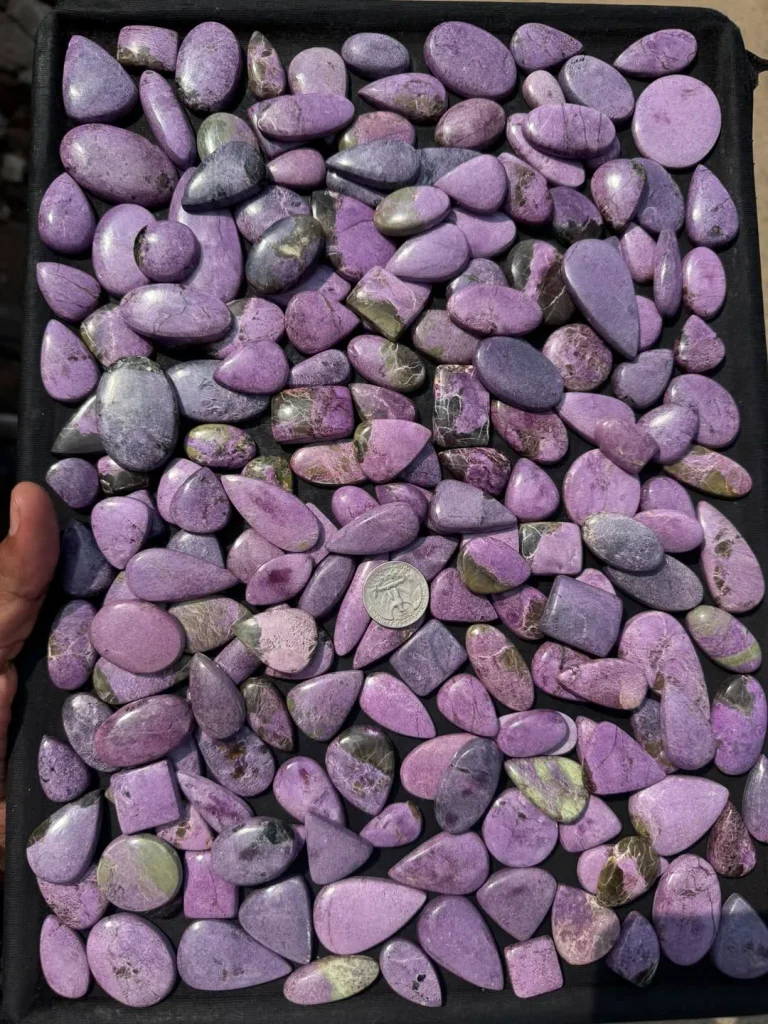
Stichtite (and Atlantisite) can be visually confused with sugilite, another purple ornamental mineral popular in jewelry and carvings, despite being chemically unrelated:
- Composition: Stichtite is a hydrated magnesium chromium carbonate; sugilite is a complex potassium sodium lithium iron manganese aluminum silicate, entirely different mineral families with no chemical relationship.
- Hardness: This is the most practically important distinction. Sugilite registers around 5.5 to 6.5 on the Mohs scale, dramatically harder and more suitable for jewelry than stichtite’s roughly 1.5 to 2.
- Color cause: Sugilite’s purple comes primarily from manganese; stichtite’s comes from chromium, different chromophores despite a broadly similar visual result.
- Typical form: Sugilite is typically sold as more uniformly colored cabochons suitable for rings and everyday jewelry; stichtite is more often found as carvings, specimens, or paired with serpentine in Atlantisite, reflecting its impractical hardness for standalone jewelry use.
- Practical implication: If you’re choosing a purple stone specifically for a ring or bracelet meant for regular wear, sugilite is the far more practical choice between the two, even though stichtite and Atlantisite have their own genuine appeal as display and carved pieces.
A basic hardness test resolves the identification quickly and has real practical consequences here, unlike some comparisons on this site where the distinction is mostly academic.
Spotted Porphyry
Leopardite: Facts About This Confusingly Named Stone →Discover why spotted feldspar rock is frequently sold under trade names.
True Patterned Quartz
Spider Web Jasper: 7 Facts About Webbed Stone →See how genuine fracture-healed chalcedony forms striking patterns.