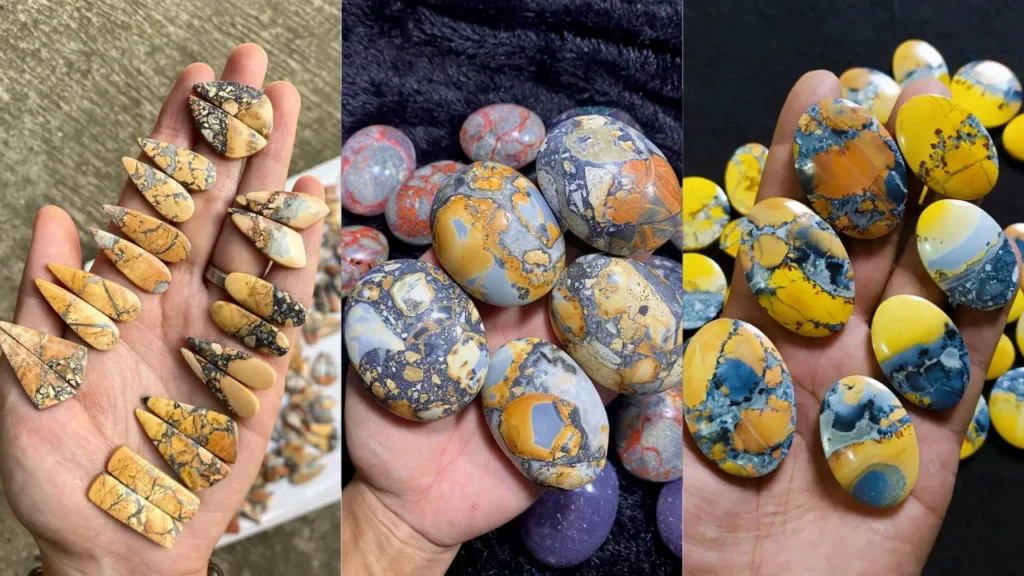
Maligano jasper is genuinely young by gem-trade standards, discovered only around 2011–2012, meaning most gemological references simply haven’t caught up to it yet. That newness cuts both ways: it’s a real, striking, well-documented stone, but almost everything written about it so far comes from sellers rather than independent geological sources, which is worth knowing before you buy.
What Is Maligano Jasper?
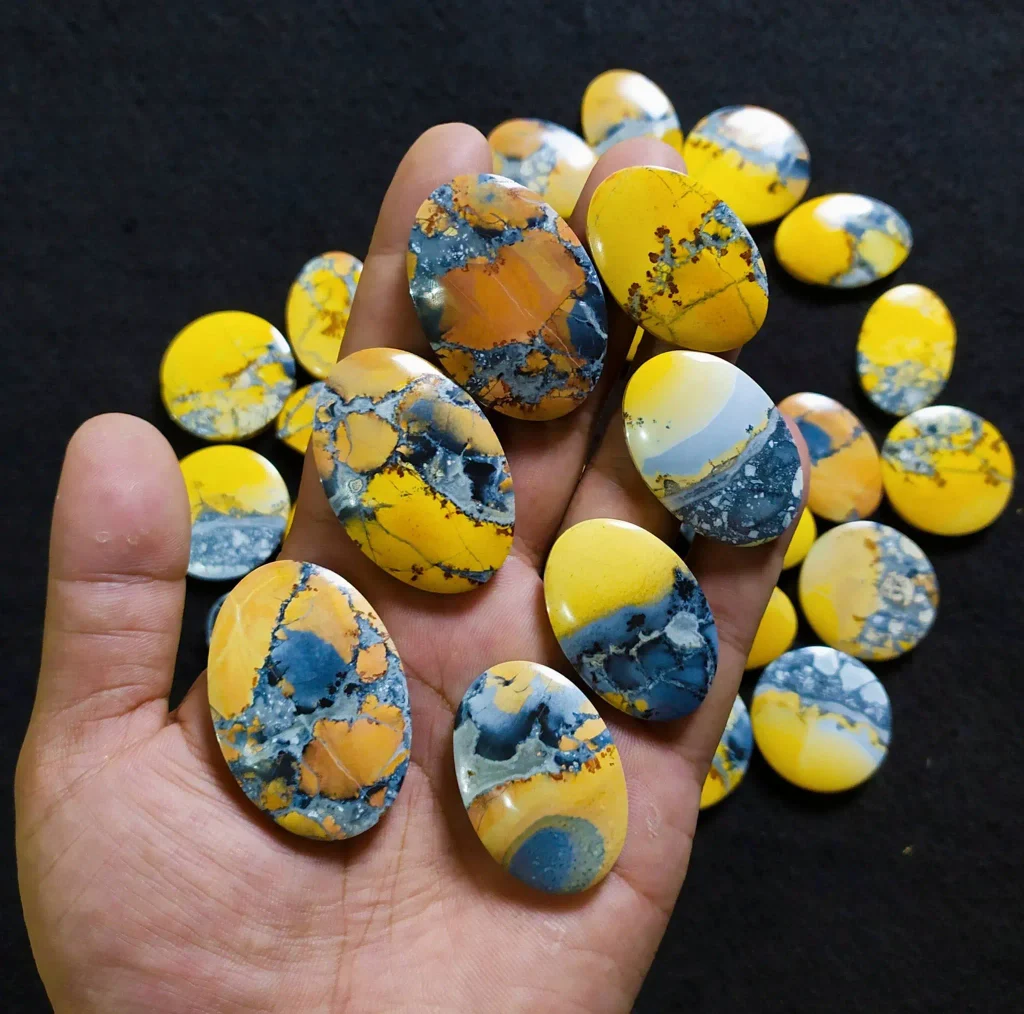
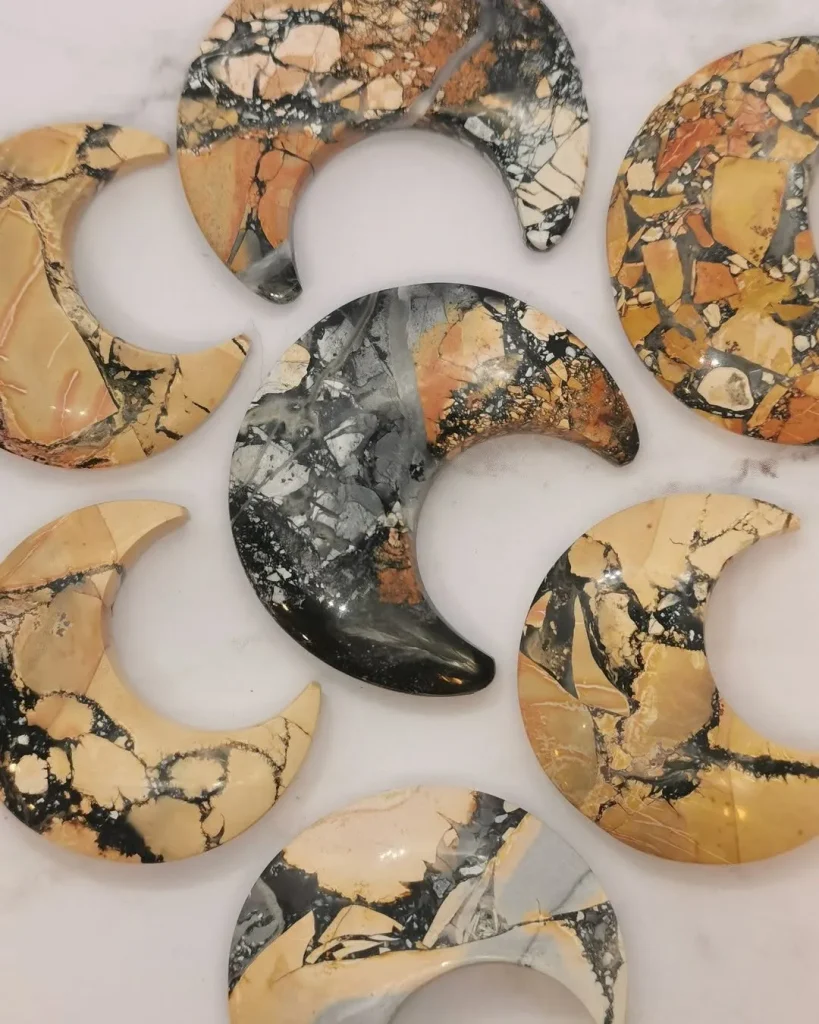
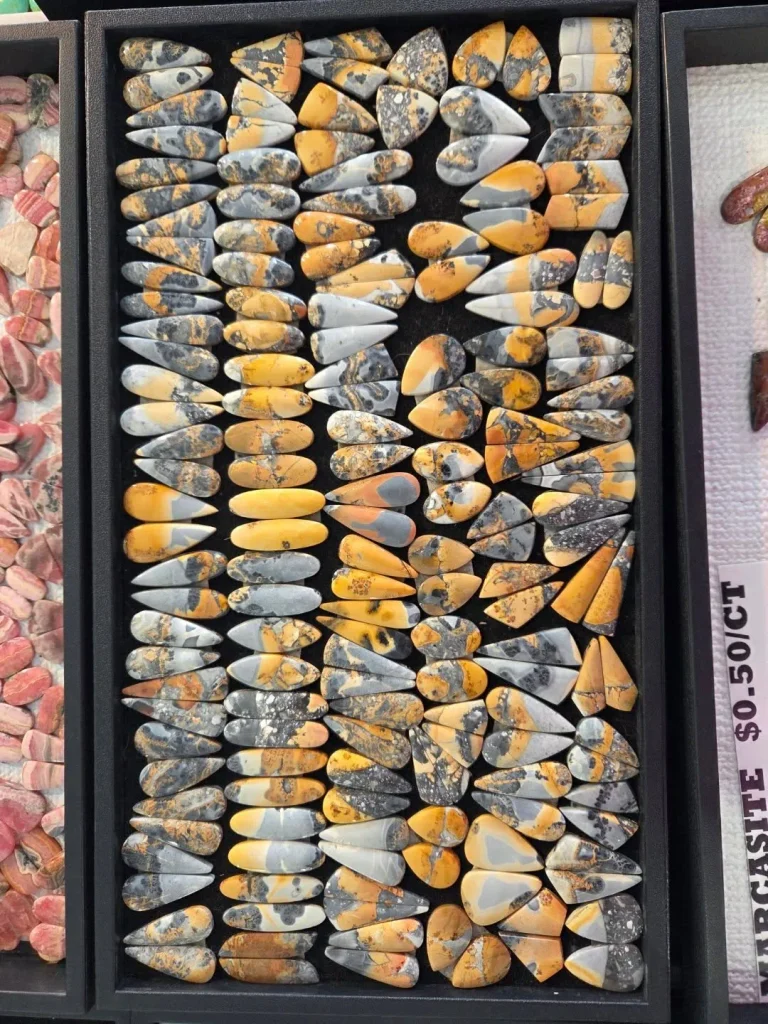
Maligano jasper is a brecciated variety of jasper, an opaque, microcrystalline quartz material, found exclusively near the village of Maligano on the island of Sulawesi, Indonesia. It’s defined by a fractured, mosaic-like pattern in which broken fragments of jasper in red, orange, gray, tan, cream, and blue-gray tones are cemented back together by lighter veining, often described as resembling miniature landscapes or riverbeds. Some pieces also contain small dendrites, branching, tree-like mineral formations, and occasional pockets of sparkling druzy quartz. It measures 6.5–7 on the Mohs hardness scale, in line with jasper and quartz-family stones generally. Wikipedia’s entry on jasper covers the broader mineral classification this variety belongs to.
How Rare Is It, Really? The Honest Answer
This is worth addressing directly, since “rare” gets used loosely in gem marketing. In this case, the rarity claim holds up better than most: Maligano jasper was only discovered around 2011–2012, comes from a single documented locality (the village of Maligano in Southeast Sulawesi), and as of a detailed 2020 write-up from The Crystal Council, the material still hadn’t gained wide market recognition, the source specifically notes many people in the geology and crystal community had never even heard of it, attributing the limited supply partly to the deposit’s inaccessibility and the small quantities typically extracted.
That said, exact discovery dates vary slightly across sources; some say “about 10 years ago” without a specific year, others cite 2011–2012 specifically, which is typical for a stone with no formal geological survey record, only trade and retailer accounts. There’s also a small disagreement worth noting on the exact cementing material: most sources describe the fragments as re-cemented by general silica-rich hydrothermal fluids, while at least one retailer describes the material specifically as jasper cemented by agate. Since agate is itself a form of silica, these aren’t necessarily contradictory, but the more specific “agate” claim isn’t consistently confirmed elsewhere.
How Does Its Landscape Pattern Form?
Maligano jasper forms through the same brecciation process seen in other fractured jaspers, playing out in a tectonically and volcanically active setting. Existing jasper deposits fracture due to seismic activity or volcanic disruption in the region’s ancient hot spring areas, breaking into fragments ranging from small shards to larger blocks. Over time, mineral-rich groundwater or hydrothermal fluids move through these broken pieces, depositing silica into the gaps and re-cementing the fragments into a single solid stone, with the specific volcanic hot-spring setting of Sulawesi contributing to the wide, unusual color range seen in the finished material.
Why Does It Show So Many Different Colors?
The color diversity comes from the variety of minerals infused during the region’s volcanic hot-spring activity, which introduced different trace elements into the silica-rich fluids depositing new material into the fractures at different times. This produces jasper fragments in red, orange, tan, and cream tones alongside the greyish-silver or blue-grey veining that fills the cracks between them, a wider and more varied palette within a single stone than most other brecciated jasper varieties typically show.
Where It Comes From
- Maligano village, Southeast Sulawesi, Indonesia — the sole documented source of this material, discovered in ancient volcanic hot spring deposits; no other locality is credited as a source across the sources reviewed for this article
Is It Treated?
Maligano jasper is generally sold untreated, consistent with jasper varieties broadly. One independent identification resource specifically recommends asking sellers whether any dye, resin filling, or stabilization has been used and requesting natural-light and untreated photos before purchasing, sound practical advice given how new and loosely documented this material still is in the trade.
Durability: Can You Wear It Every Day?
Maligano jasper measures 6.5–7 on the Mohs scale, in line with jasper and quartz-family stones generally.
- Solid everyday hardness, suitable for daily-wear jewelry.
- Takes a glassy to waxy polish when properly finished, according to identification-focused sources, which is a useful quality check when buying.
- Rough material is genuinely scarce, according to trade sources, so slabs and cabochons, rather than large raw pieces, are the more commonly available and practical form for jewelry use.
- Everyday wear verdict: durable enough for rings, pendants, and bracelets given its hardness, though its price and rarity make it more likely to end up as a statement or collector piece than daily wear jewelry.
How to Care for Maligano Jasper
Clean with warm, soapy water and a soft brush. Because it’s typically untreated, ultrasonic and steam cleaning are generally considered safe, but confirm with the seller first given how new this material is and the possibility of stabilization treatments on lower-grade rough. Store separately from harder gemstones to prevent surface scratching.
Maligano Jasper vs. Brecciated Jasper: What’s the Relationship?
- Category: Maligano jasper is a specific, single-locality variety within the broader brecciated jasper category. Every Maligano jasper is a brecciated jasper, but not every brecciated jasper is Maligano jasper.
- Sourcing: Brecciated jasper broadly comes from multiple locations worldwide (South Africa, the United States, and elsewhere); Maligano jasper comes from exactly one documented village in Indonesia.
- Pattern: Maligano jasper is specifically known for landscape-like, scenic patterns and occasional dendrites, a more specific visual signature than brecciated jasper’s broader angular-fragment description.
- Shared buyer lesson: because “Maligano” is a locality-based trade name, ask sellers to confirm genuine Sulawesi origin rather than assuming any multicolored brecciated jasper qualifies for the name; one identification source specifically flags that the trade name can overlap with other Indonesian jaspers.
The Complete “Not Really Jasper” & Quartz Guide
Compare authentic microcrystalline chalcedony with volcanic and metamorphic trade stones: