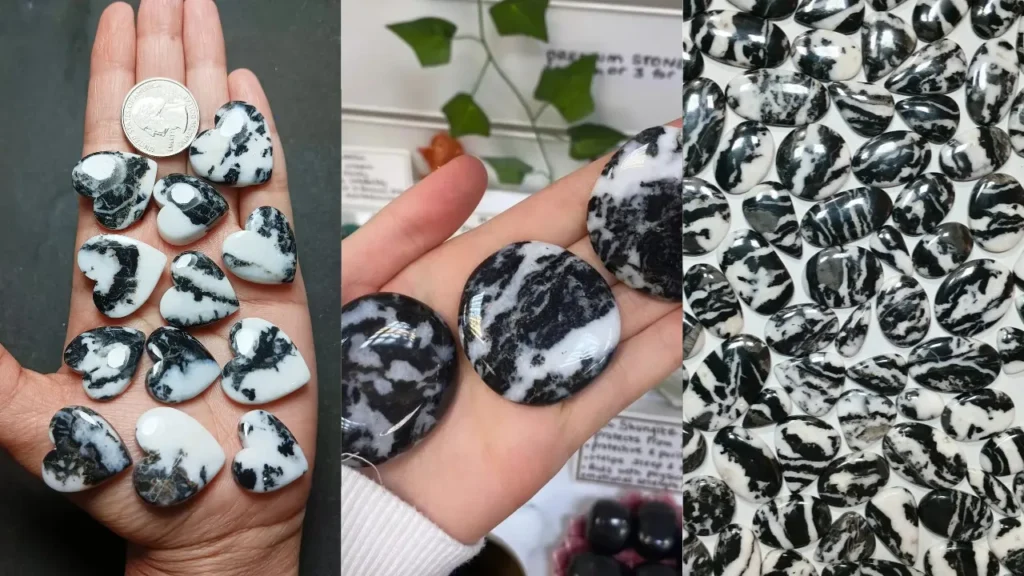
Pick up a black-and-white striped stone at a rock shop and ask what it is, and there’s a decent chance you’ll hear “zebra jasper”. even if it isn’t. That’s not a knock on the sellers. It’s just how this particular trade name works: it gets stretched over several genuinely different rocks that happen to share a striped look, and the internet has been happily blurring the lines between them for years.
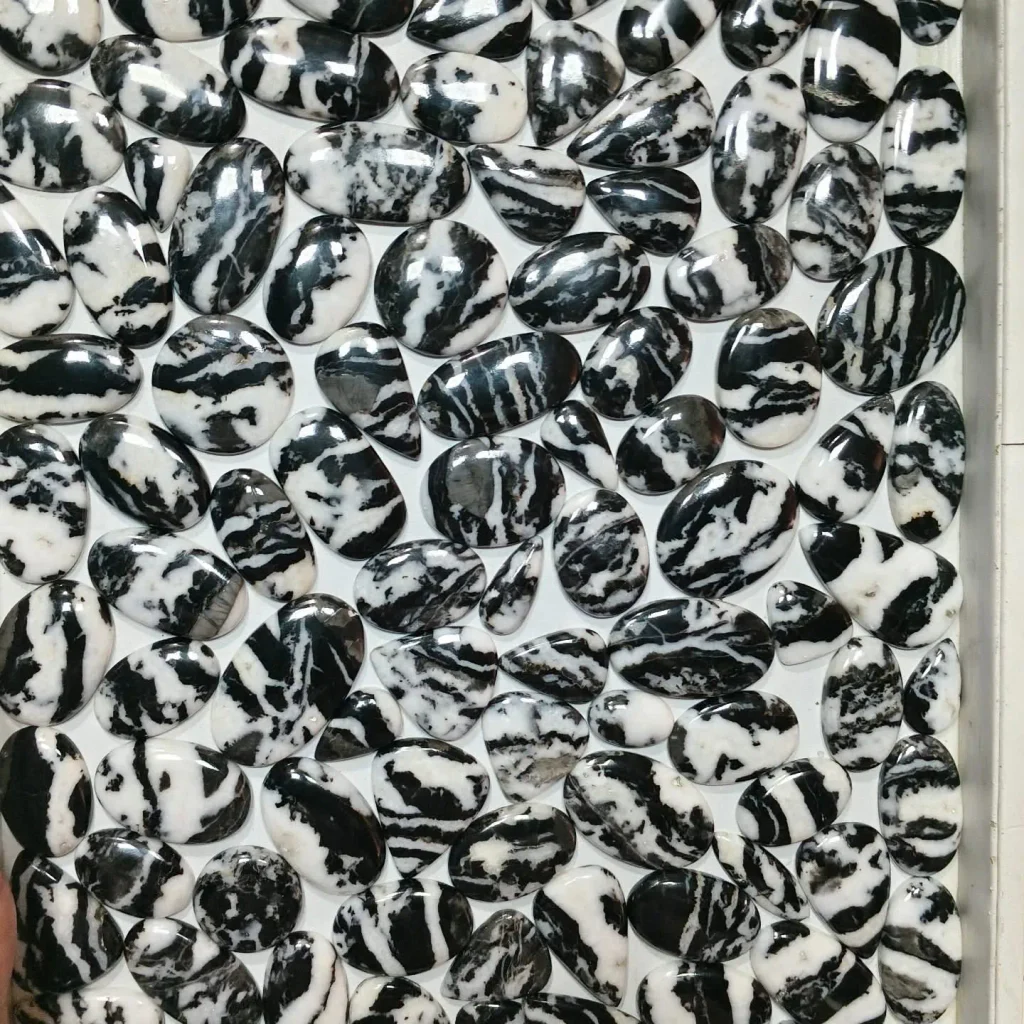
So what is it, technically?
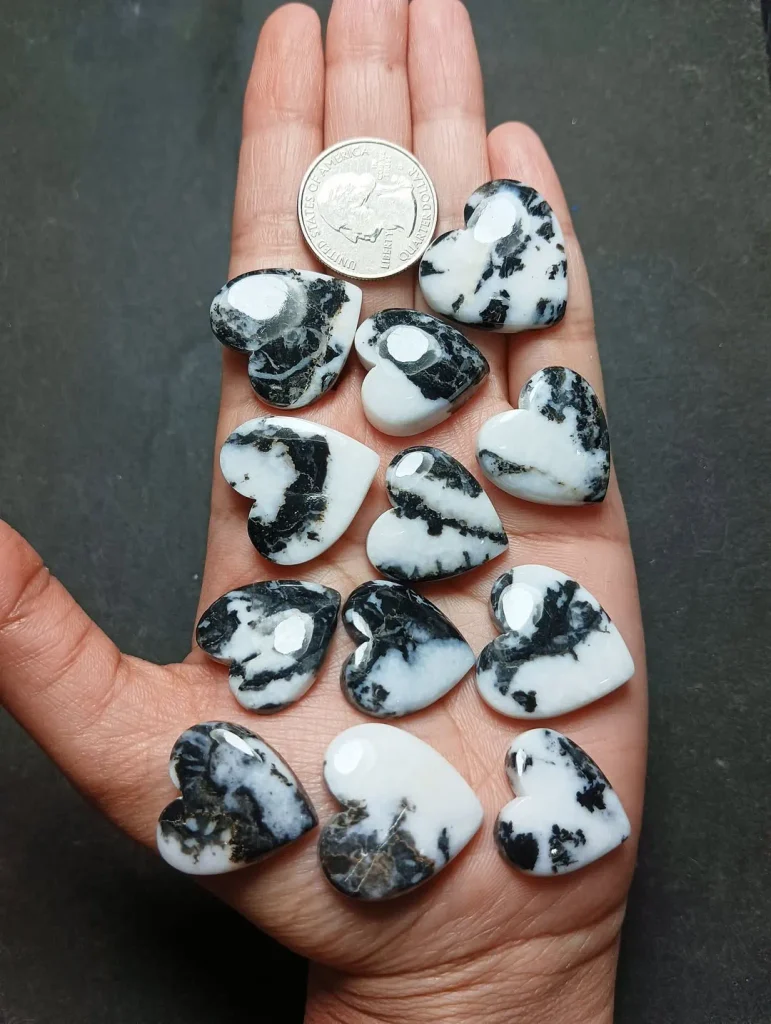
Strictly speaking, zebra jasper should be an opaque, microcrystalline quartz, the same family as red jasper or bumblebee jasper, banded in alternating black and white (sometimes brown, gray, or beige creep in too). The dark bands usually owe their color to iron oxide, while the pale bands are closer to pure quartz. On paper it’s a clean, simple definition. In practice, it gets messier fast.
The part worth knowing before you buy
Here’s where a bit of honesty pays off. At least one geology focused source flatly states zebra jasper “is not a true jasper but rather a type of chalcedony,” which, worth noting, is a distinction without much practical difference, since jasper is itself a variety of chalcedony. More useful is a warning that shows up repeatedly across gemological forums: any black-and-white banded stone tends to get called zebra jasper, whether it’s actually silica-based jasper, a carbonate marble, dyed howlite, or dolomite. One long-running gemology forum thread put it bluntly: someone posted a “zebra jasper” specimen for identification and was told it was almost certainly a metamorphosed marble, not jasper at all.
There’s a simple field test buried in that same thread, and it’s genuinely useful: dilute hydrochloric acid makes calcite fizz but does nothing to dolomite or true silica based jasper. If you’ve got acid on hand (most rock shops do), it’s a fast way to separate a real quartz-family zebra jasper from a look-alike carbonate stone.
Then there’s the separate confusion with zebra rock, an entirely different Australian siltstone from the Kimberley region, reddish-brown and cream rather than black and white, made mostly of quartz and sericite mica rather than silica banding. It’s 600 million to 1.2 billion years old by most estimates, and its stripes are still debated, the leading theory points to rhythmic hematite precipitation during fluid alteration of the rock, though nobody’s fully settled the question. Because “zebra jasper” and “zebra rock” both get shortened to just “zebra stone” casually online, the two get conflated constantly despite being unrelated geologically.
How the stripes actually form
For the genuine quartz-based version, formation follows familiar jasper logic: silica-rich fluids move through volcanic ash or fine sediment and cement it together as they harden. What makes zebra jasper specifically striped, rather than just multicolored the way most jasper is, comes down to mineral impurities depositing in distinct alternating layers rather than mixing evenly, iron oxide concentrating into dark bands, with the intervening layers staying closer to pure, pale quartz.
Where the real stuff comes from
Sources differ slightly on the full list, but there’s solid overlap: India shows up as the most frequently cited source, with additional material documented from Mexico, the United States, South Africa, Russia, Brazil, Madagascar, and Myanmar. No single locality dominates the way Sulawesi does for Maligano jasper, this is a widespread, commercially abundant trade name rather than a rare, geographically specific find.
Does it need any help from a lab?
Not typically. Genuine zebra jasper reaches the market untreated; its banding is stable and doesn’t need enhancement. The treatment risk here isn’t really about the true jasper being altered; it’s about other, softer materials (dyed howlite, dyed magnesite, painted resin) being sold under the same name to mimic the stripe pattern. Watch for dye pooling around drill holes or in surface cracks, and be suspicious of stripes that look too perfectly printed rather than naturally irregular.
Wearing it day to day
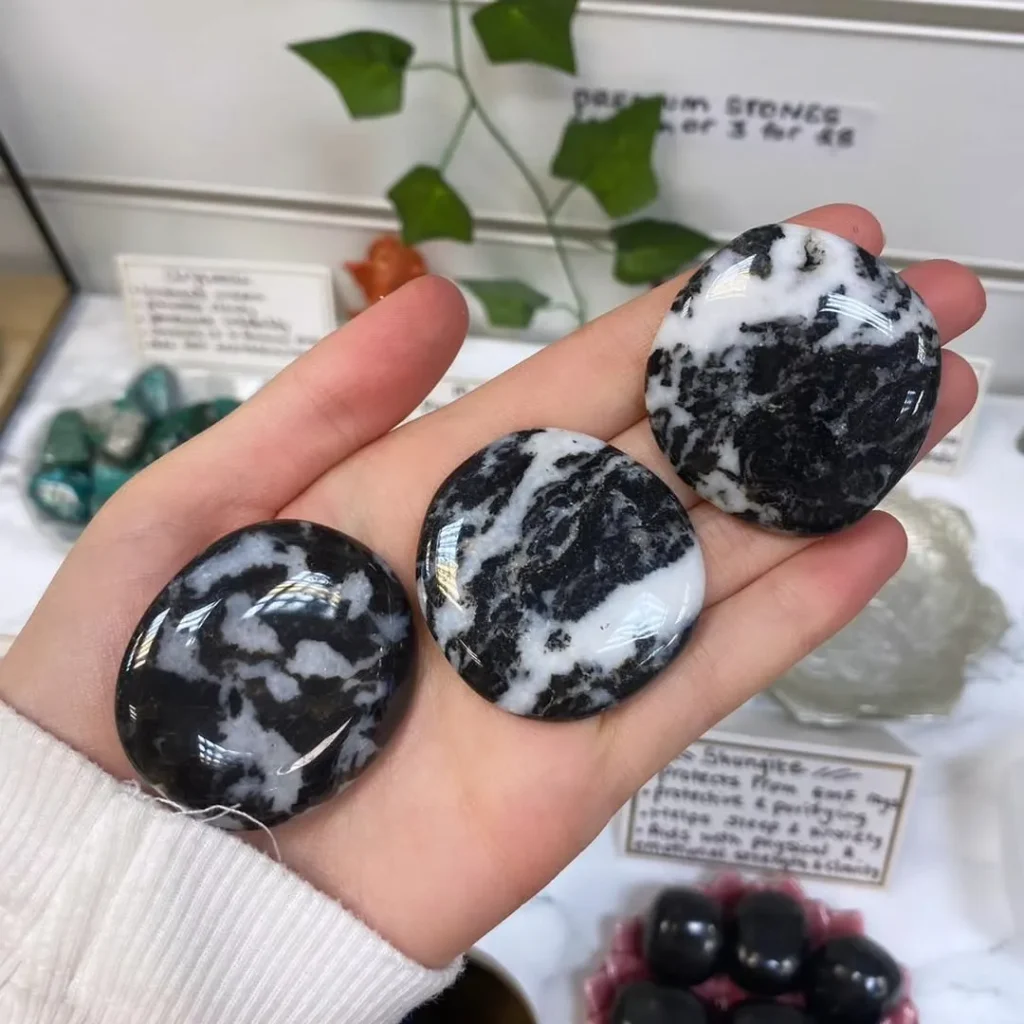
Genuine quartz-based zebra jasper sits at 6.5-7 on the Mohs scale. It’s plenty tough for daily wear in rings, bracelets, or pendants, and its fine-grained structure holds up well against chipping. The look-alike carbonate versions (marble, dolomite, and calcite) are a different story entirely, typically only 3–4 on the Mohs scale, soft enough to scratch easily and unsuitable for anything that takes daily knocks. This is really the crux of the whole identification issue: two stones can look nearly identical while behaving completely differently on your hand. If you’re buying for a ring rather than a display piece, confirming which one you actually have matters more here than with almost any other jasper variety on this site.
Keeping it clean
Warm water, mild soap, a soft brush, and standard care for the genuine quartz version. Skip ultrasonic or steam cleaning if there’s any chance the piece is dyed or a softer carbonate look-alike, since both heat and vibration can degrade dye or damage a softer stone. When in doubt about which you’re holding, treat it gently rather than assuming it can take the same handling as true jasper.
Zebra jasper next to zebra rock, side by side
- Composition — zebra jasper (the real version) is silica-based quartz; zebra rock is a quartz-and-sericite siltstone; both get shortened to “zebra stone” informally, which is most of the confusion right there
- Color pattern — zebra jasper runs black and white; zebra rock runs reddish-brown and cream, a genuinely different palette once you know to look
- Origin — zebra jasper is sourced from multiple countries, with India most prominent; zebra rock comes from one specific region in Western Australia
- Age claims — zebra rock carries a documented age estimate (600 million to 1.2 billion years); zebra jasper’s formation timeline isn’t pinned down with anything close to that precision
- The practical takeaway — if a listing shows reddish-brown and cream stripes rather than black and white, you’re very likely looking at zebra rock mislabeled as jasper, not the other way around
GeologyScience’s rundown of the silicification process, for anyone who wants the deeper geology.“
https://geologyscience.com/gemstone/specific-gemstones/zebra-jasper/
The “Not Really Jasper” Mineral Guide
Explore how trade names, volcanic rocks, and true chalcedony differ across the gem market:
The geological benchmark for authentic microcrystalline quartz.
How natural mineral-healed fractures create spiderweb patterns.
Essential safety facts regarding sulfur and realgar minerals.
The geological reality behind Madagascar’s green orbicular rock.
Why spotted feldspar porphyry is misidentified as jasper.
How Australian volcanic lava forms colorful secondary agates.