

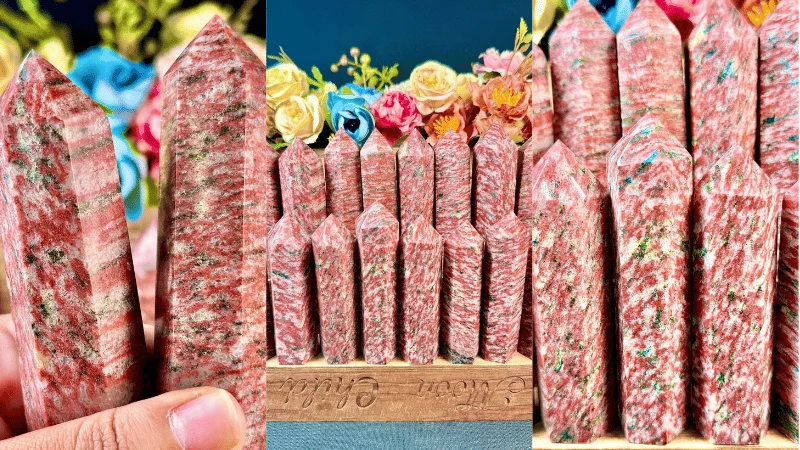
Someone on Reddit’s rock identification board posted a photo last year asking a simple question: is this actually red sesame jasper? Nobody could give them a confident answer, and once you dig into the name, it’s obvious why.
“Sesame jasper” points at two entirely different rocks, from two different countries, formed by two different geological processes. One of them is genuine jasper. The other, according to a geologist who looked at it, almost certainly isn’t.
Red sesame jasper is the first kind. But the name it shares drags all the confusion of the second kind along with it.
The Australian rock
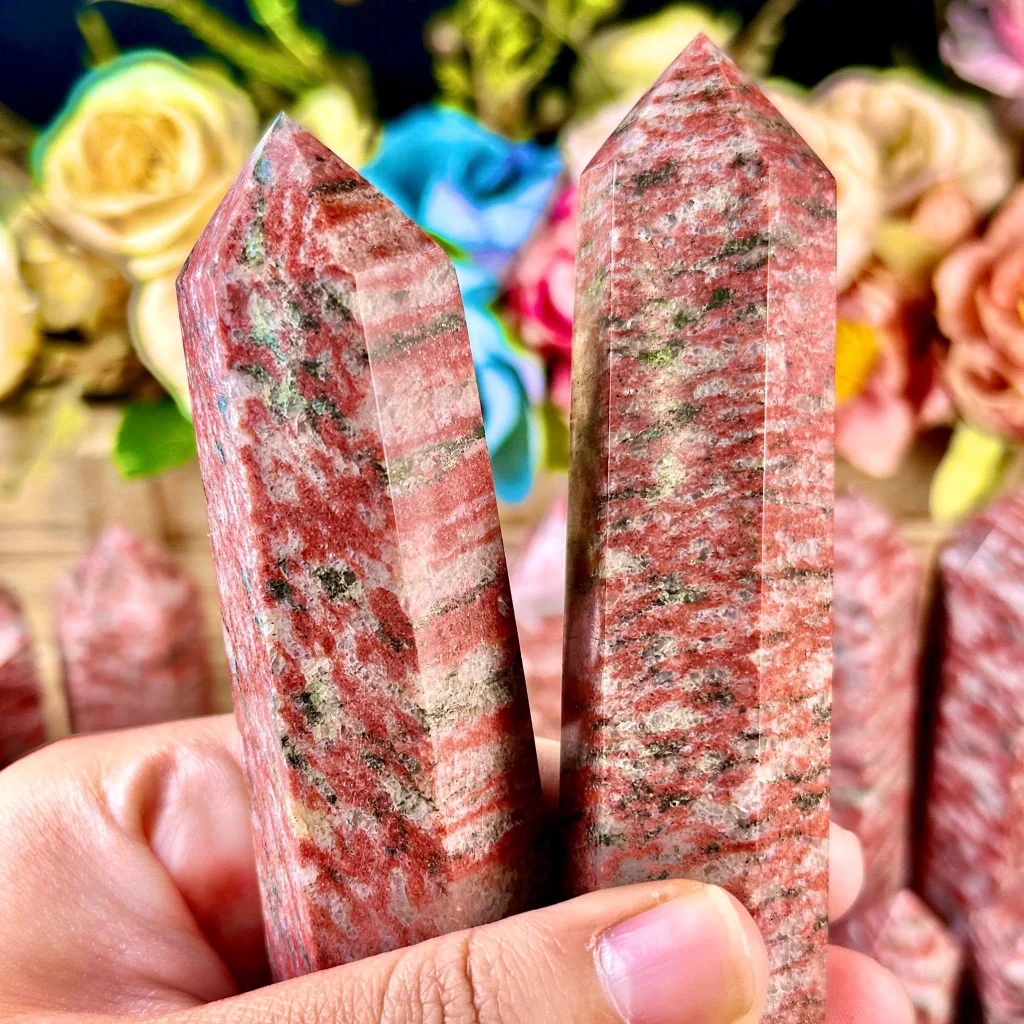
This is where red sesame jasper actually comes from. Sesame Creek in central Queensland, Australia — hence the name, which has nothing to do with seeds and everything to do with a creek.
The Queensland material is a sedimentary jasper, formed the way most jaspers form: mineral-rich fluids working through rock over millions of years, depositing silica and iron as they go. Its color range runs beige, brown, cream, red and yellow, usually swirled together. The red and autumn-toned varieties are what get sold as red sesame jasper.
Composition is microcrystalline quartz with iron and organic inclusions — which does satisfy the actual definition of jasper. Specific gravity sits between roughly 2.58 and 2.91 depending on porosity and mineral content. Geology Science’s sesame jasper entry has the full physical property breakdown if you want the technical specs.
The New Zealand rock
Here’s where it goes sideways. In 2014 or 2015, a green-and-black speckled stone started appearing on the crystal market out of New Zealand, sold as kiwi jasper,and its paler, whiter variant got sold as sesame jasper.
Except it isn’t jasper. Multiple sources describe it as a pegmatite containing amazonite, tourmaline and quartz. One retailer says so directly: not a true jasper, but a pegmatite with amazonite and tourmaline inclusions, where the lighter form gets called sesame jasper and the darker, more tourmaline-heavy form gets called kiwi jasper.
The bluntest assessment comes from a Mindat forum thread, where someone posted the stone asking whether it qualified as jasper at all. A responding geologist didn’t hedge: definitely not jasper, looks like an igneous intrusive rock similar to granite, though a thin section would be needed to say which type. The original poster’s own read was harsher still — that it looked like a marketing name invented to move product.
So which one is “red sesame jasper”?
The Australian one. Red isn’t a color the New Zealand pegmatite produces,that material runs green, cyan, white and black. If a listing says red sesame jasper, you’re almost certainly looking at Queensland material, which is a real jasper.
Where it gets messy: at least one major bead supplier’s reference page conflates both rocks into a single entry, describing sesame jasper as Queensland material and then, in the same breath, calling the greenish variant kiwi jasper from New Zealand. Two continents, two rock types, one paragraph.
Practical version: red sesame jasper is probably fine and probably genuine jasper. Plain “sesame jasper” with no color specified could be either rock, and you’d want to ask.
What makes it red
Iron. Specifically iron oxide infused through the microcrystalline quartz during formation, the same mechanism behind red jasper generally. The swirled, mottled appearance comes from mineral-rich fluids depositing unevenly over long stretches of geological time rather than in clean layers, so the patterning varies piece to piece with no two matching.
Where it comes from
- Sesame Creek, central Queensland, Australia,the genuine source of red sesame jasper, and where the trade name originated
- New Zealand, source of the kiwi jasper / pale “sesame jasper” pegmatite, discovered 2014–2015, which is a different rock despite the shared name
Any treatment concerns?
Nothing in the sourcing suggests red sesame jasper is routinely dyed or enhanced — the iron coloring is structural. The usual caution applies to unusually vivid or suspiciously uniform pieces, but it isn’t a documented problem with this material specifically. The bigger risk with this stone isn’t treatment, it’s getting a different rock than the name implies.
Wearing it
Genuine Queensland sesame jasper is microcrystalline quartz, which puts it in the standard jasper range of 6.5 to 7 on the Mohs scale. That’s solid everyday territory — fine for rings, bracelets, pendants, and durable enough to handle normal knocks without much worry.
Worth knowing: the New Zealand pegmatite gets quoted at the same 6.5 to 7 range, so hardness alone won’t tell you which rock you’re holding. Color will. Red means Australian jasper.
Keeping it clean
Warm water, mild soap, soft brush, standard jasper care. Untreated microcrystalline quartz handles ultrasonic and steam cleaning without complaint, though confirming a piece hasn’t been dyed first is never wasted effort. Store away from harder stones so the polish stays intact.
Red sesame jasper next to kiwi jasper
- Country, Queensland, Australia versus New Zealand
- Rock type, genuine sedimentary jasper (microcrystalline quartz) versus a pegmatite with amazonite and tourmaline, which multiple sources and at least one geologist say isn’t jasper at all
- Color, red, brown, cream, beige, yellow versus green, seafoam, cyan, white with black speckling
- Age on the market, Queensland material has a longer trade history; the New Zealand stone only appeared around 2014–2015
- Practical tell, color is your best identifier here, since both get quoted at the same hardness and both carry “sesame jasper” in their names
The “Copy-Paste Spec Sheet” Trap
Online wholesale listings routinely paste “Mohs Hardness: 6.5–7.0” on any material bearing the word “jasper.” In reality, buying an incorrectly labeled stone can result in scratched surfaces or broken jewelry:
- Carbonate & Metamorphic Softness: Striped stones sold as Zebra Jasper often contain soft calcite or dolomite (Mohs 3–4), meaning a steel utility blade or pocket knife will easily scratch them.
- Fragile Vent Deposits: Volcanic formations like Bumblebee Jasper sit at just 4 to 5 on the Mohs scale and require gentle, protected settings.
- The True Quartz Benchmark: Authentic microcrystalline jaspers like Red Jasper and Spider Web Jasper reliably resist knife scratches and retain an enduring vitreous polish.
Rule of thumb: If your unpolished “jasper” scratches under copper or stainless steel, you are holding a carbonate or sedimentary rock, not true quartz.
Pingback: Kiwi Jasper: What a Lab Actually Found When Someone Finally Tested It