Elephant jasper, elephant skin jasper, calligraphy stone, Miriam stone, Mariyam jasper, Arabic script stone, cobra script stone, snake jasper. Eight names, one rock. And buried under all that branding is a question nobody selling it seems eager to answer: is this actually jasper?
Almost certainly not. Which matters more than it sounds, because the answer changes whether you should put it in a ring.
What the sellers agree on
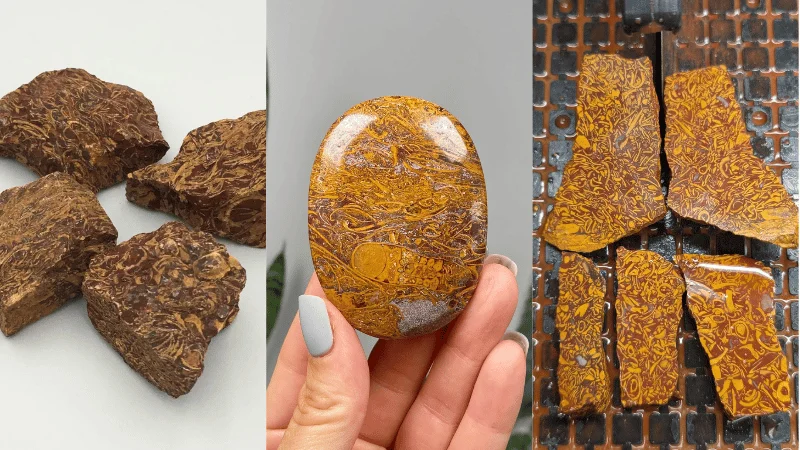
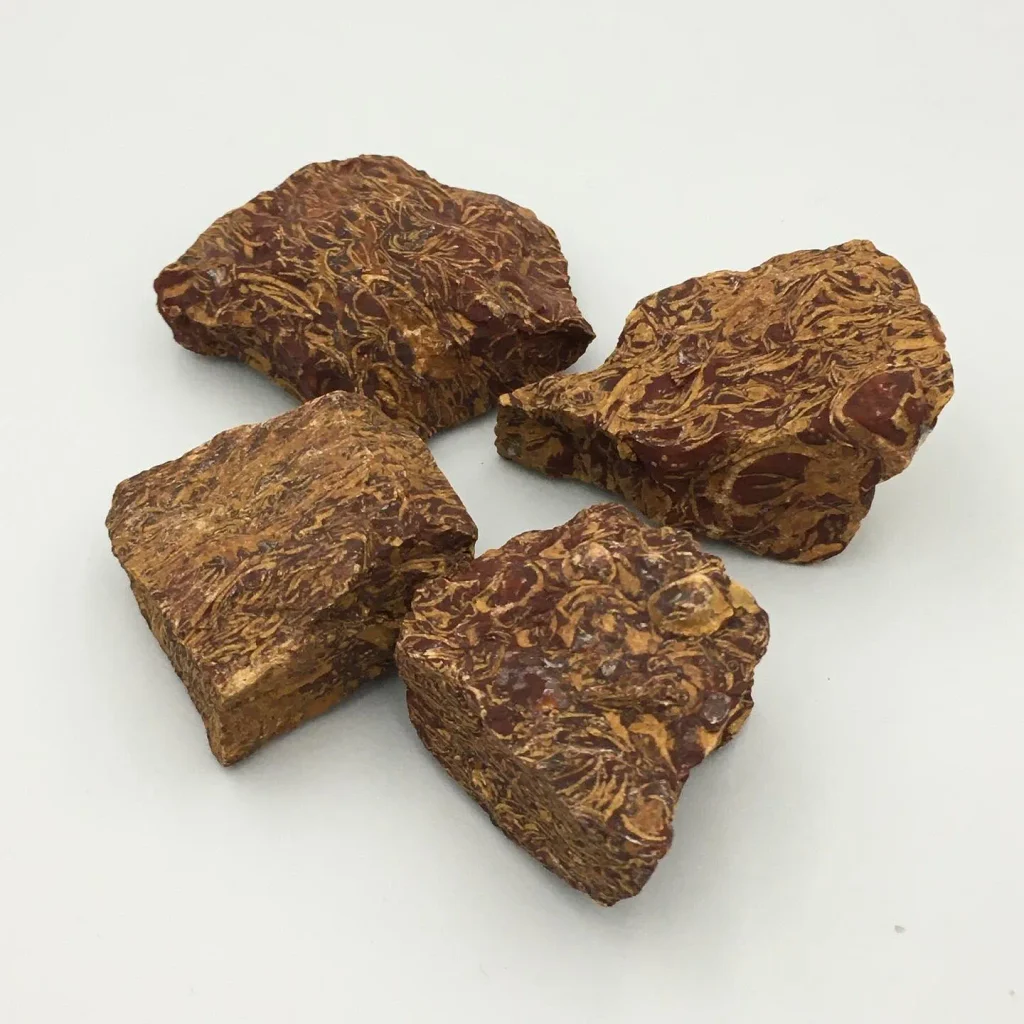
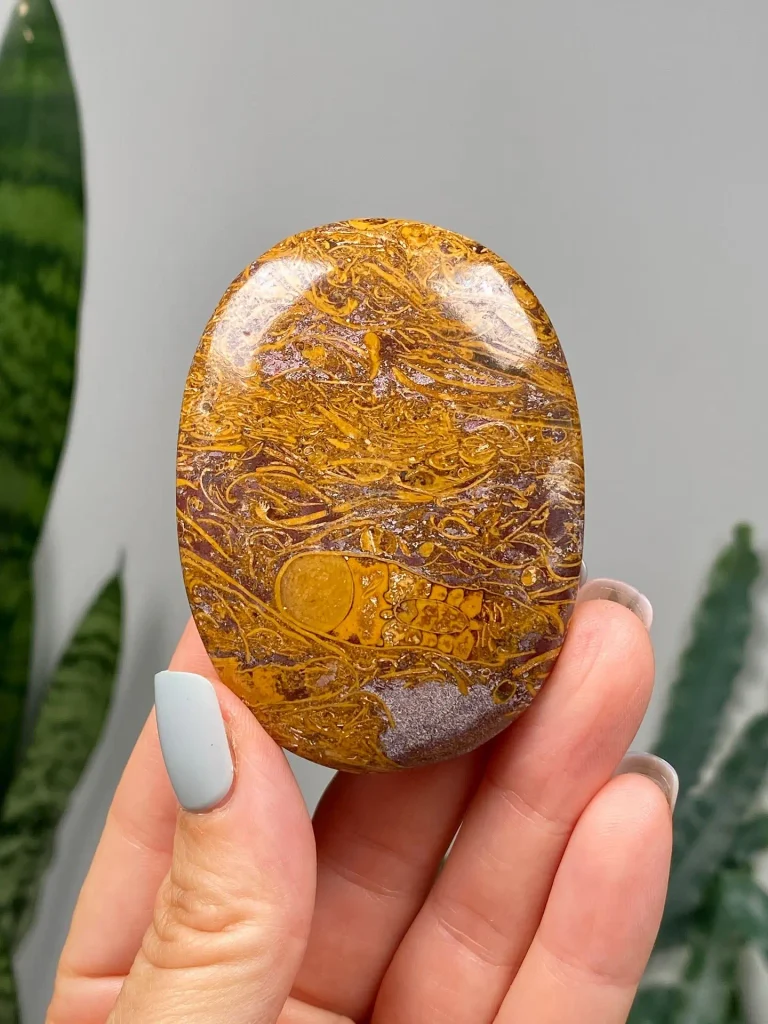
For a stone with this many aliases, the descriptions are surprisingly consistent. Nearly every source describes the same material: dark brown stone marked with lighter, script-like patterns that genuinely do resemble handwriting or calligraphy, which is where most of the names come from. Composition gets described as some combination of hematite, iron, and fossilized shells, with several sources adding fossilized bone and vegetation from ancient swampland.
The origin story is consistent too. It comes from the Himalayan mountains in India, formed when the mountain range’s uplift put the surrounding landscape under enormous pressure and fossilized whatever organic material was caught in it. One retailer adds the Atlas Mountains as a second source, though that’s a minority claim I couldn’t corroborate elsewhere.
The jasper problem
Here’s the thing. Real jasper is opaque microcrystalline quartz, silica, chalcedony family, Mohs 6.5 to 7. Every source describing elephant jasper’s composition lists something else entirely: hematite, iron, fossilized shell, limestone matrix, organic debris. None of those are quartz. One source describes it outright as limestone with hematite and fossil inclusions, which makes it a fossiliferous sedimentary rock, not a jasper. Geology.com’s jasper reference spells out the silica requirement if you want the formal definition to check any stone against.
To their credit, at least one bead supplier seems aware of the gap. Dakota Stones lists the material as elephant skin jasper but hedges its durability note with the qualifier “for true jasper”,a small tell that someone in the supply chain knows the name doesn’t quite fit the rock.
This isn’t unique to this stone. “Jasper” gets attached to plenty of materials that aren’t chalcedony, the same way bumblebee jasper (actually a sulfur-and-arsenic mineral mix) and kambaba jasper carry the name without the chemistry. What’s different here is how much the mislabel affects buying decisions, which brings us to the real issue.
Where the sources genuinely fight: hardness
This is the part worth slowing down on, because the numbers are not close.
One retail source lists Miriam stone at Mohs 3 to 4,soft, roughly calcite territory, scratchable with a copper coin. Another lists the same material at Mohs 6.5 to 7, which is true jasper’s range and hard enough for daily wear. That’s not a rounding difference. It’s the gap between a stone you can set in a ring and one you shouldn’t.
Reading between them, the low figure fits the composition better. A limestone-and-hematite fossil matrix should land in the soft range, and the 6.5 to 7 figure appears alongside that “for true jasper” hedge, which reads like a generic jasper spec pasted onto a stone that isn’t jasper, rather than a measurement of this actual material.
How the patterns formed
The script-like markings aren’t decorative mineral banding the way they are in most patterned stones. They’re fossils. When the Himalayan uplift compressed ancient swamp and shallow marine sediment, shells, bone fragments and plant material got flattened and preserved inside the hardening rock. The lighter “writing” you see on a polished surface is a cross-section through that fossilized debris, with the iron and hematite in the surrounding matrix providing the dark brown background it reads against.
That also explains why no two pieces match,you’re looking at a slice through a random arrangement of fossil fragments, not a repeating crystal structure.
Where it comes from
- Himalayan region, India,the source cited by essentially every seller, tied to the mountain range’s uplift and the fossilization event that came with it
- Atlas Mountains,mentioned by one source as a second locality, I found no corroboration elsewhere, so treat as unconfirmed
Several sellers describe the Himalayan formation conditions as unique and unrepeated anywhere else on Earth. That’s marketing language rather than a geological claim, fossiliferous limestone forms in plenty of places, so I’d hold it loosely.
Treatment and what to watch for
Nothing in the sourcing suggests this material is routinely enhanced. The pattern is structural, not applied, so there’s no obvious commercial reason to dye it. The generic advice about watching for dye pooling in cracks applies here as it does to any patterned stone, but it isn’t a known problem with this material specifically.
Can you actually wear it?
This depends entirely on which hardness figure is right, and I’d plan for the lower one.
If the material really is a limestone-and-hematite fossil rock around Mohs 3 to 4, it will scratch easily, it won’t survive knocking against countertops or other jewelry, and it’s a poor candidate for rings and bracelets. Pendants, earrings and display pieces are the safer call,they take far less abuse.
The safest practical approach,treat it as soft unless a seller can show you an actual hardness test on the specific material rather than a spec sheet that says “jasper.” If you want a stone with this kind of dark, earthy, patterned look that you can genuinely wear daily, brecciated jasper or spider web jasper are both genuine chalcedony at 6.5 to 7 and will hold up.
Cleaning it
Mild soap, a soft cloth, lukewarm water. Skip ultrasonic cleaners and steam entirely, if the stone is in the soft, carbonate-bearing range, both could damage it, and the fossil inclusions may sit at slightly different densities than the surrounding matrix, which makes vibration a bad idea. Keep it away from acids and household cleaners for the same reason. Store it separately so harder stones don’t scratch the polished surface.
Elephant jasper next to a real jasper
- Composition, elephant jasper is a fossil-bearing limestone and hematite matrix; real jasper is microcrystalline quartz with mineral inclusions
- Hardness, real jasper reliably sits at 6.5 to 7; elephant jasper’s figure is genuinely disputed and may be as low as 3 to 4
- What makes the pattern, elephant jasper’s markings are fossilized organic material; real jasper’s patterns come from mineral impurities and silica banding
- Practical difference, a true jasper handles a ring setting without much thought; this one probably doesn’t
- Naming lesson, “jasper” in a product name describes an appearance, not a verified mineral family, and that’s worth checking before you buy for wear rather than display
The “Not Really Jasper” Field Guide
Explore individual geological analyses across commercial trade jaspers, volcanic rocks, and authentic chalcedony:
The benchmark standard for genuine microcrystalline chalcedony.
Natural microcrystalline quartz with fracture-healed network veins.
Why one commercial name covers marbles, dolomites, and gneiss.
Fumarole mineralization, calcite hardness, and handling safety.
Madagascar’s volcanic rhyolite and its orbicular quartz spherulites.
Igneous porphyritic rocks featuring spotted feldspar phenocrysts.
Australian volcanic lava flows with secondary agate fillings.